
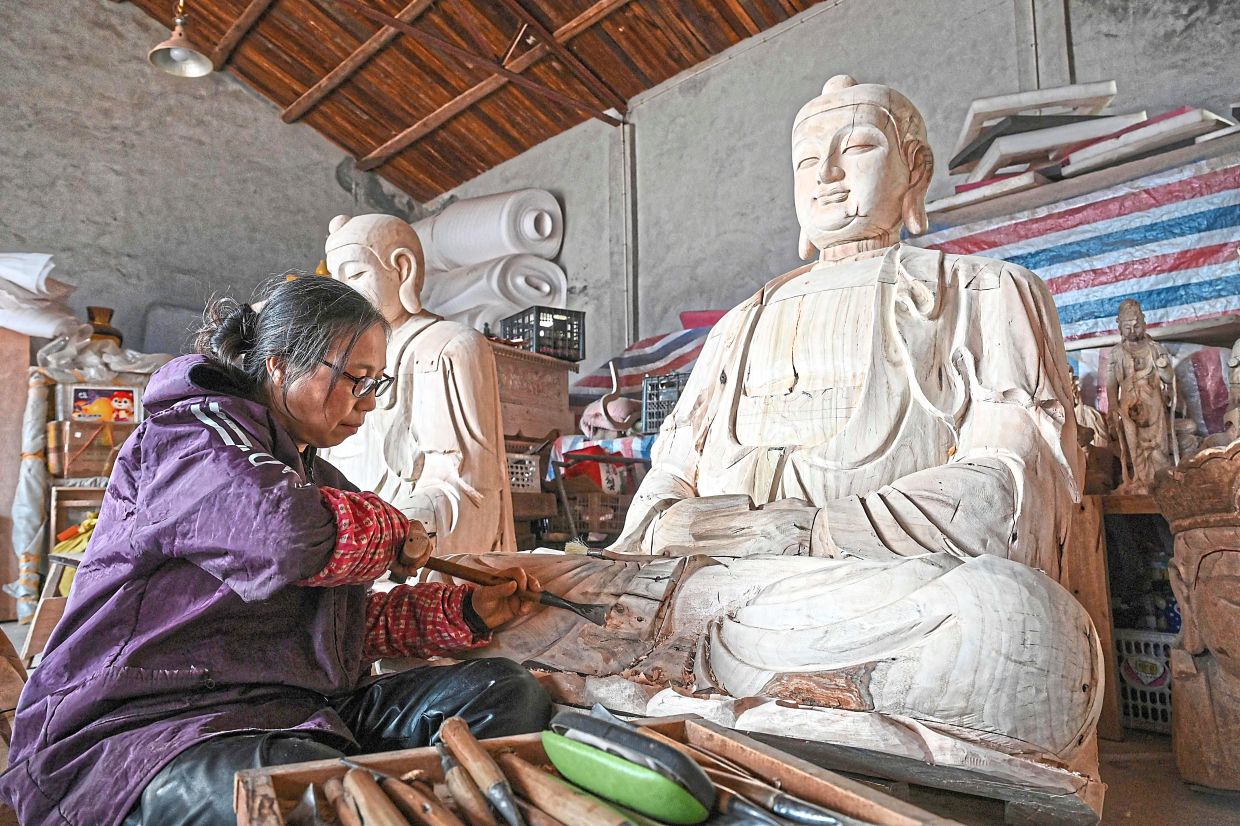
IN a dimly lit workshop in eastern China, craftsman Zhang measured and shaped a block of wood into a foot as dozens of half-completed life-sized Buddha statues looked on silently.
Zhang is one of a dwindling number of master woodcarvers in the village of Chongshan near the city of Suzhou, where generations of residents have made a living creating Buddhist and Taoist sculptures for display in temples across China.
Carving the intricate statues, which are often adorned with bright paint and gold leaf, was an art he learned from his father.
“My grandpa and my grandpa’s grandpa were also craftspeople,” Zhang said in his dusty studio.
But “once our generation retires, there will be no one left to carry on the tradition”.
He blamed a combination of unattractive pay and youngsters’ unwillingness to dedicate time and energy to mastering the craft.
“You need to do this for at least five or six years before you can set up shop on your own.”
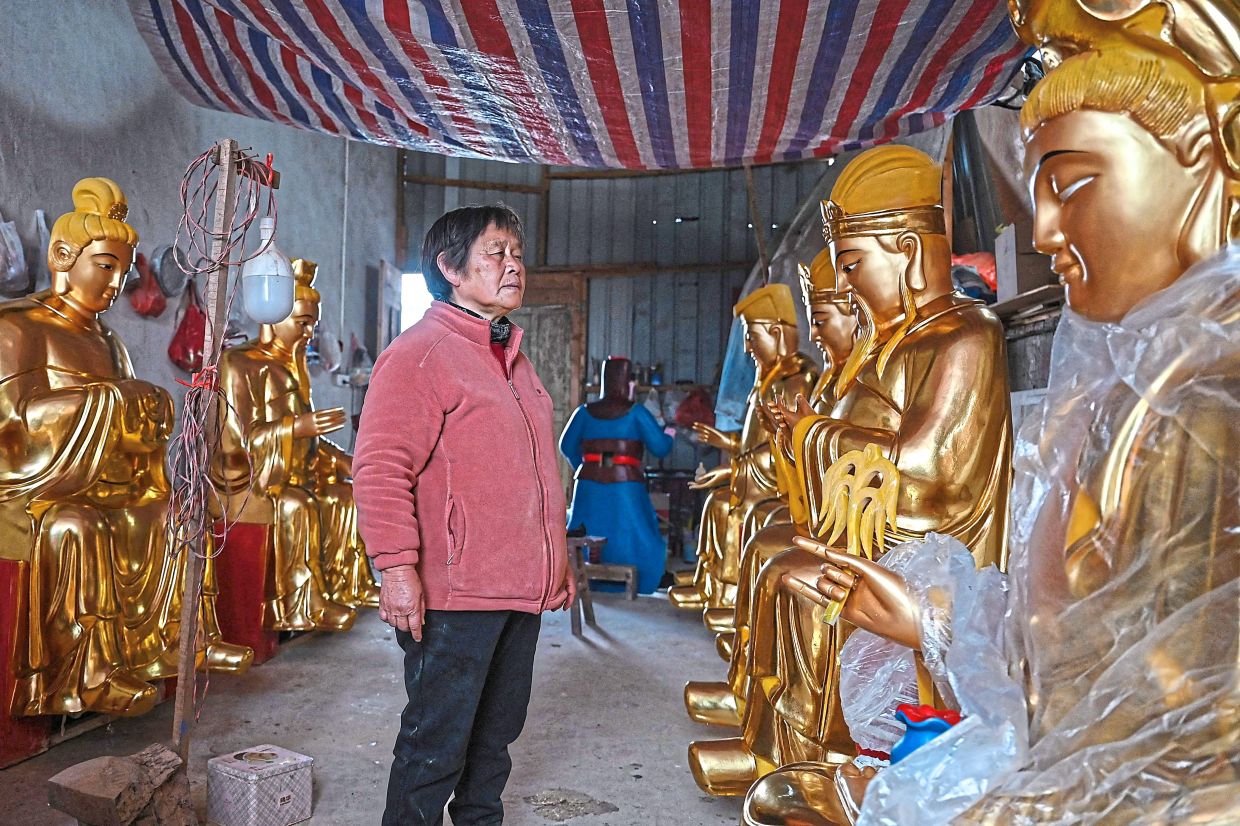 Gu checking on Buddhist sculptures after the gilding process at a workshop at the village in Suzhou, Jiangsu province. — AFP
Zhang said the village had received a boom in orders starting in the late 20th century, after a loosening of tight government restrictions on worship led to a resurgence of interest in religion across the country.
But now, fewer people are commissioning new pieces with the market already “saturated” and most temples around the country already furnished with statues.
Gu, who specialises in carving the heads of Buddha sculptures, proudly showed off the subtle expressions on the faces of a row of gilded figures in her storeroom.
She grinned as she explained that some sculptures of famed Buddhist monk Ji Gong even showed him smiling on one side of his face and frowning on the other. — AFP