

Manitoba’s health-care system is again working with some of the private nursing agencies it cut loose only days ago, after some rural hospitals struggled to fill shifts when it could only rely on a handful of agencies.
This week, the province went back to some of the private nursing agencies it dropped in an effort to find enough nurses to address staffing shortages.
Manitoba cut ties with dozens of agencies Jan. 15 in a bid to reduce the health-care system’s reliance on private agencies, which it argued has squeezed the public system for millions of dollars in higher wages, travel fees and per diems.
It moved forward with just four agencies, which won a competitive bid to work in Manitoba, as opposed to the nearly 80 it used before the change.
Nurses warned that cutting agencies would exacerbate staffing shortages if the public system wasn’t adequately staffed, and after the move was implemented, reports emerged in recent days of hospitals in Swan River and Dauphin struggling to find staff.
Rural hospitals struggled
The emergency department at Swan River’s hospital was running with half the nurses required, with some shifts having no nurses at all.
In Dauphin, a four-bed unit that provides high-level care to patients remains temporarily suspended due to staffing shortages.
“On one hand, I don’t agree with going back to agency, but for the nurse’s sake and for the patient care’s sake, I think there’s nothing else we can do at this point,” said Darlene Jackson, president of the Manitoba Nurses Union.
“Although I find it really unnerving that a government wouldn’t anticipate these issues.”
Health Minister Uzoma Asagwara said the province remains committed to reducing the number of private agencies, and in the meantime, “regions are being supported to manage patient safety in real time,” they said in a statement.
“That includes allowing regions with unique challenges the flexibility to temporarily work with agencies [it dropped], as needed, to ensure safe and reliable care.”
The minister didn’t say how long that flexibility would last.
 Manitoba Health Minister Uzoma Asagwara said extending the use of private agencies temporarily will ensure ‘safe and reliable care’ for patients. (Prabhjot Singh Lotey/CBC)
Dr. Scott Kish, a physician at Dauphin Regional Health Centre, said his hospital received permission to rehire the previous nursing agencies until the end of January. He isn’t sure what would happen afterwards, noting some weekend shifts were staffed entirely with agency nurses.
He said the four-bed unit at Dauphin’s hospital was closed so those nurses could be redeployed to other areas of the facility.
“That has a spillover effect on multiple clinical areas in terms of our ability to provide appropriate stroke services, as well as our ability to manage and take on higher-risk surgical cases that might need a higher level of support than what the ward can offer after surgery,” he said.
Are you affected by the reduction in private nursing agencies? Please email ian.froese@cbc.ca.
Jackson supports a reduction in the number of private agencies, but said she warned the province for months it shouldn’t move forward until there were enough travelling nurses in the public system’s float pool — the government’s answer to private agencies.
That pool now has 630 nurses, up from 280 nurses a year earlier, Asagwara said in an interview.
“Clearly we were not in a position to be ready to go with that, because we had some facilities in crisis with no staff — Dauphin, Swan River, Pine Falls, so areas that were very dependent on agency nurses seemed to be in the worst situation,” Jackson said.
She heard from one nurse who felt re-engaging with the dropped agencies temporarily is the equivalent of putting “a Band-Aid on a hemorrhage.”
Asagwara previously said the province is counting on the nurses who work for the dozens of other agencies to either take jobs with the four chosen firms — Elite Intellicare Staffing, Integra Health, Bayshore HealthCare, Augury Healthcare — or preferably the public system, which includes the float pool.
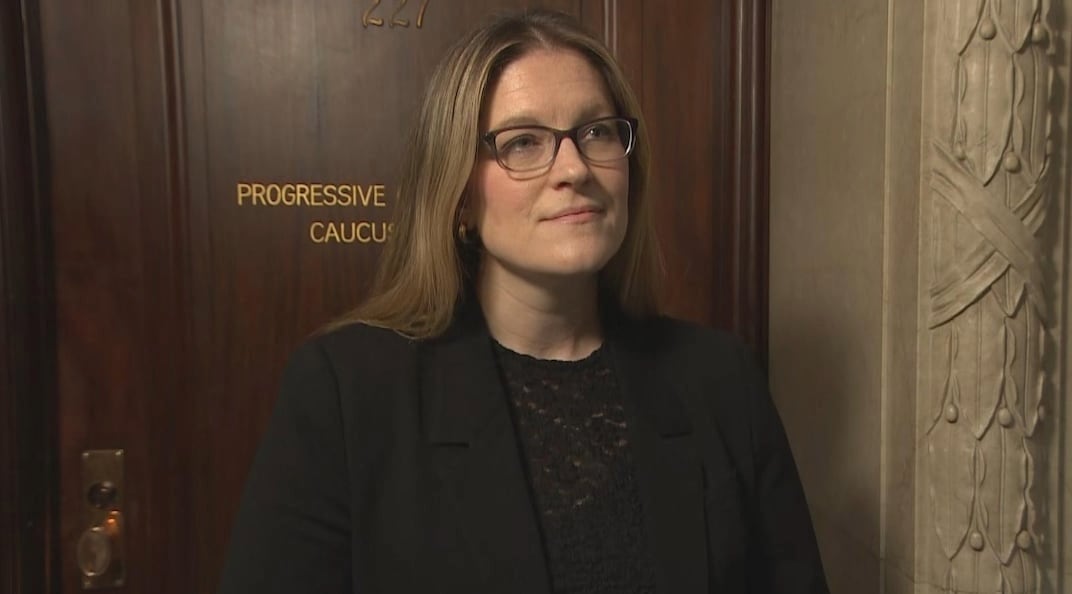 Kathleen Cook, a Manitoba Progressive Conservative MLA and the party’s health critic, said the province should have handled the transition to fewer nursing agencies more gradually to ensure facilities were better prepared for the switch. (Jeff Stapleton/CBC)
Progressive Conservative health critic Kathleen Cook said the government should have anticipated a major change in addressing staffing vacancies would have hiccup.
She said the province should have taken a more gradual approach.
“They could have rolled out this new policy in regions that don’t rely so heavily on agency nurses. And best of all, they could have focused on eliminating those vacancies, on filling those vacancies in Prairie Mountain Health, before they essentially handcuffed the RHA [regional health authority] and took the agency option away from them,” Cook said.
The planned reduction in the number of nursing agencies also resulted in new limits on what nurses can earn for travel.
Shared Health, which oversees health-care delivery in the province, confirmed travelling nurses will no longer be paid a mileage rate on a per-kilometre basis, and travel time reimbursement is capped at a maximum of four hours each way.
The province’s spending on private nursing agencies has soared year-over-year, rising from $26.9 million in 2020-21 to $80 million in 2024-25, Shared Health said.