

If your morning routine is grabbing a coffee before work, it may be taking up a bigger chunk of your budget than you think.
Statistics Canada released the December 2025 Consumer Price Index on Monday, revealing that the inflation rate rose 2.4 per cent compared to the same month in 2024.
According to the data, grocery prices are continuing an upward trend.
“Despite being unchanged month over month, prices for food purchased from stores rose five per cent year-over-year in December,” reads the report.
StatCan found that coffee prices — which increased 30.8 per cent compared to the same month in 2024 — and fresh or frozen beef (16.8 per cent increase) remained the largest contributors to food inflation.

Sunshine Seeds/Shutterstock
The report does note that the acceleration was driven by the temporary GST/HST tax break the government implemented from December 2024 to February 2025.
The report says restaurant food, alcoholic beverages, toys, games and hobby supplies, children’s clothing and some grocery products, like potato chips and confectionery, were affected by the GST/HST break.
“Year over year, higher restaurant prices were the largest contributor to faster growth in the all-items CPI in December 2025,” explains StatCan. “Prices for food purchased from restaurants rose 8.5 per cent in December, compared with a 3.3 per cent increase in November.”
However, coffee has been a major contributor to food inflation for months, as found in earlier StatCan CPI reports.
A report from Loblaw earlier last year shared that a poor growing season and United States tariffs are factors in increasing coffee prices.
kyozstorage_stock/Shutterstock
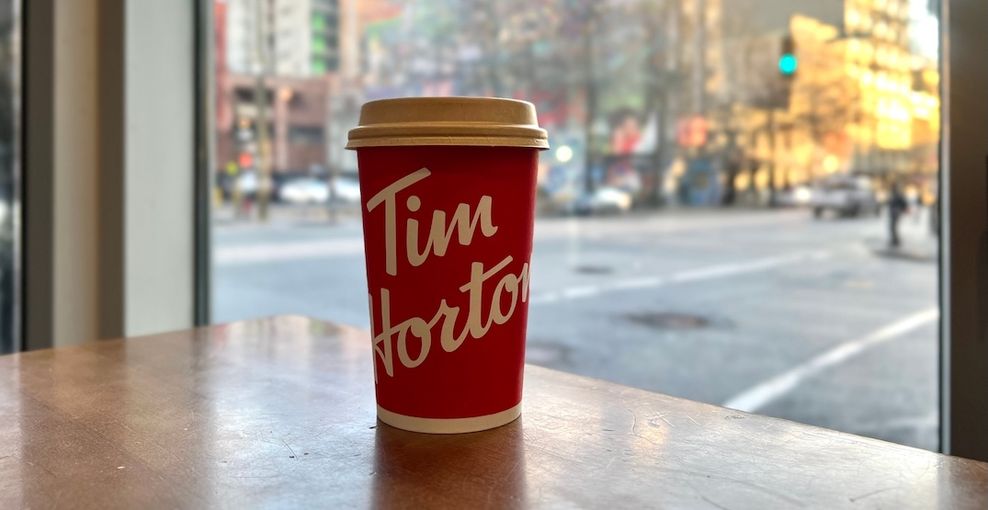
A real-world consequence of this bean inflation is when Tim Hortons raised coffee prices in Canada in October, shocking Canadians across the country.
Dalhousie Agri-food Analytics Lab’s Canada’s Food Price Report (CFPR) 2026 reported that, despite the removal of counter-tariffs by Ottawa in September, it may still take time for lower prices to reflect in grocery stores.
“Commodities with short shelf lives that move through the supply chain quickly will show more immediate decreases, whereas previously tariffed items with long shelf lives, like coffee, will take more time,” explains the report.
“Coupled with the fact that many producers, manufacturers and suppliers are exploring international trade markets outside the U.S., it is unlikely that food prices will see a notable decrease soon.”