
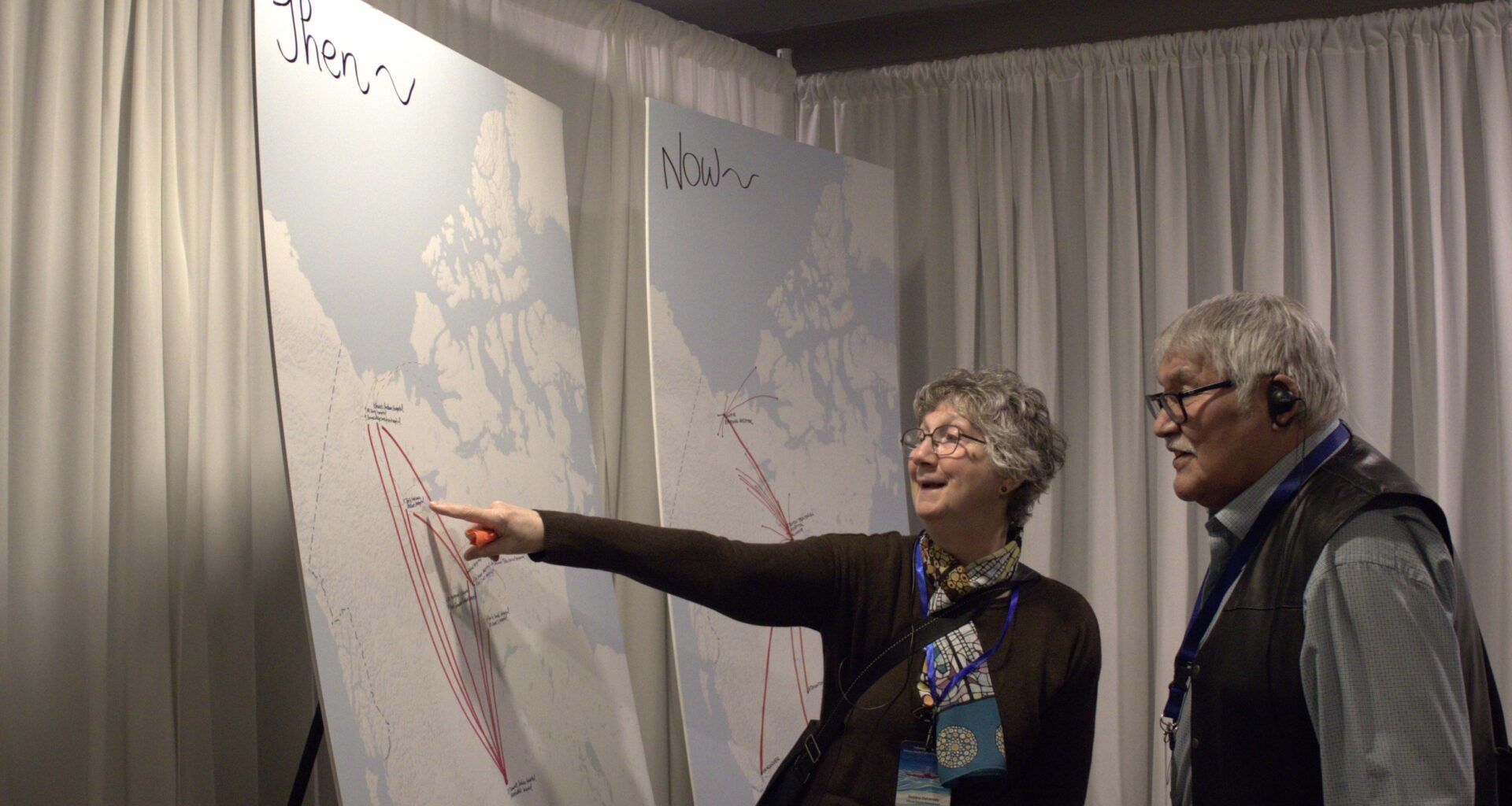
The GNWT has launched an interactive art exhibit at Yellowknife’s Chateau Nova Hotel, focused on cultural safety and anti-racism in healthcare.
The Department of Health and Social Services began developing the exhibit with artists and scholars from across the NWT in December. It is not open to the public, though officials say that could change based on feedback.
According to the department, it is designed to “help leaders and staff understand what needs to change to make care culturally safe and equitable.”
On Tuesday, reporters were invited to take a guided tour of the exhibit, which is part of a primary healthcare summit taking place in Yellowknife until Thursday.
Summit discussions will inform a new healthcare framework set for release this spring.
Advertisement.
Advertisement.
“The summit will create a culturally safe, inclusive space for collaboration and learning. Participants will work together to refine a plan that sets the direction for transforming primary and community health care in the Northwest Territories,” a Tuesday news release stated.
“The summit is about working together with Indigenous governments to improve access to care and make services more culturally safe. It is an important step toward building trust and shaping a health system that meets the needs of residents.”
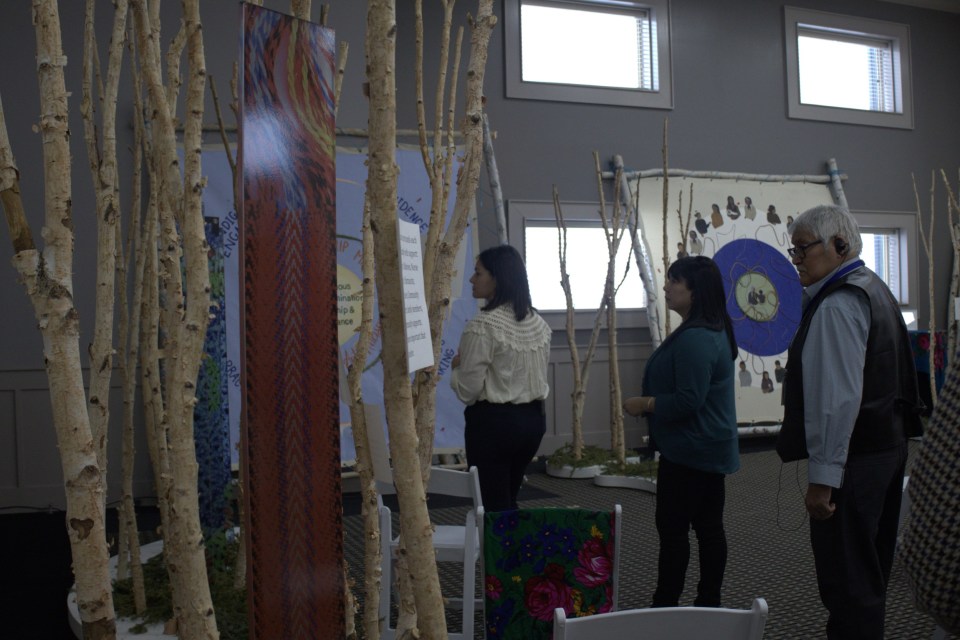
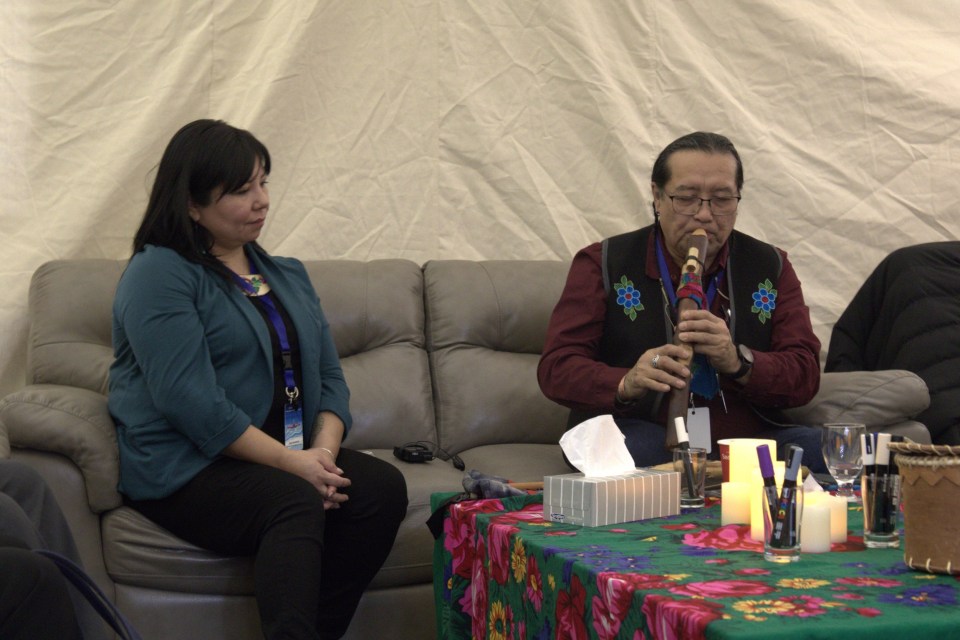 Inside the installation, William Greenland played the flute (bottom) as people toured the artwork. Aastha Sethi/Cabin Radio
The exhibit guides people through rooms exploring colonial history, systemic racism and the future of Indigenous health. After the tour, participants are asked to reflect and make a personal commitment.
Sharla Greenland, based in Inuvik, works as a senior advisor for community and Indigenous engagement at the Department of Health and Social Services’ Community, Culture and Innovation division. She was invited to join the tour alongside Elder Paul Andrew.
Advertisement.
Advertisement.
“There were a lot of aspects of it that came from Gwich’in culture. I really felt grounded walking into the first space where you could smell the spruce boughs,” she told Cabin Radio. “That’s a memory smell from my childhood.”
The first room featured a collection of historical photographs, including one of Greenland’s grandmother, Ellen Bruce, from Old Crow, Yukon.
Greenland spent most of her career as a high school and junior high humanities teacher. After completing her master’s in counselling, she became an advocate for addressing broader needs in mental health and overall well-being.
Greenland believes the exhibit was able to touch on a lot of important teachings.
“Our older generations have gone through the residential school system and there are a lot of those thoughts, too, that need to be broken down,” she explained.
“There is so much need for the reclamation of our culture, as was meant to be taught by our ancestors.”
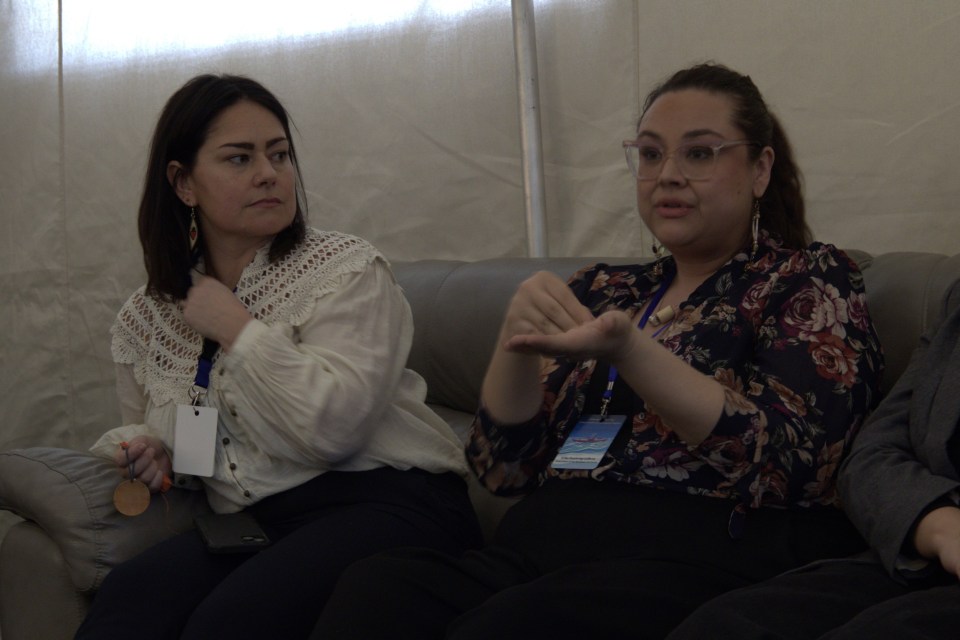 Erika Doehring-Lafferty, right, during a debrief session after touring the exhibit. Aastha Sethi/Cabin Radio
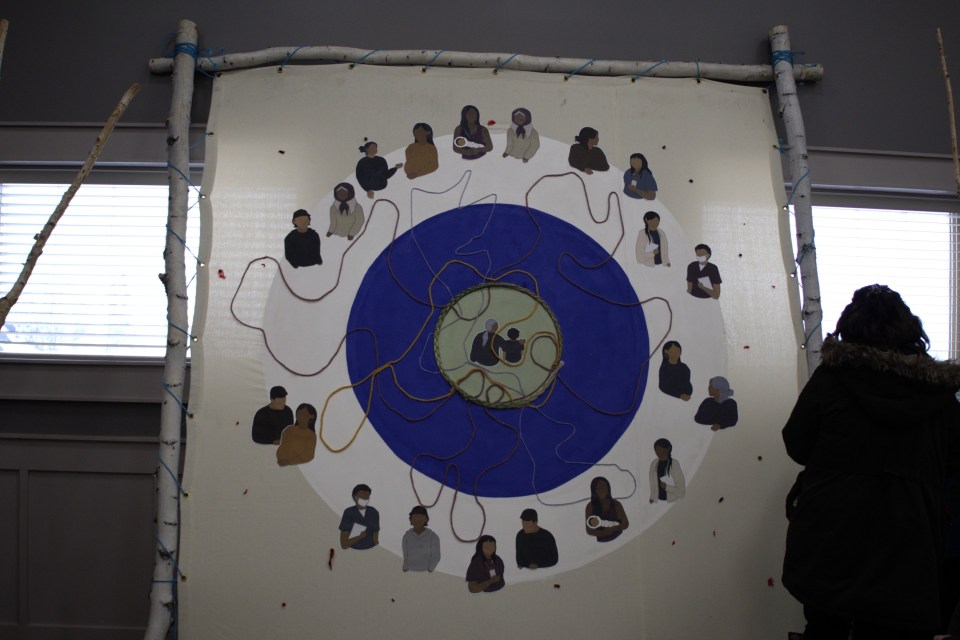 A part of the exhibit. Aastha Sethi/Cabin Radio
During a debrief session on Tuesday, Erika Doehring-Lafferty – a graphic recorder and artists of Gwichya Gwich’in, Dene and German ancestry – explained that systems often lose the memory of their origins, which are rooted in racism, making change difficult.
What starts as one person doing something differently can slowly become normalized, Doehring-Lafferty said, then eventually seen as “the way things have always been.”
Advertisement.
Advertisement.
Trying to change an overworked and under-resourced system is “going to take time,” she said.
“A lot of people, when they hear the word racism, they think of overt racism, bigotry, of obvious things,” said Doehring-Lafferty, “but the system’s been sneakier than that, and so there’s a lot of different beliefs that we’ve inherited.”
Doehring-Lafferty said many people contributed to building and planning the exhibit.
Despite the short timeline from conception to completion, she said, a great deal of time and care went into it.
Related Articles