
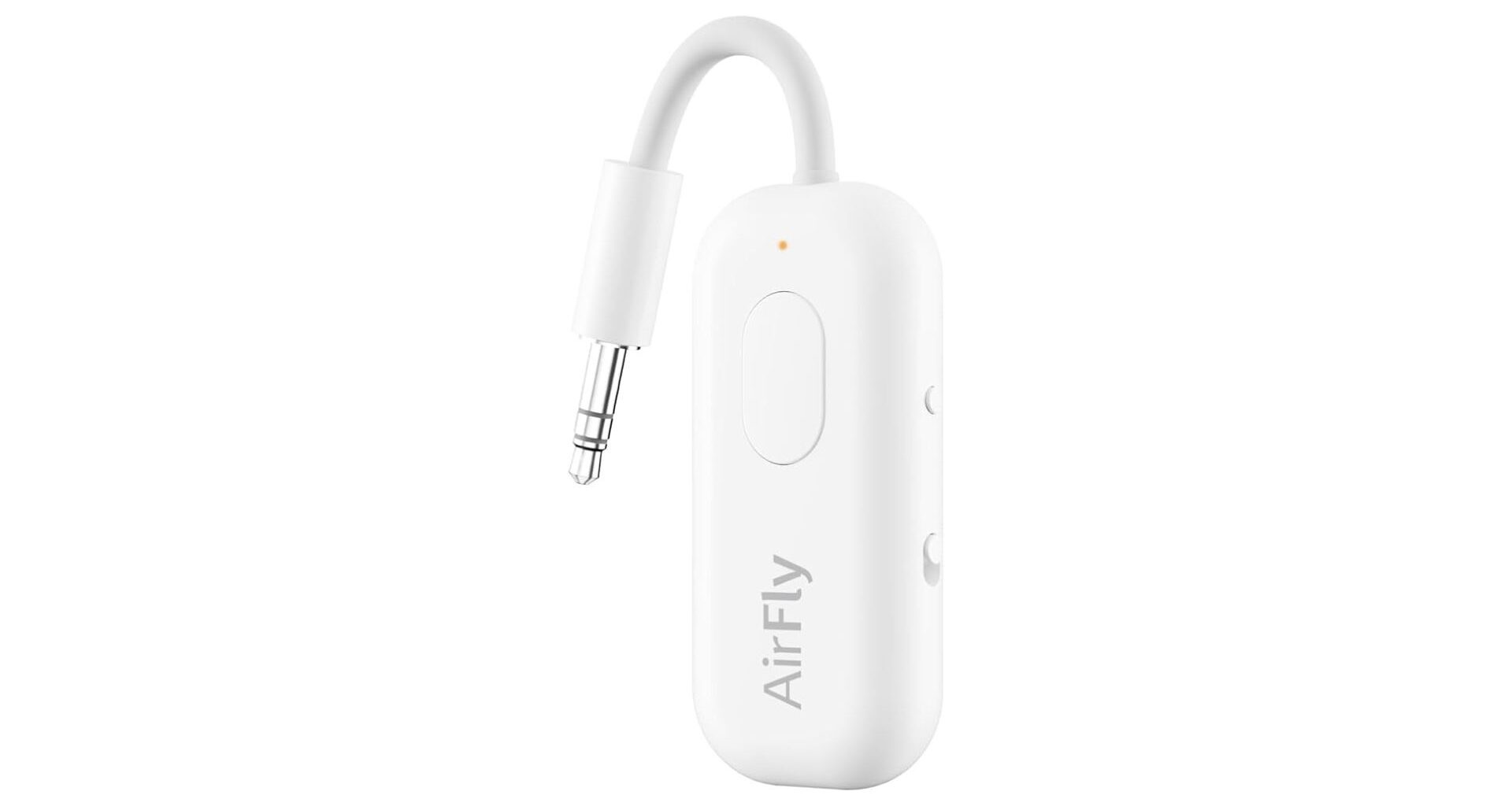
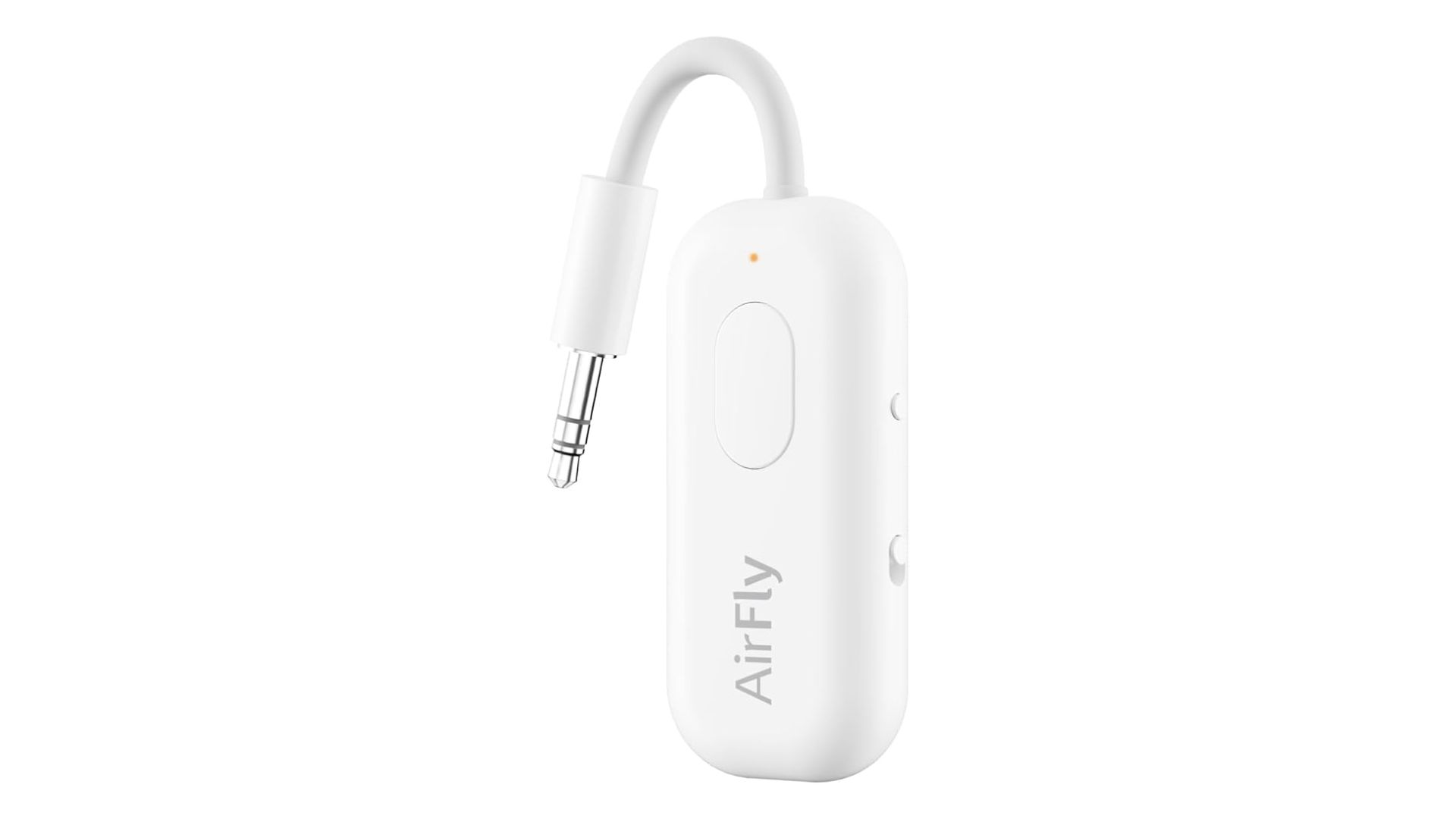
I’ve seen a lot of talk lately about the Twelve South AirFly Pro. For those not in the know, this is a Bluetooth transmitter (and receiver) that allows you to use your wireless earbuds or headphones with devices that only have a 3.5mm headphone jack—most notably, airplane seatback screens. While this sounds handy in principle, many airlines have already upgraded their fleet’s in-flight entertainment systems to include Bluetooth connectivity. The consumer audio market is also increasingly awash with Bluetooth earbuds that include wireless transmitters. This has me wondering: Is the Twelve South AirFly Pro still worth it in 2026?
Do you use a third-party wireless audio transmitter?
0 votes
Yes, I love my Twelve South AirFly Pro.
NaN%
No, my earbuds case does it for me.
NaN%
Many airlines already offer Bluetooth connectivity
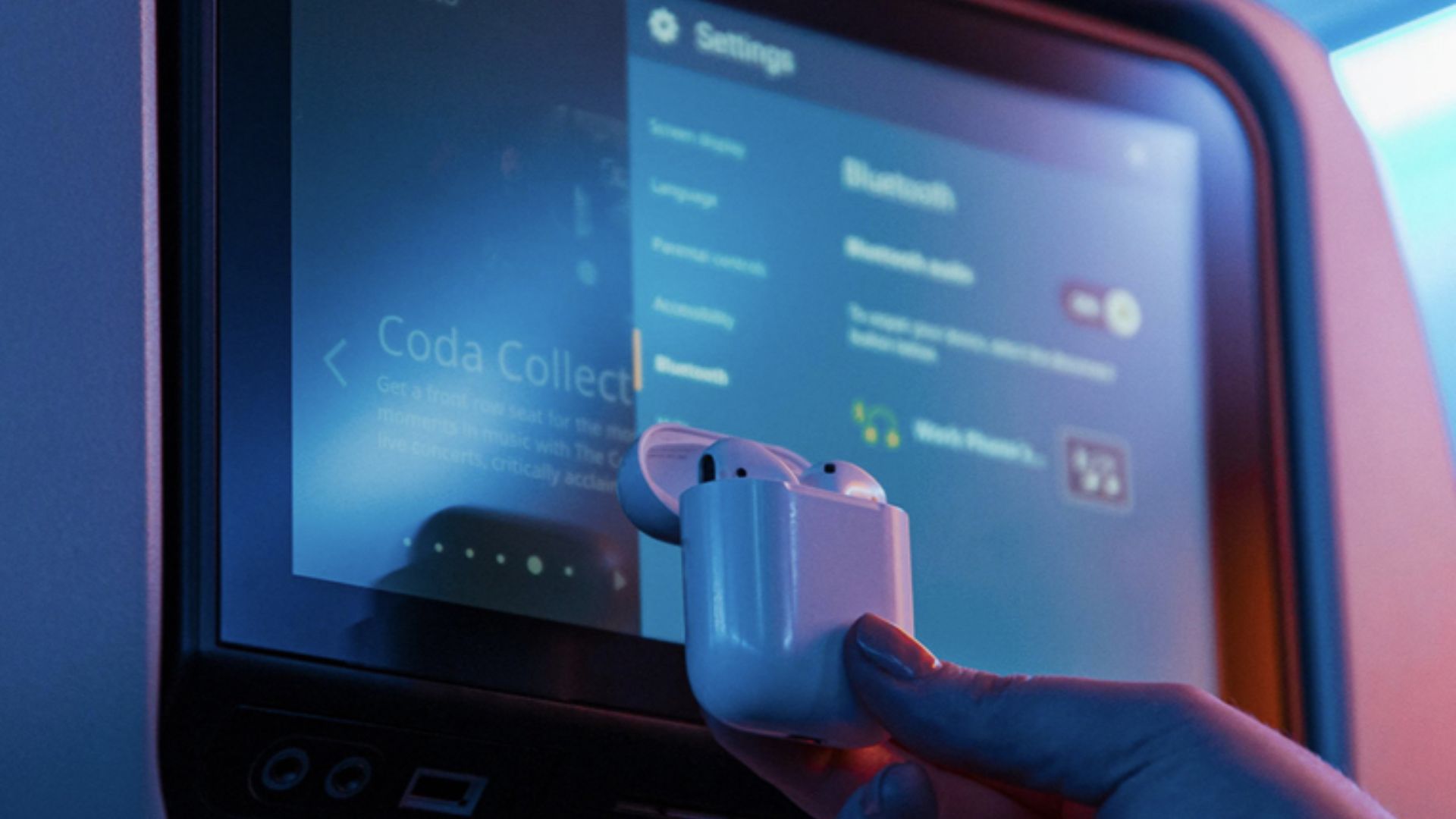
Many US airlines, such as United Airlines, offer Bluetooth connectivity with their in-flight entertainment systems.
In the not-too-distant past, it was commonplace to carry wired headphones through security just so that you could connect to your flight’s entertainment system. Either that, or you’d have to rip open those wasteful, single-use plastic ones offered by airlines. More recently, though, passengers have opted to try devices that allow their personal wireless headphones to connect cordlessly. These Bluetooth transmitters are compact, inexpensive, and reusable.
However, many airlines have upgraded their fleets to include more sophisticated in-flight entertainment systems. For example, United Airlines first introduced Bluetooth connectivity onboard in July 2021. This has now expanded to over 300 new and retrofitted aircraft, with wireless audio now available on seatback screens in all cabins on United’s new Boeing 737 MAX 8 and MAX 9 planes, as well as some Airbus A319 models. The company plans to equip more than 800 of its jets with Bluetooth capabilities by 2032.
Delta Air Lines announced Bluetooth expansion among its fleet at CES 2026.
United isn’t the only airline expanding its Bluetooth offerings, either. Delta announced during a keynote presentation at the Las Vegas Sphere during CES 2026 that it plans to roll out Bluetooth connectivity to more aircraft and cabins throughout the year. In particular, it will install Bluetooth on future Airbus A350-1000 jets, in addition to its A321neos planes in mid-2026. Delta has also planned eventual deliveries for the yet-to-be-certified Boeing 737 MAX 10. Bluetooth is currently only available in the first-class cabin of its Airbus A321neo jets.
American Airlines also posted a press release in April 2024. This stated that customers traveling onboard its Boeing 787-9, 777-300, and Airbus A321XLR aircraft in the Main Cabin and Flagship Suite will receive Bluetooth connectivity. The company claims its new primary amenity kit is available on more than 300 of its international and transcontinental flights. Even without a first-class ticket, more and more headphone manufacturers are developing charging cases that wirelessly transmit audio.
More earbuds have wireless transmission
Christian Thomas / SoundGuys
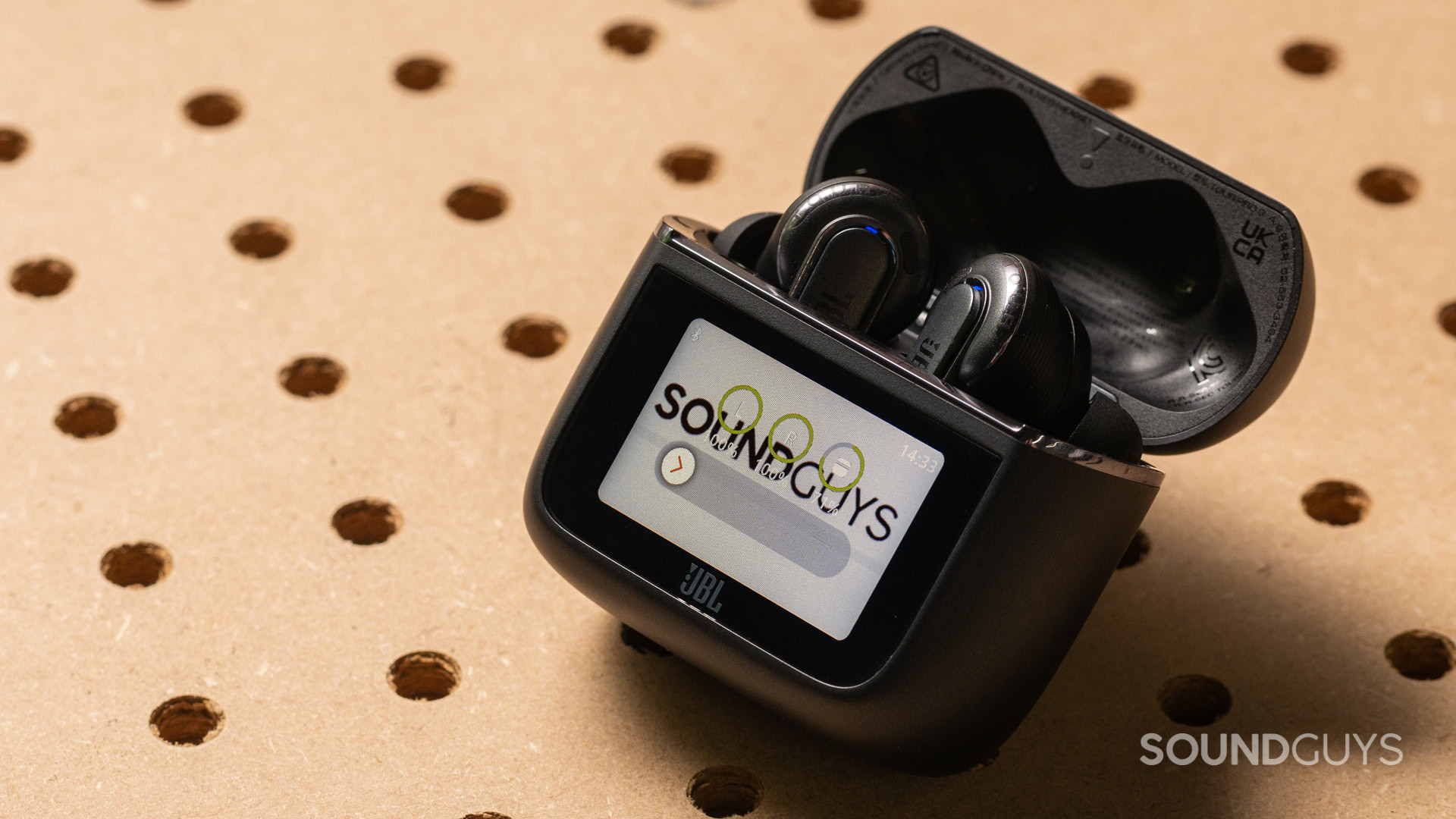
The Smart Charging Case can handle most of the app’s functions directly from the case via its touchscreen.
Take, for example, the JBL Tour Pro 3. These earbuds ship with a transmitter case, which wirelessly sends audio from devices with a 3.5mm headphone jack directly to the buds. You even receive a USB-C to 3.5mm cable in the packaging to connect your analog device to the Smart Charging Case, and you shouldn’t need an amplifier to boost the volume. The JBL Tour Pro 3 case also supports Auracast broadcasting, adding future-proof functionality that far surpasses regular Bluetooth pairing.
JBL, Jabra, LG, and Bowers & Wilkins manufacture earbuds with transmitter cases.
High-end audio brand Bowers & Wilkins also designs earbuds with wireless transmission capabilities. For example, the B&W Pi7 and Pi8 buds both have transmitter cases that connect with a 3.5mm to USB-C cable. However, the latter supports wireless data transfers over aptX Adaptive. This makes it one of the first products that allows aptX audio streaming between an iPhone and wireless earbuds.
These earbuds, and more, have an initial retail price of over $229. However, when you consider that you’d be spending $50 or more on a separate Bluetooth transmitter for your current buds, that isn’t bad going.
An extra item to carry around in your pocket
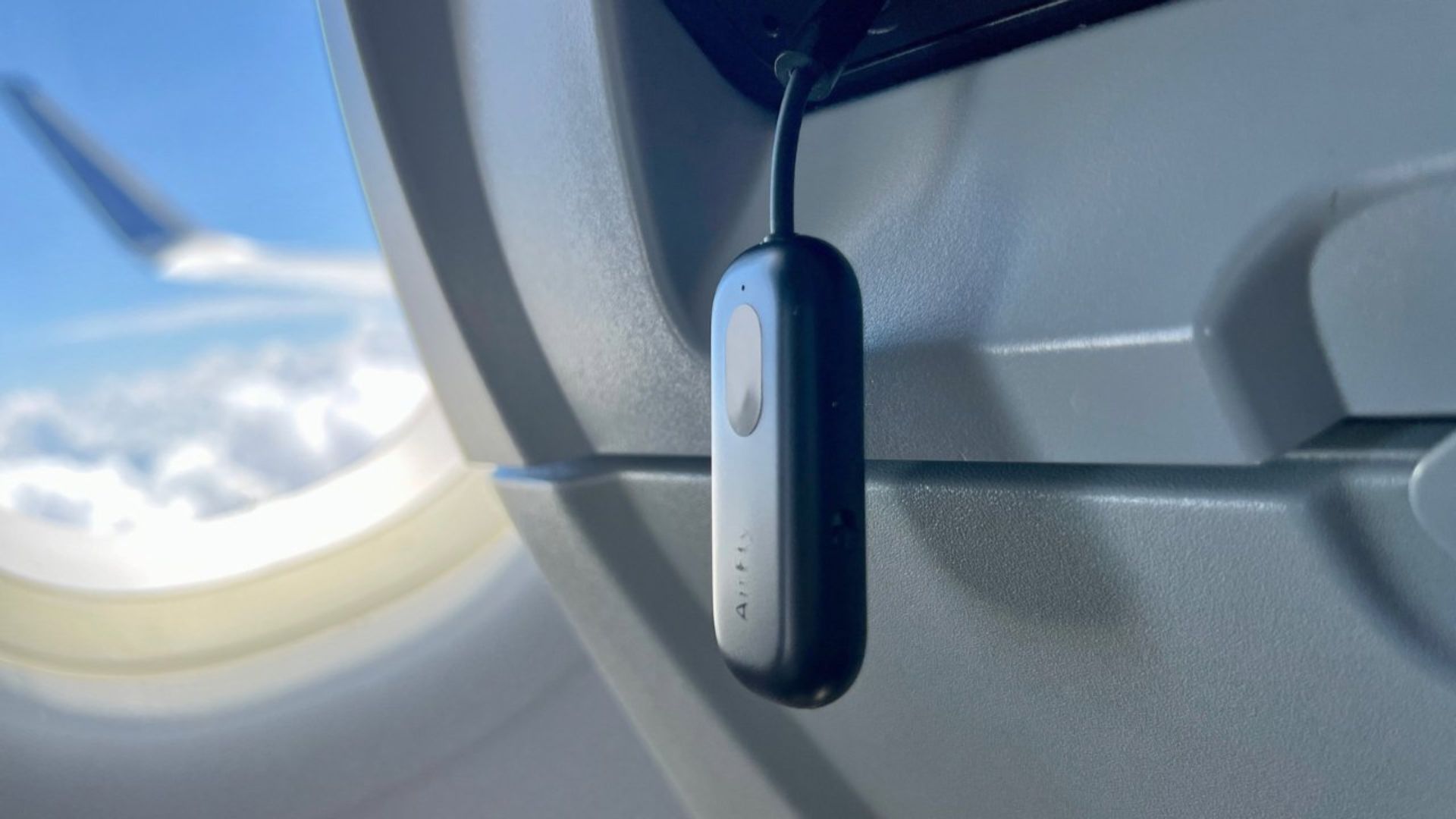
The Twelve South AirFly Pro weighs 18g and dangles freely.
In an ideal world, all headphone manufacturers would implement ubiquitous wireless transmission capabilities into their charging cases. However, until that day comes, fans of Sony, Apple, Samsung, and other major headphone manufacturers must purchase separate Bluetooth transmitters to enjoy wireless connections with older analog devices.
On the plus side, the Twelve South AirFly Pro features notable benefits in addition to basic pairing. For example, the company claims that it lasts over 16 hours per charge, which should be more than enough for most intercontinental flights. It can also be topped up via USB-C, and it maintains wireless connectivity while charging, so that you don’t miss a beat.
The Twelve South AirFly Pro supports Hi-Res Bluetooth codecs, including aptX.
The Twelve South AirFly Pro supports Hi-Res Bluetooth codecs, including aptX and aptX Adaptive. Like the Bowers & Wilkins Pi8, this can deliver superior wireless audio quality between iPhones and earbuds. According to Twelve South, the AirFly Pro also has a Bluetooth range of up to 10 meters. This is ideal if you plan to move about the cabin to stretch your legs, but don’t want to miss a line from your favorite film.
Perhaps most enticing is that the AirFly Pro supports simultaneous connections. So, if you and your friend have separate headphones, you can use them both to tune into the same wireless audio feed. This is ideal for families, as you no longer need to jostle one pair of headphones between members watching the same film. The device can also receive audio, which is ideal when you want to send audio from your phone to the aux input of your car speaker system. All in all, there remains room in the market for third-party wireless audio transmitters. The question is, for how long?
Thank you for being part of our community. Read our Comment Policy before posting.