
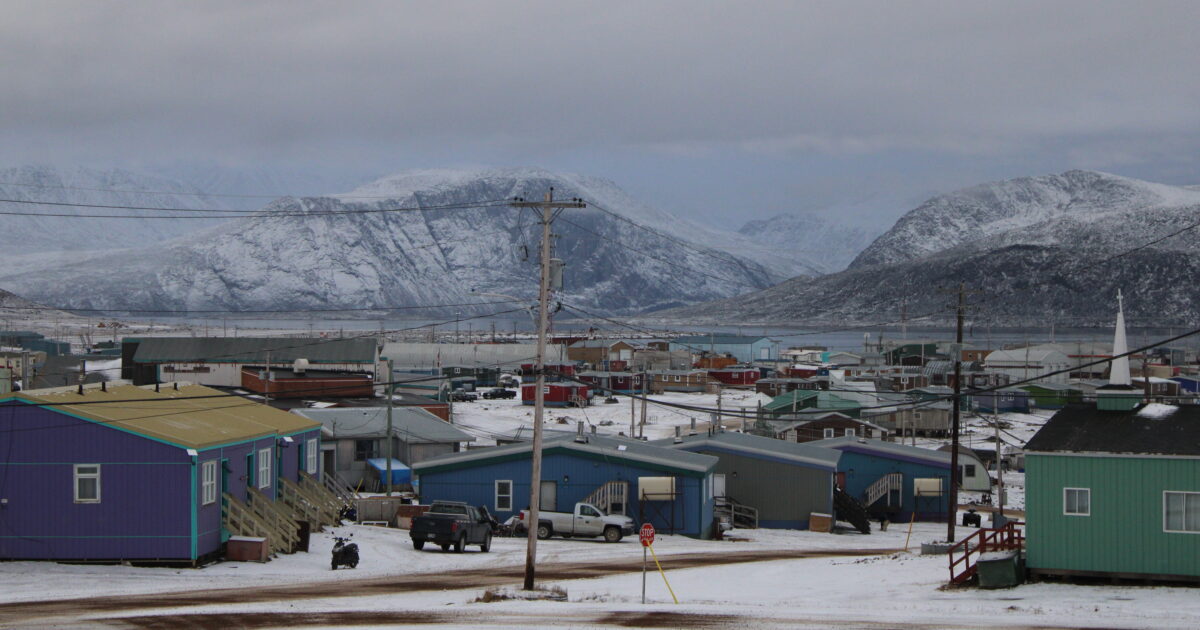
$350-million Qikiqtarjuaq port is shovel-ready; backers say it will be completed by 2028
U.S. President Donald Trump’s threats against Greenland make Arctic “nation-building” a more pressing need for Canada, says a proponent for the Qikiqtarjuaq deepsea port.
“We see the value in enhancing Canada’s Arctic sovereignty and security given the current geopolitics,” said Jeff Maurice, vice-president of partnerships at Arctic Economic Development Corp. in a phone interview Monday.
In recent weeks, Trump has cited national security needs as he ramped up his threats to acquire or annex Greenland, a self-governing territory of Denmark with a mostly Inuit population of approximately 56,000 people.
In response, several countries that oppose Trump’s plan and which are members of the NATO military and political alliance — which the U.S. also belongs to — have sent troops to Greenland for a military exercise. Canada is reportedly considering sending a small number of troops as well.
Because of the uncertainty caused by Trump’s threats, Canada needs to understand the “important strategic value” of the proposed Qikiqtarjuaq port, which sits at the entrance to the Northwest Passage and across from Greenland’s shore, Maurice said.
The planned port is “shovel-ready” with construction expected to start in the first week of June with the arrival of a sealift ship and icebreaker carrying heavy construction equipment, he said.
The $350-million port will include a 75-metre wharf, a crane for offloading cargo, security and operations offices, and a 275-metre-long access road. It will be located along the western shoreline of Broughton Island about one kilometre south of Qikiqtarjuaq.

It is set to be built and ready for operation by 2028 — earlier than a previously announced opening date of 2030 — making Qikiqtarjauq one of Baffin Island’s main fishing hubs.
With an increased focus on Arctic security and sovereignty, the port has potential to become a northern “support hub” for the Canadian navy, said Maurice.
“I think it offers an immense opportunity for Canada and the Department of National Defence and Canadian Coast Guard, as potential future anchor tenants for the port,” Maurice said.
He said port proponents are in “conversation” about the navy’s needs in the region.
The Arctic Economic Development Corp. and Qikiqtaaluk Corp., the business arm of Qikiqtani Inuit Association, inherited the project from the Government of Nunavut in September 2025.
So far, $53.4 million of the $350-million price tag has been secured — $13.3 million from the Nunavut government and $40.1 million from the federal government.

The project has applied for a $150 million investment from the federal $1-billion Arctic Infrastructure Fund. The rest could come together from a Canada Infrastructure Bank loan and private investments, Maurice said.
Qikiqtarjuaq has advocated for the long-promised port for decades due to its potential to bring new jobs to the community.
It has recently made the list of “nation-building” projects compiled by Nunavut Tunngavik Inc. and the Nunavut government, along with the Iqaluit hydroelectric project, Kivalliq hydro-fibre link and Grays Bay road and port.
“We’re very excited about,” Maurice said. “This is going to have huge economic, spin-offs for the community.”