
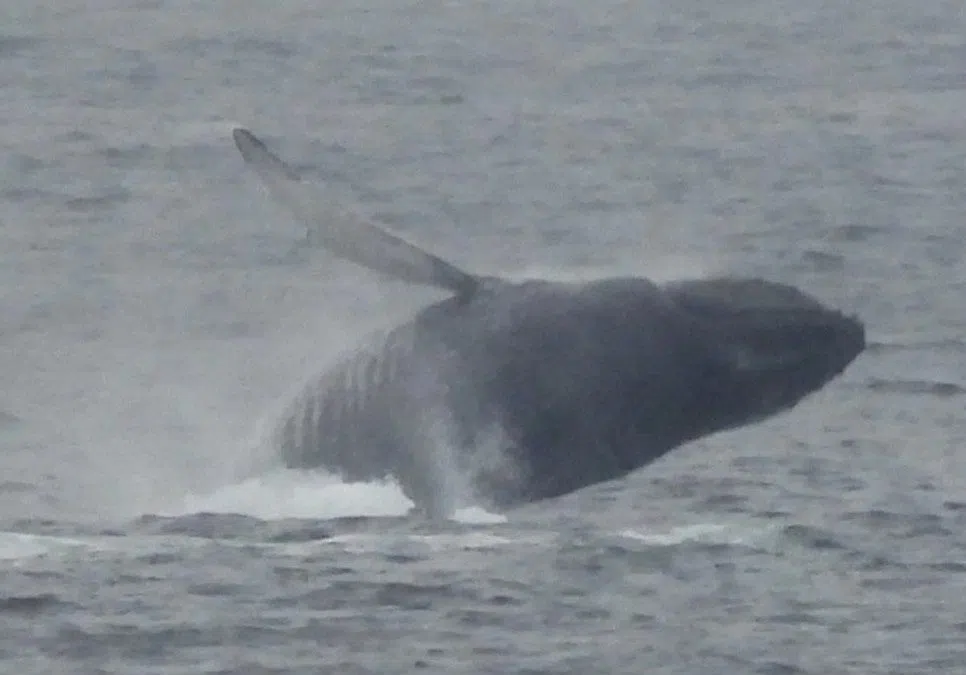
A visual artist with a YouTube channel with local/transient killer whales and humpback whales, Zavelta is part of a growing community tracking whale movements on eastern Vancouver Island.

He said keeping tabs on whale watch vessels and coordinating real-time reports through several Facebook groups makes it much easier to be an effective onshore whale watcher.
“We get in place ahead of time to be able to set your tripod, camera, binoculars and just wait for them and watch them.”
Zavelta often tracks whales from Dodd Narrows via Cable Bay Trail, then follows them heading northward at popular lookouts like Stephenson Point, Pipers Lagoon Park and Neck Point Park.
“Dodd Narrows is the most amazing place to watch them, humpbacks or orcas, because you can see them 10 meters from you. After that you just have to follow them, you just have to drive.”
Fast-growing groups like Neck Point Whale Watch, have thousands of participants, with constantly updated locations of whales.
A statement from Fisheries and Oceans Canada (DFO) outlined surveys in the Strait of Georgia since 2020 were launched to estimate abundance and distribution patterns of whales and porpoises in the context of increased shipping traffic and human activities.
“Humpback whales in Canadian Pacific waters were severely depleted by commercial whaling until 1967 and were mostly absent from the Salish Sea as recently as 2004. Humpback whales have now reoccupied this historical habitat, where they are known to feed on krill and herring,” the DFO statement to NanaimoNewsNOW read.
Humpback whale populations in Canadian Pacific waters rebounded to over an estimated 400 between Vancouver and the western end of the Strait of Juan de Fuca, according to the DFO.
Previously known to migrate to warmer breeding grounds off Hawaii and Mexico during the winter, local humpbacks can be spotted year-round in the Strait of Georgia.
Humpback whale sightings are least common locally in February and March, the DFO statement noted.
Zavelta believes the decision for humpbacks to stay in local waters is also swayed by females with young calves and adults not ready to breed.
“They just stay in our waters the entire winter, and if the water gets too cold, they move south, but if the water is persistent in a constant temperature, they stay.”
With increased reports of regional whale sightings, Zavelta said it’s important to spread the message of limiting hazards for whales.
He said increasing incidents of whales struck by boats and getting tangled in fishing gear are concerning.
“We see every year all these private boats breaking the law. You can tell when it’s by accident because they didn’t see them or when it’s absolute abuse,” Zavelta said.
Regulations and advice from the DFO for boaters pertaining to whales can be found here.
Follow us on Facebook. Join Everything Nanaimo on Facebook and stay connected with everything happening on central Vancouver Island.
Follow us on: Twitter (X) | Bluesky | Facebook