
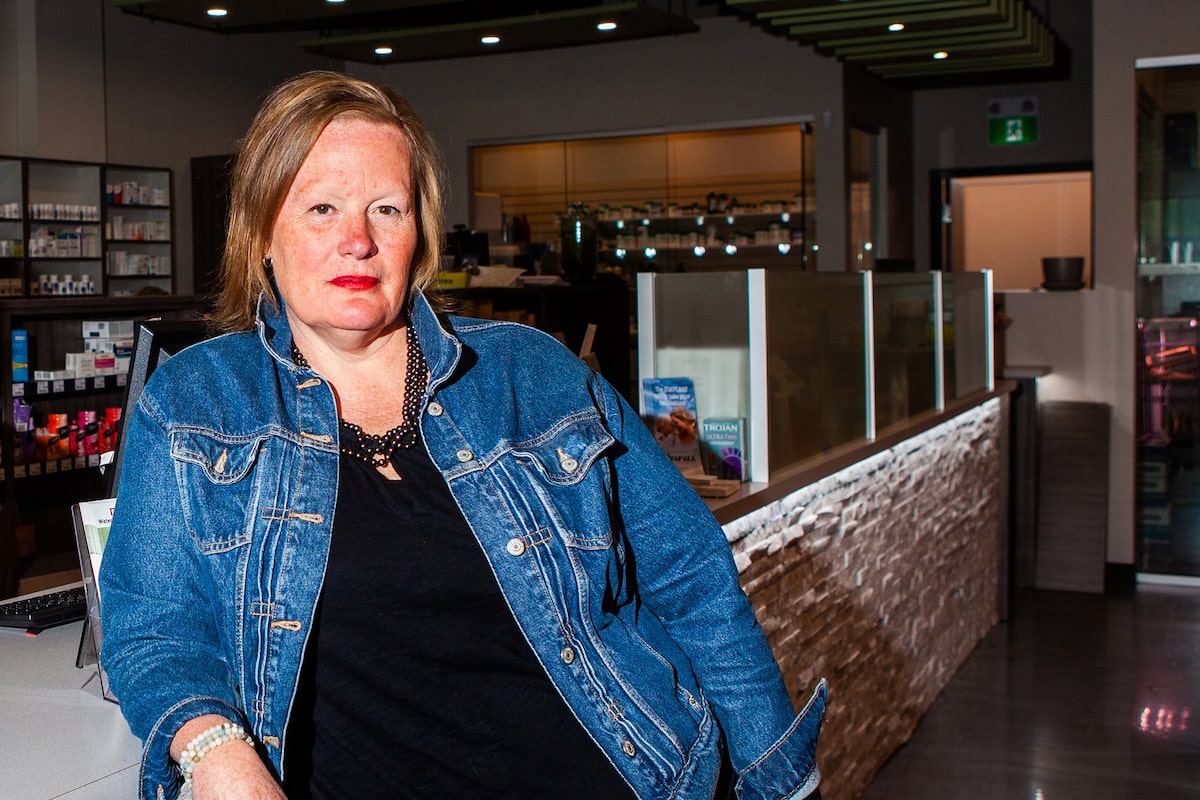
Ontario teacher Amy Miller was told she would lose coverage for a drug she relies on to manage a painful condition unless she filled her prescription with a pharmacy owned by the Ontario Teachers Insurance Plan.Sarah Palmer/The Globe and Mail
A disciplinary panel of Ontario’s pharmacy regulator has dismissed a complaint about a specialty-drug pharmacy created for the Ontario Teachers Insurance Plan that takes away teachers’ choice of where they fill prescriptions if they want to keep their drug coverage. But the decision in favour of OTIP’s pharmacy, MemberRx, goes directly against the regulator’s own zero-tolerance position against such deals, advocates say.
A teacher, Amy Miller, first submitted her complaint to the Ontario College of Pharmacists in August of 2024 against three pharmacists who are directors of MemberRx. Ms. Miller was told she would lose coverage for a drug she relies on to manage a painful condition unless she filled her prescription with MemberRx.
The complaint alleged professional misconduct because the pharmacists had, among other actions, struck “an agreement that restricts a person’s choice of pharmacist without their consent.”
The decision reveals gaps in the regulation of controversial deals known as “preferred pharmacy networks,” or PPNs. These agreements between insurers and pharmacies dictate where plan members can receive their drugs. The college itself issued a zero-tolerance statement on PPNs in the summer of 2024, stating that such models present a “potential risk of harm to patients.”
Inside the $2-million loophole that lets corporations own pharmacies in Ontario
“I don’t know why they would have a zero-tolerance policy, and then not be able to enforce it,” said Justin Bates, chief executive officer of the Ontario Pharmacists Association (OPA). He added that the decision in Ms. Miller’s case was “inconsistent” with that policy and “disappointing.”
Late last year, Ontario announced it would pass a new law banning such exclusive deals. But regulations are still under development, and they would apply to insurers rather than pharmacists. The directors of MemberRx all argued during the complaint-review process that the appropriate venue for Ms. Miller’s complaint was the Ontario government’s consultation on that law, and not the college.
The decision of the college’s disciplinary panel, issued on Jan. 14 and obtained by The Globe and Mail, concluded it would take no action against the MemberRx directors. The panel noted that it has no jurisdiction over PPNs, and that many of the issues raised by the complaint “are matters of policy rather than professional regulation.” It also wrote in the decision that “there is currently no legislation or other mechanism” prohibiting pharmacists from practising at a PPN pharmacy.
“I think that’s a cop-out,” the OPA’s Mr. Bates said.
“While we cannot comment on the specifics of this confidential investigation, we recognize that the complainant’s experience reflects broader concerns about the impacts of closed Preferred Provider Networks (PPNs) on patient care,” college spokesperson Nancy Schlomer wrote in a statement to The Globe, adding that the college continues to contribute to the government process to develop regulations.
Ms. Miller takes a specialty drug to manage her ankylosing spondylitis arthritis, a condition characterized by painful inflammation of the spine. The drug, Humira, costs more than $30,000 a year – an expense she cannot afford without her insurance coverage.
Health Canada considering using decisions of foreign regulators for some drug approvals
In 2023, OTIP informed its plan members that they would have to use MemberRx exclusively in future in order to maintain coverage for some drugs. Then, in the spring of 2024, OTIP informed Ms. Miller she must switch to the pharmacy.
She filed the complaint with the college after requests to remain with a local pharmacist she trusts to manage her condition were denied. The OPA was able to help Ms. Miller secure third-party compassionate care coverage while she filed her complaint. Now, she only has about 40 days of medication left, but the OPA says it will work to help her secure continued access to it.
“Pharmacists are a key point of contact in our health care,” Ms. Miller said, adding that MemberRx would not keep track of the full scope of her medications the way her local pharmacist does. “That, to me, is invaluable.”
MemberRx is a new type of model called a “plan sponsor pharmacy,” which is owned by the insurance plan itself. Similar to a PPN, it directs members exclusively to a designated pharmacy.
MemberRx was designed and set up for OTIP by a Toronto-based consultancy called Cubic Health Inc., which charges OTIP a fee for its services, including hiring pharmacy staff and establishing wholesale relationships. All three of the directors of MemberRx who were named in the complaint – Xiaofei Huang, Bishoy Khalil and Michael Sullivan – also hold paid leadership positions at Cubic. But they denied that this was a conflict of interest, because any profits from MemberRx are directed back into the plan.
Complaints to the college are reviewed by a panel of pharmacy professionals and members of the public. The panel in this case found there was “insufficient information” demonstrating a conflict of interest.
Through their lawyers in response to the complaint, the pharmacists noted that the Employee Life and Health Trusts of the Ontario teachers’ unions “have a fiduciary obligation to balance providing comprehensive coverage in a sustainable manner and have concluded that a PPN model is necessary to achieve these objectives by reducing the cost of the coverage provided.”
New pet pharmacies could help owners manage rising costs as access opens up
“We have confidence in the professionalism and care demonstrated by MemberRx throughout this process,” Mr. Sullivan, Cubic Health’s CEO and a MemberRx director, wrote in a statement to The Globe.
“In its review, the Panel found no evidence that MemberRx limited a patient’s choice of pharmacist, disrupted continuity of care, or placed business interests ahead of the patient’s wellbeing,” he wrote.
The decision also noted that Ms. Miller initially signed a consent form to transfer her prescription to MemberRx after she first received the communication from OTIP in 2023.
“Telling someone they would have to pay $33,000 for a quality-of-life-altering medication, that’s not free consent,” said Ms. Miller’s lawyer, Aly Haji. Ontario law specifies that consent must be voluntary and free from duress, he added. “That is duress.”
Mr. Haji noted that the regulator’s zero-tolerance position on PPNs should apply to models that restrict patient autonomy.
“What they did is completely incongruent with that.”
Ms. Miller plans to appeal.