
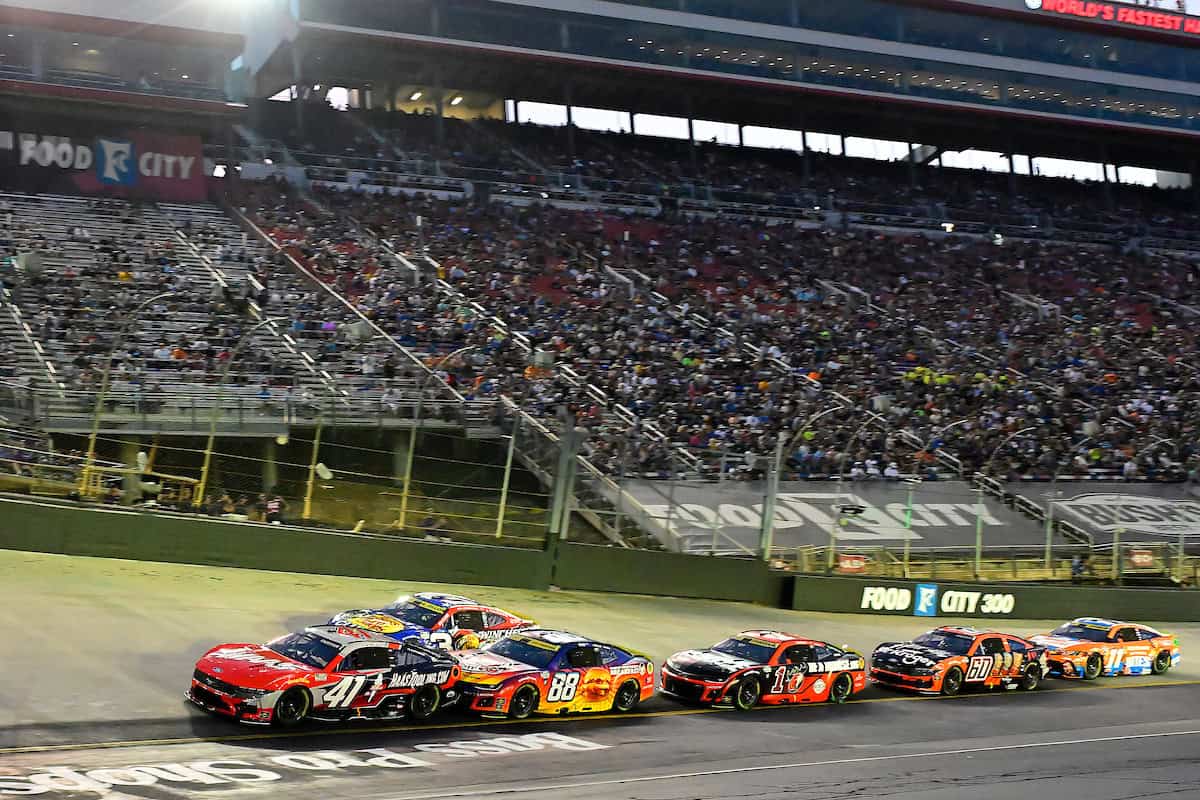
Back in October, NASCAR announced that it plans increase the horsepower of its Cup Series cars on select tracks to 750 horsepower for this season.
To many, this news was heralded as a step in the right direction, but just how much of a difference will the jump make? That’s a question that begs for some number crunching.
The increase will be in effect at 18 different tracks this season, including every road course and any oval shorter than 1.5 miles. That means five of the first eight races of the season will see the horsepower bump and new accompanying package, giving an early glimpse into just how much difference the increase can make.
Check out Frontstretch‘s top 10 NASCAR storylines for the 2026 season here
The increase is substantial, to say the least. The old package only put out 670 hp, and on a car as light as the Next Gen, that sort of increase can make a world of difference in lap times.
Will the drivers feel a very significant change? Probably not initially. The Next Gen car isn’t the rattling, shaking machines many fans grew up with. However, during a preliminary test session at North Wilkesboro Speedway earlier this month, drivers provided insight into an issue that has thus far plagued the Next Gen platform: inconsistent tire wear.

Is NASCAR’s Horsepower Increase a Win or Flail at Pleasing Fans?
“At 10 o’clock this morning, if you would have told me there was a difference in motor changes, that’s the only way I would have known,” Josh Berry said. “There’s just a lot of grip, and it’s hard to tell [a difference].”
Those aren’t encouraging words from one of the sport’s most revered short-track savants.
NASCAR’s biggest issue at short tracks thus far has been due to a litany of factors, with horsepower being one of them, but not the end all, be all. Horses under the hood don’t always automatically lead to great short-track racing. I’ve seen everything from micro sprints to 410 non-wings run excellent short-track races.
The biggest issue limiting NASCAR’s short-track package in the Next Gen era remains the platform itself. While it is still light enough that 750 hp will make a stark difference, the car’s overreliance on aerodynamics, weight and independent rear suspension remains unchanged to this point.
The fans have never once griped that the car is too slow on short tracks (superspeedways is an argument for another day). Instead, they’ve said all along that the cars simply cannot pass on short tracks without having to forcibly move another driver out of the way.
When it comes to the aerodynamics of the Next Gen, they actually work quite well when the cars have the necessary space between them to make a difference. On short tracks, though, this space is nonexistent. This causes the cars to stall out behind one another (in an aerodynamic sense) and allows the aerodynamics to have too much influence on cornering, even at low speeds.
In the playoff era, no less, this created a short-track experience that relied on restarts and bump-and-runs to gain positions, rather than on long-run race craft. Inconsistent tire falloff didn’t help matters by any stretch of the imagination, but that’s easily remedied by Goodyear simply bringing a better tire, and it can be done.
Now, I’m not going to sit here and tell you that I have all the answers. However, if there was one thing I wished fans could see during offseason testing, it was a Next Gen car with a solid rear axle and the 750-hp package.

Top Storylines Entering 2026: How Will Brad Keselowski Bounce Back From Injury?
Am I asking for too much? Probably. However, if NASCAR wants to fix its short-track problem, getting rid of independent rear suspension is an excellent next step. It would increase tire load variation, require drivers to pedal the car a bit more carefully and offer a bit narrower sweet spot, necessitating teams to choose between long- and short-run speeds.
That being said, this story is about the 750-hp package itself. I’ve done a lot of talking up to this point, but the reality is this: the package alone will not and cannot be a silver bullet to fix NASCAR’s short-track issue. Can it potentially make the racing better? Sure. However, with the state of the Next Gen, extra horsepower is neither going to feel that different nor race that differently, as far as the drivers are concerned.
A lot of good things have happened for the sport this offseason, and there are some exciting moments on the horizon. The 750-hp package is a step in the right direction, but it might require a leap for NASCAR to fix one of its staples in short-track racing.


Tanner Marlar is a staff writer for Sports Illustrated’s OnSI Network, a contributor for multiple automotive news outlets, an award-winning sports columnist and talk show host, and a PhD. student at a premier college of media and mass communication. Tanner began working with Frontstretch in 2022, covering the O’Reilly Auto Parts Series.