
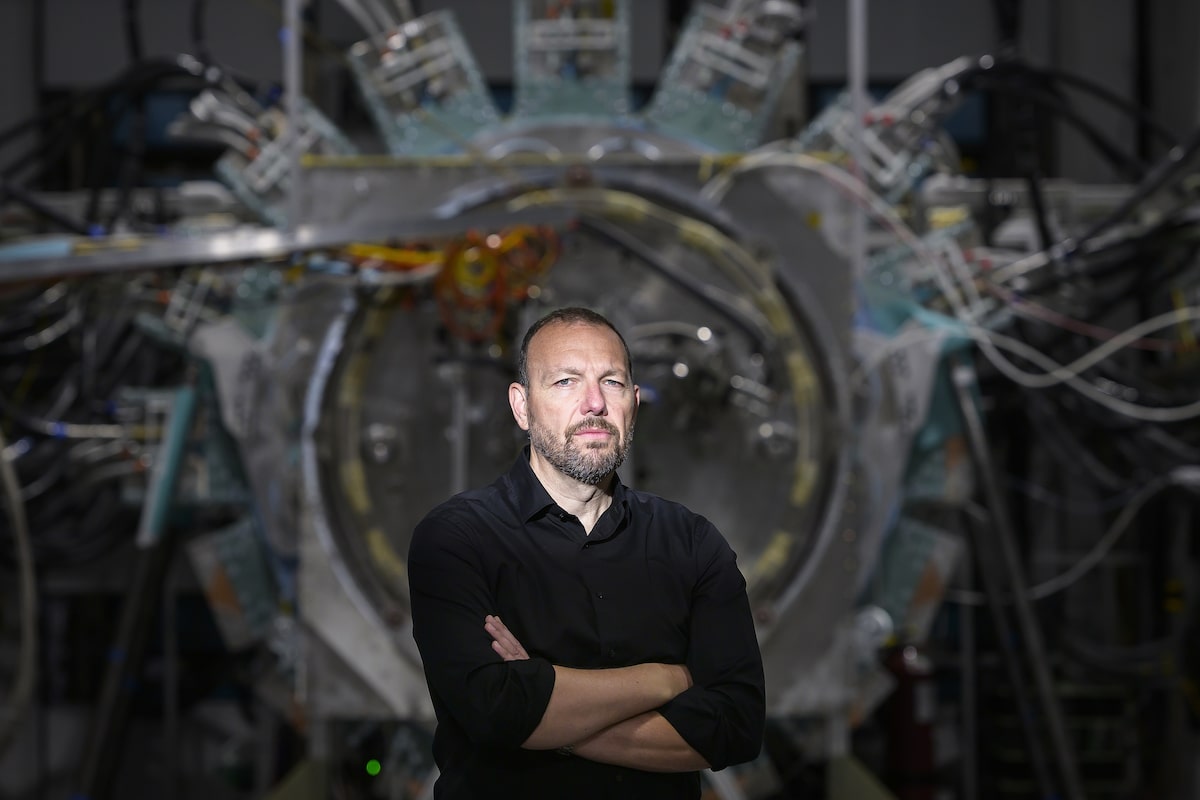
General Fusion CEO Greg Twinney with the LM26 in Richmond, B.C., in 2025. Mr. Twinney says fusion energy developer has enough funding now to ‘move at full speed.’Jennifer Gauthier/The Globe and Mail
B.C. fusion energy developer General Fusion Inc. has struck a deal to go public by merging with a Nasdaq-listed special purpose acquisition company, or SPAC.
Under the terms of the proposed deal, announced Thursday, the Richmond, B.C.-based company would combine with publicly-traded Spring Valley Acquisition Corp III. (SPACs are publicly traded shell companies that look to combine with operating companies).
Private investors have committed US$105-million as part of an oversubscribed private investment that would accompany the SPAC combination, while Spring Valley has US$230-million of capital in trust. The deal values General Fusion at US$600-million prior to the transaction.
If successful it would be the second public listing this year by way of a SPAC transaction involving a leading Canadian-based developer of complex, breakthrough technologies.
UBC experiment aims to reignite cold fusion nuclear quest
Toronto-based Xanadu quantum computer developer Quantum Technologies Inc. is also proceeding with a SPAC combination on the Nasdaq and Toronto Stock Exchange. That would make Xanadu the first tech company to make its debut on the TSX since 2021. General Fusion is also evaluating whether to cross-list in Canada, chief executive officer Greg Twinney said in an interview.
It’s not guaranteed that General Fusion will get all of Spring Valley’s cash; the SPAC’s unitholders have the right to redeem their capital, and some SPAC deals have seen redemptions exceed 90 per cent.
In an investor presentation, Spring Valley touted the experience of its team in closing dozens of energy and decarbonization transactions and helping to create 17 publicly traded companies, including seven SPACs.
“We strongly believe fusion is going to play a key role in our future” as demand for energy skyrockets, Spring Valley chairman and CEO Chris Sorrells said in a release.
“When we looked at the players in the space, General Fusion was an easy choice for us” given its technology and experienced team.
Even if General Fusion can only get the US$105-million in private financing, it would be enough for the company to complete key development work on its fusion demonstration device to achieve what it calls scientific break-even – the point beyond which the machine would produce more energy than it takes in if loaded with the appropriate fuel mix.
The test machine is not designed to generate electricity but serve as a precursor to a full-scale fusion reactor General Fusion ultimately hopes to develop.
In the unlikely event there are no redemptions, General Fusion would have enough money to not only complete its demonstration work but design a full-scale plant for commercial deployment, Mr. Twinney said.
If the SPAC deal succeeds, General Fusion would be the first “pure play” fusion company to go public. Private fusion energy developer TAE Technologies agreed last month to merge with Trump Media & Technology Group, owner of the Truth Social social media site and majority-owned by U.S. President Donald Trump.
Efforts to develop fusion power into a commercially viable form of electricity production are in the early stages, but interest has picked up this decade; fusion companies raised US$2.6-billion in 2025 according to the Fusion Industry Association. General Fusion is one of the oldest in the sector.
General Fusion enters the go-public transaction in far better shape than last May, when it laid off staff and reduced operations due to a cash shortfall. Three months later it raised US$22-million in a “pay-to-play” deal that saw about 70 per cent of existing preferred shareholders buy their pro-rata shares in order to maintain their stakes in the company, including Shopify Inc. CEO Tobi Lütke’s family investment company and JIMCO, the global investment arm of Saudi Arabia’s billionaire Jameel family. Some that didn’t, including two Singapore sovereign wealth funds, saw the relative size of their stakes shrink significantly.
Within months, it raised another US$66-million, including a C$51-million financing last November that gave investors the right to receive discounted equity in the company’s next financing. Those funds are separate from the deal announced Thursday.
“I’ve always believed that what we are doing at General Fusion is so incredibly important that we would push through any challenges that got in our way,” said Mr. Twinney, who previously held senior finance roles with Hootsuite, Real Matters and Rakuten Kobo. “Now we’ve got the capital to move at full speed.”
General Fusion was founded in 2002 by physicist Michel Laberge, who sought to revive an approach to nuclear fusion shelved in the 1970s. The method, which differs from those used by other companies, includes using a metal sheath to momentarily contain and then rapidly compress plasma to reach the temperatures and pressures needed to initiate fusion reactions.
General Fusion has raised more than US$400-million to date, including US$100-million-plus in support from governments in Canada, the United States and Britain.