
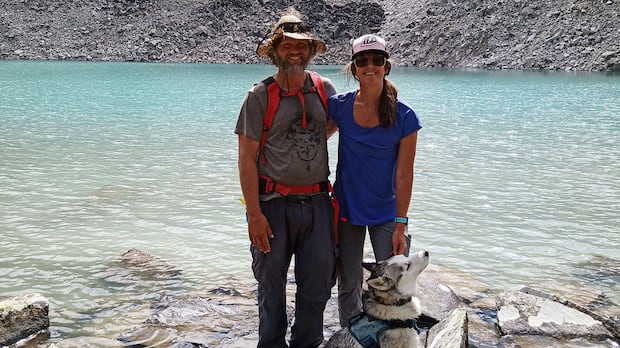
A couple from Radium Hot Springs, B.C., say they didn’t know traplines were a risk on public land in Canada until their husky Moon died in a baited trap near their home earlier this month.
“It was a horrific experience that should never happen to anybody,” said Sean Boxall.
Now, he and his partner Nicole Trigg want to educate others on the prevalence of traps in B.C.’s backcountry, and are calling on the government to prohibit commercial traplines on public land — which does not include Indigenous harvesting and trapping rights.
In the commercial trapping industry, which is regulated under the Wildlife Act, fur-bearing animals that are not typically hunted for meat, like lynx, fox, bobcats, wolves and minx, are killed for their pelts.
WATCH | B.C. couple wants ban on some trapping following dog’s death: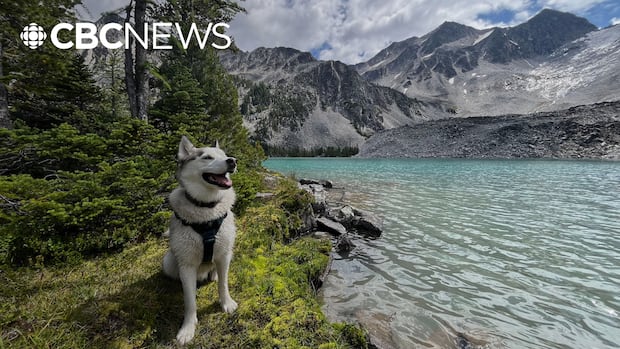
B.C. couple calls for trapping reform after death of beloved dog
A couple in the East Kootenay is calling for a ban on all commercial trap-lines placed on public land after their dog was ensnared in a baited trap and died. As the CBC’s Jacqueline Gelineau reports, the B.C. Conservation Service says the kill trap was legal and set by a licensed trapper.
The B.C. Conservation Officer Service told CBC News that the trap that killed Moon was legal, and the trapper was properly licensed. It said no offence had occurred and enforcement action would not be pursued. The trapper had installed a sign, which was not required.
In an emailed statement to CBC News, the B.C. Trappers Association said the loss of any pet is heartbreaking. It said increased public education on trapping practices is needed to prevent further tragedies.
Conibear traps, like the one that killed Moon, use a spring-loaded design that snaps around an animal’s neck. They often use bait as an attractant and are intended to quickly kill fur-bearing animals for their pelts.
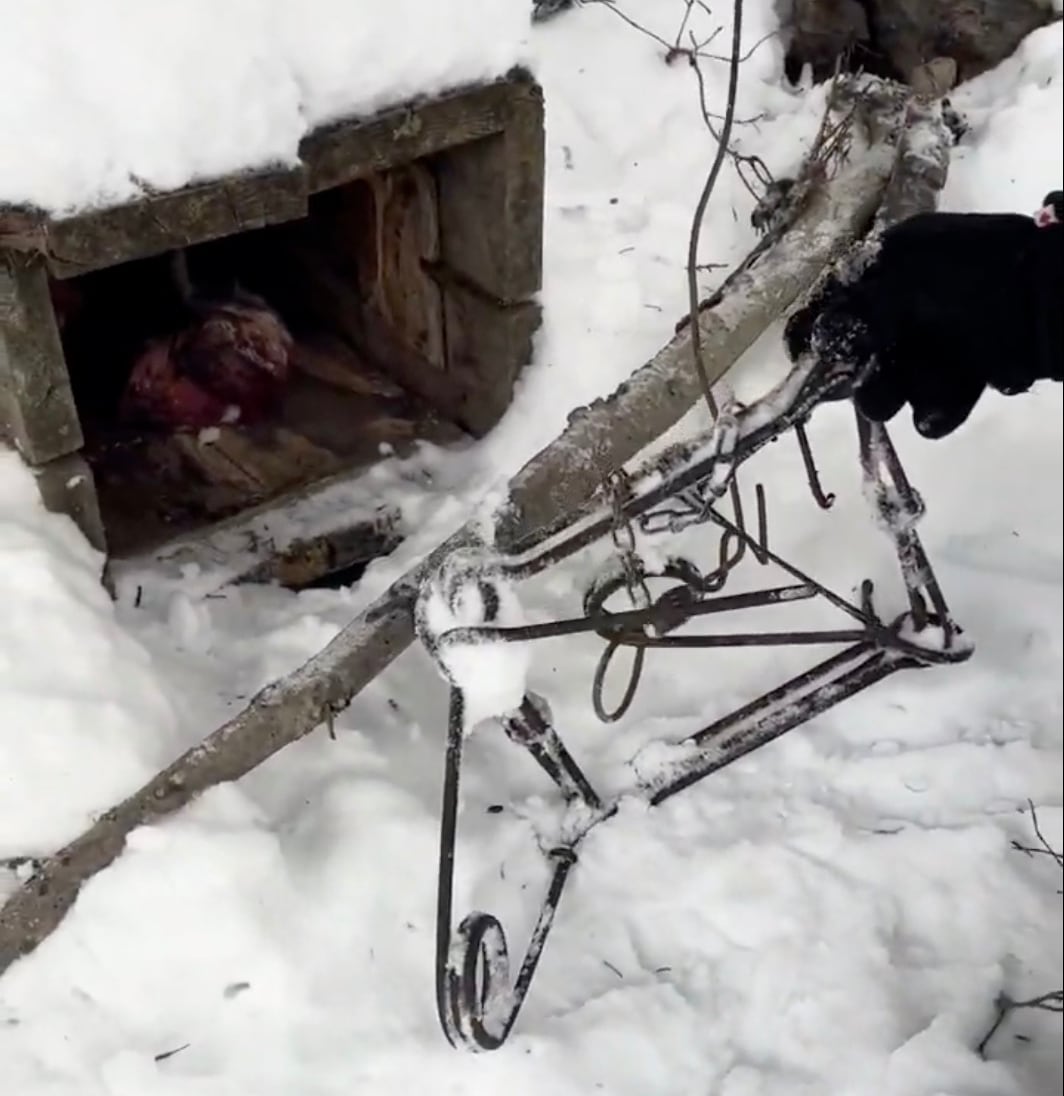 Conibear traps are used to kill medium to large animals. This is a photo of the trap and bait that killed Moon. (Submitted by Nicole Trigg)
The trappers association said, unfortunately, outcomes can differ significantly when a non-target species is captured by a trap.
“It wasn’t a quick kill. It was several minutes,” said Boxall of his dog’s death.
On Jan. 8, Boxall loaded up his truck with ski gear and his two-year-old dog Moon. They drove up a plowed road west of their home to a popular snowmobile and recreation area that Boxall frequents in the summer for work.
He said he didn’t know that the winter is trapping season, and initially didn’t see the sign that had been erected in the trees lining the roadside pullout where he parked.
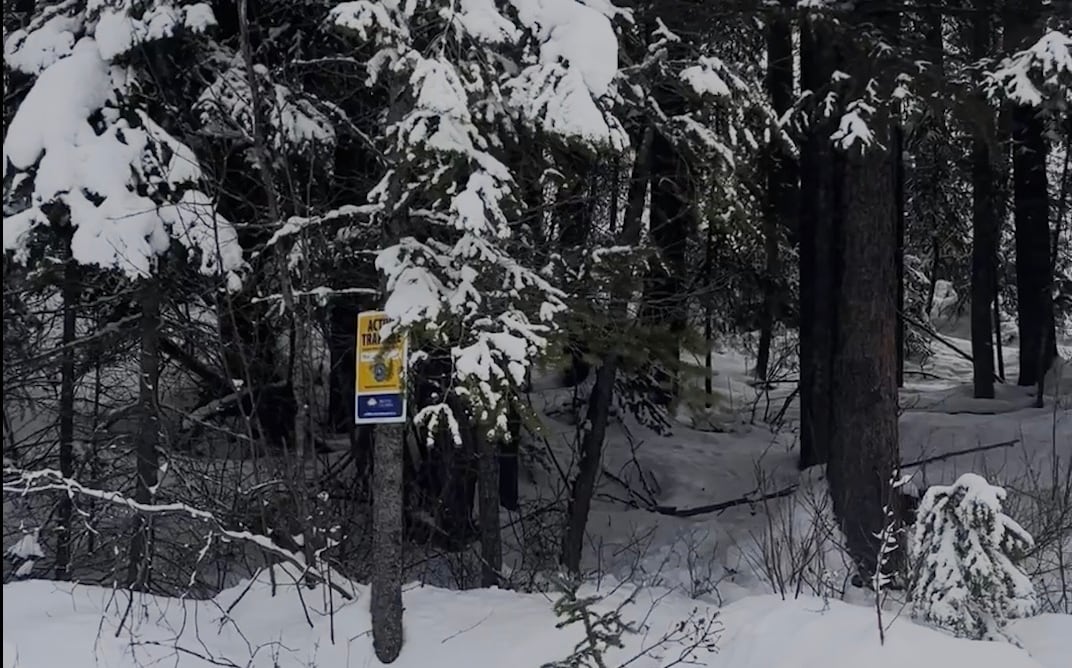 Sean Boxall did not see the ‘Active Traps’ sign when he let Moon out of his truck. (Submitted by Nicole Trigg)
As usual when they arrived at their ski destination, Moon hopped out of the truck to sniff around nearby while Boxall got his gear organized.
Boxall said he could see Moon’s wagging tail on the edge of the woods when he noticed the sign saying there was trapping in the area.
He yelled out and began running over just as he heard the snap of the metal trap around Moon’s neck.
Boxall thinks Moon, who was perpetually curious and hungry, was enticed by the fresh meat bait and lured into the trap.
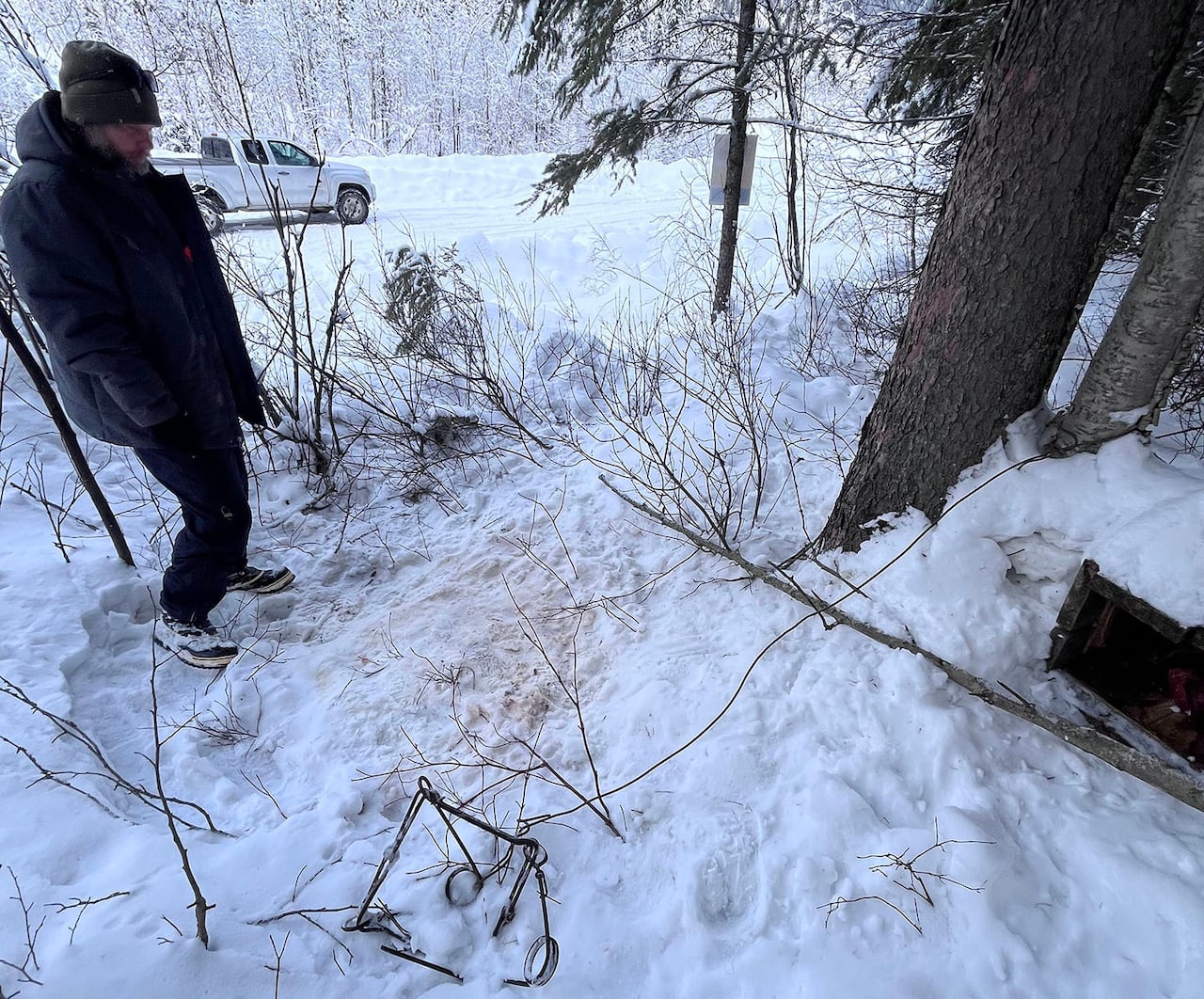 Sean Boxall and Nicole Trigg revisited the site where Moon died days after the incident. (Submitted by Nicole Trigg)
“It’s just 100 per cent indiscriminate. Anything that eats meat is going to investigate one of those traps and potentially be tortured and killed,” Boxall said.
He tried to free Moon, but Conibear traps are difficult to open and he cut his hand, which later required stitches.
He ran back to the truck and grabbed his chainsaw to cut the metal trap and free Moon, who had already lost consciousness.
“I saw the look in my little buddy’s face as he was in pain and terror and, yeah, torture,” said Boxall.
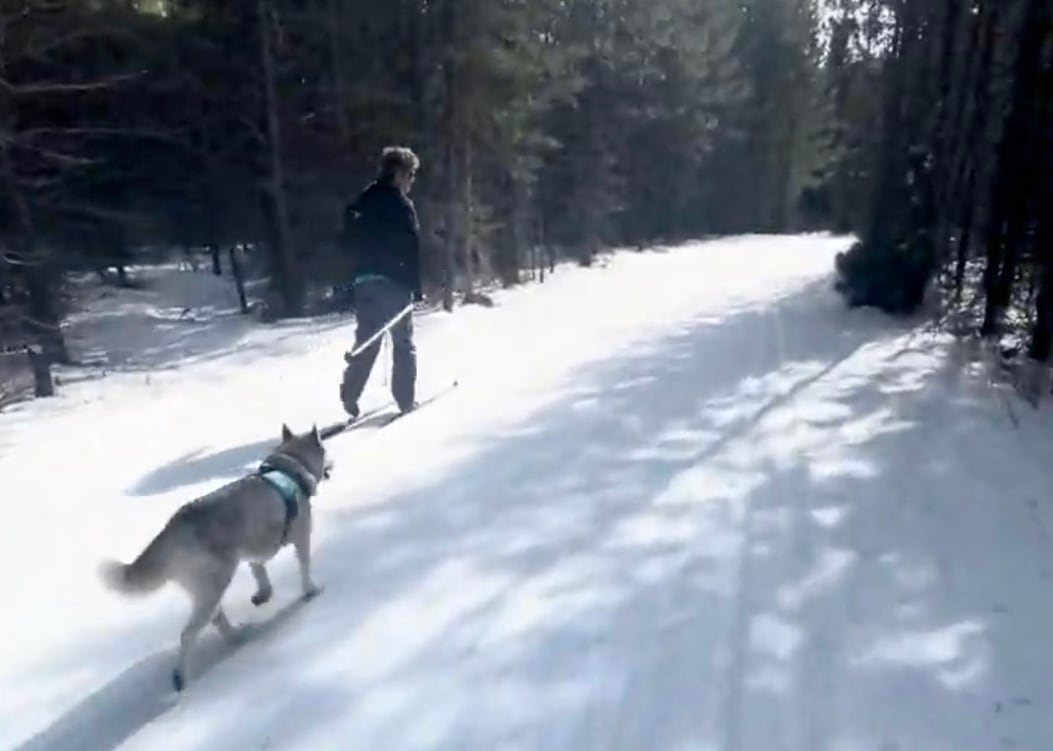 Sean Boxall and Nicole Trigg loved to go skiing with Moon. (Submitted by Nicole Trigg)
The trapping association said public education on the methods used to trap animals for fur is imperative to ensure the safety of all backcountry users, especially as the number of people exploring Crown land increases. It also said pets should be on leash when on public land, as traps may be present and signage is not always required.
It said commercial trapping is an important and historical industry in Canada. Most commercial trappers were introduced to the practice by their family or community and the tradition is often passed down generation to generation.
Traditional Indigenous trapping practices are not the same as commercial trapping and have sustained First Nations people since time immemorial. Indigenous people do not require a licence to trap in B.C., and typically trap animals with the intention of both consuming their meat and using the pelts.
Pelts from commercial trapping are typically sold to the fashion industry and the meat is not usually eaten. The trapping association said trapping aids in population management across large landscapes and in disease control of animals that are not typically hunted.
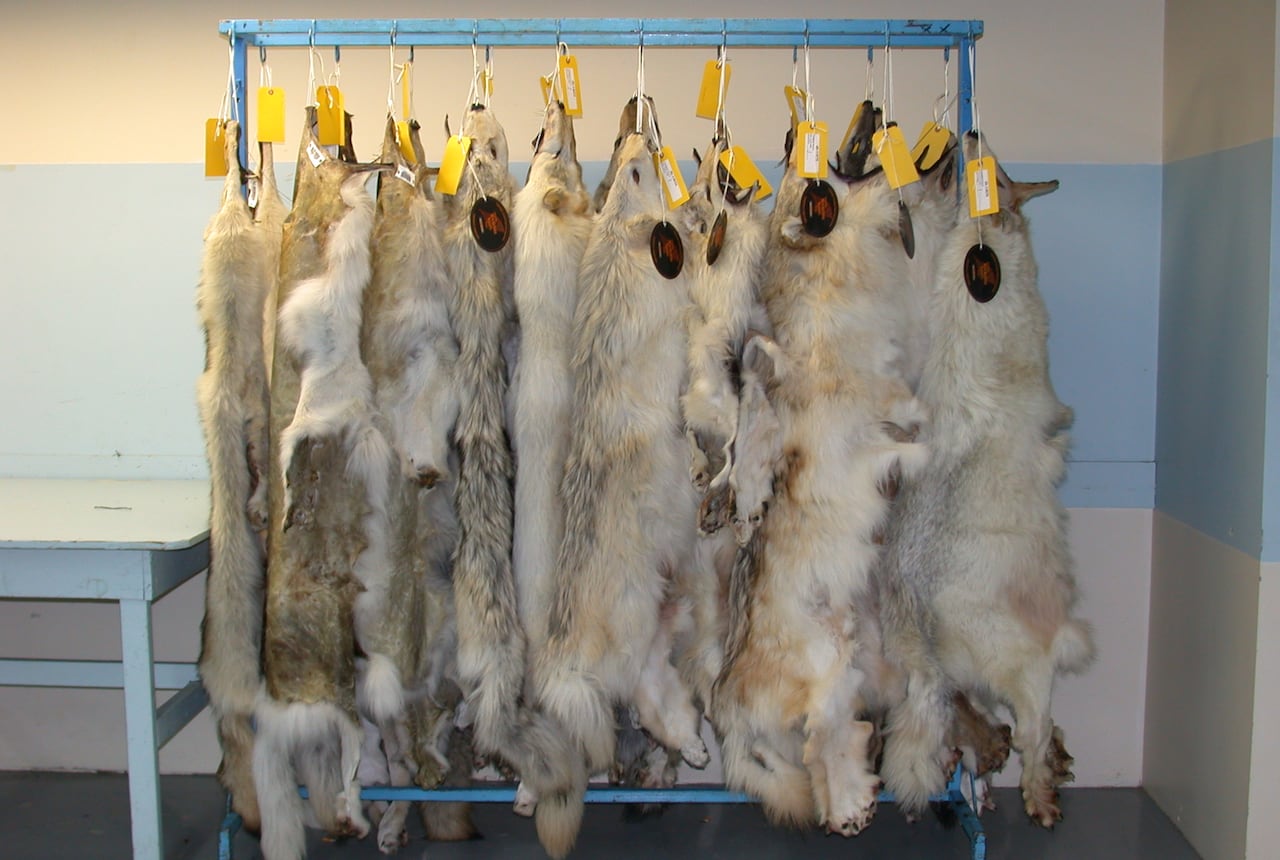 A line of Genuine Mackenzie Valley Fur wolf pelts is seen at auction. (Submitted by Environment and Climate Change Canada)
The association said provincial regulations based on ecological data dictates the specific requirements trappers must follow to prevent over-harvesting and mitigate unintentional trapping of non-target animals. The regulations also outline how frequently trappers must physically check their set line.
The B.C. Trappers Association said in Canada, commercial trappers must abide by the parameters outlined by the International Humane Trapping Standards.
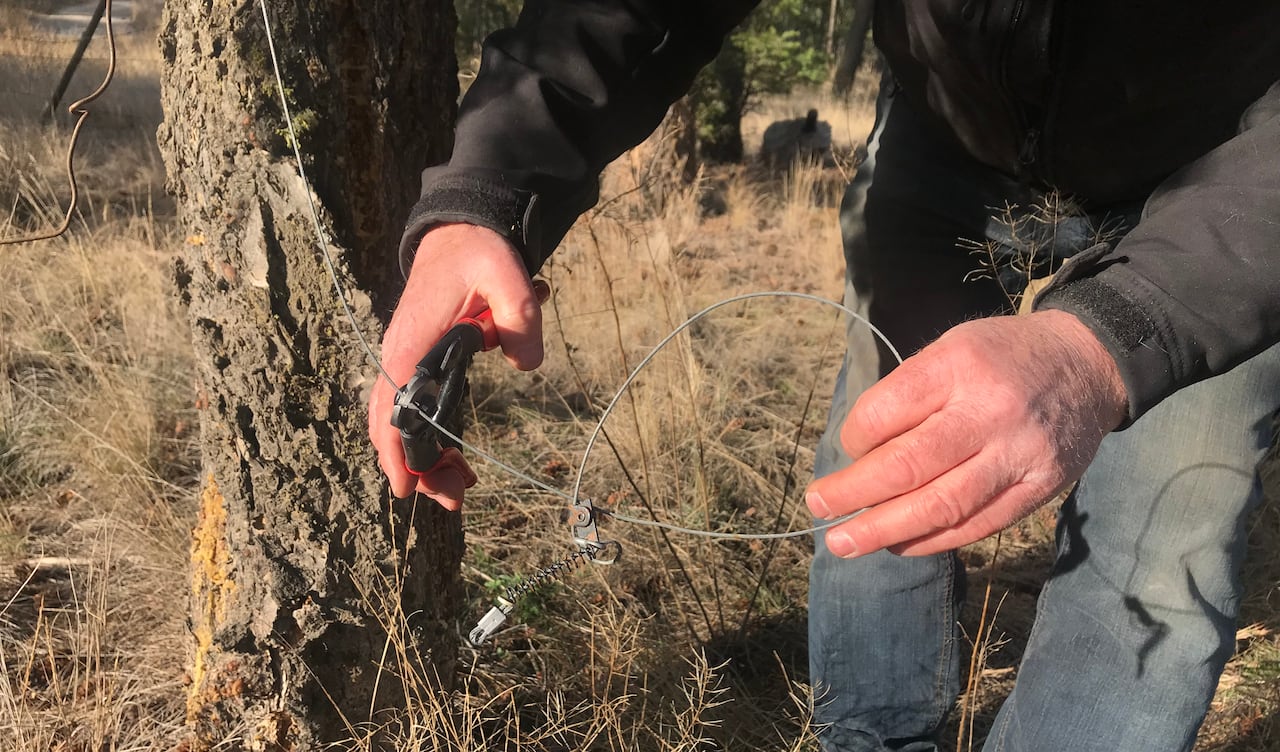 Mike Ritcey, head of SRD K9s of B.C., shows how to use wire cutters to release a dog from a snare trap. (Doug Herbert/CBC)
Lesley Fox, the executive director of the Fur-Bearers, an organization that advocates for wildlife protection, believes there is no humane way to trap an animal, though. She said traps don’t always function as intended, sometimes leading to the death of non-target animals or prolonged suffering.
She said the Furbearers believe commercial trapping for fur should be banned in public areas.
At a minimum, Fox said the Fur-Bearers would like the provincial government to require mandatory warning signs for all active commercial traps and increased setbacks and separation from dwellings, trails and roads.
The provincial government is inviting the public to comment on proposed regulation changes to the International Humane Trapping Standards certified trap list until Feb. 13.