
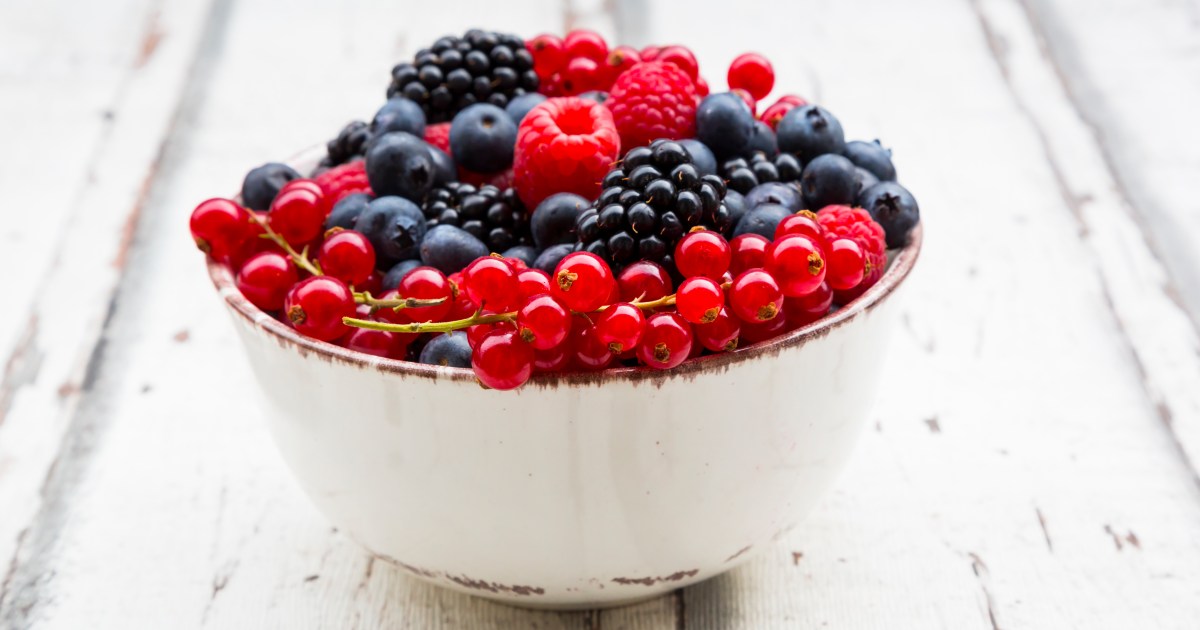
Berries stand out like jewels in the fruit section of the supermarket. Their vibrant colors signal powerful plant compounds, making them one of the healthiest foods you can eat.
Juicy and sweet, berries are also a tasty treat and the second most popular fruit sold in the U.S., just behind bananas, according to the International Fresh Produce Association.
“One thing that makes berries so special is that they pack a lot of nutrients into a small and delicious package,” Samantha Cassetty, a registered dietitian in New York and co-author of “Sugar Shock,” tells TODAY.com.
“They supply fiber and key nutrients, like vitamin C and potassium, and contain health-promoting antioxidants, such as anthocyanins.”
These antioxidants help protect cells from oxidative stress and inflammation — two “troublemakers” that show up as people age and when they don’t eat a healthy diet, she adds.
Eating berries of all kinds is a “plausible and potentially useful dietary strategy” to reduce the risk of cancer, studies have found.
Berries are also the only fruit specifically mentioned in the MIND diet, which is designed for brain health and calls for eating five half-cup servings of berries per week. Frozen berries are as healthy as fresh ones and typically more affordable, dietitians say.
You can’t go wrong with eating any type of berry — they’re all nutritious and tasty. But some berries stand out when it comes to their health benefits.
What Is the Healthiest Berry?
Blueberries are Cassetty’s No. 1 pick for the healthiest berry. She also chose them as the overall healthiest fruit.
Blueberries support healthier blood pressure and blood vessels, she says. They’re linked to a lower risk of heart disease and Type 2 diabetes, and improvements in cognitive performance — all thanks to anthocyanin, the antioxidant responsible for their deep color, Cassetty notes.
Blueberries have the highest anthocyanin concentration of any popular fruit consumed in the U.S., studies have found.
The anti-inflammatory benefits from blueberries may also help protect against cancer and Alzheimer’s, registered dietitian Frances Largeman-Roth previously told TODAY.com.
Blueberries are an excellent source of vitamins C and K, manganese and other essential nutrients, according to the U.S. Department of Agriculture.
One cup of fresh blueberries provides about 4 grams of fiber for gut health and satiety.
“One cool thing about blueberries is that they may support a healthier body composition,” Cassetty says.
“Research in identical twins links higher blueberry intake with lower body fat, pointing to benefits beyond calories alone.”
Berries With the Most Fiber
Raspberries stand out in this category with 8 grams of fiber per cup.
“Most adults need 25 to 38 grams per day, but very few hit that target. Add a cup of raspberries to your breakfast or snack, and you’ll be a lot closer to meeting your daily fiber needs,” Cassetty says.
Berries With the Most Vitamin C
Strawberries are the winner with 90 milligrams of vitamin C in one cup, meeting the recommended daily intake for men and exceeding it for women. Strawberries make the list of fruits with the most vitamin C.
“Strawberries have more vitamin C than an orange,” Cassetty points out, noting that vitamin C supports immune health and plays a key role in collagen synthesis.
“Collagen is the structural support in our skin. When collagen weakens, our skin starts to wrinkle and sag, so vitamin C-rich foods can help your skin wrinkle less as you age,” she adds.
Berries With the Most Antioxidants
Blackberries are the top choice among the berries accessible to most Americans.
When it comes to antioxidants, “we can get more than twice the bang for our buck choosing blackberries over strawberries,” says Dr. Michael Greger, a founding member of the American College of Lifestyle Medicine and author of “How Not to Die,” on his website.
Antioxidants can neutralize harmful free radicals in the body, so dietitian Keri Glassman considers blackberries one of the best foods to reduce inflammation.
Berries With the Least Sugar
Cranberries win this category — no surprise. Famously tart, it would be hard to eat them on their own, but they deliver vitamin C, fiber and antioxidants.
Cranberries are “effective against all inflammatory processes,” help prevent urinary tract infections, promote a healthy heart and support digestive health, researchers reported.
“Cranberry products often contain added sugars, so try to choose cranberry products that contain no additional sweeteners, and use them in other naturally-sweet foods to balance their taste,” Cassetty says.
She advises mixing cranberry juice with 100% orange juice or diluting it in unsweetened, flavored seltzer.
Other Berries to Explore
Depending on where you live, you might have access to gooseberries, currants, lingonberries, elderberries and huckleberries.
Cassetty also calls attention to goji berries, which are usually eaten dried and have prebiotic properties that support gut health; and acai berries, which are being studied for their antioxidant and anti-inflammatory properties.
Acai berries are most commonly sold in frozen packets or powdered form, so she advises opting for unsweetened varieties that can be mixed with sweeter fruits in a smoothie to naturally provide sweetness.