

Listen to this article
Estimated 4 minutes
The audio version of this article is generated by AI-based technology. Mispronunciations can occur. We are working with our partners to continually review and improve the results.
A new artificial intelligence system will begin handling calls to the Toronto Police Service (TPS) non-emergency line, starting sometime in February.
The move comes after reports of long wait times for low-priority calls, with one woman previously telling CBC Toronto she waited 12 hours on the line before being disconnected.
Supt. Gregory Watts, with the TPS communications unit, says that won’t happen anymore with the use of AI.
“The adoption of this new technology should quite frankly make that null and void,” he told CBC Toronto. “Because now everybody that calls the non-emergency line … gets answered immediately by the AI system.”
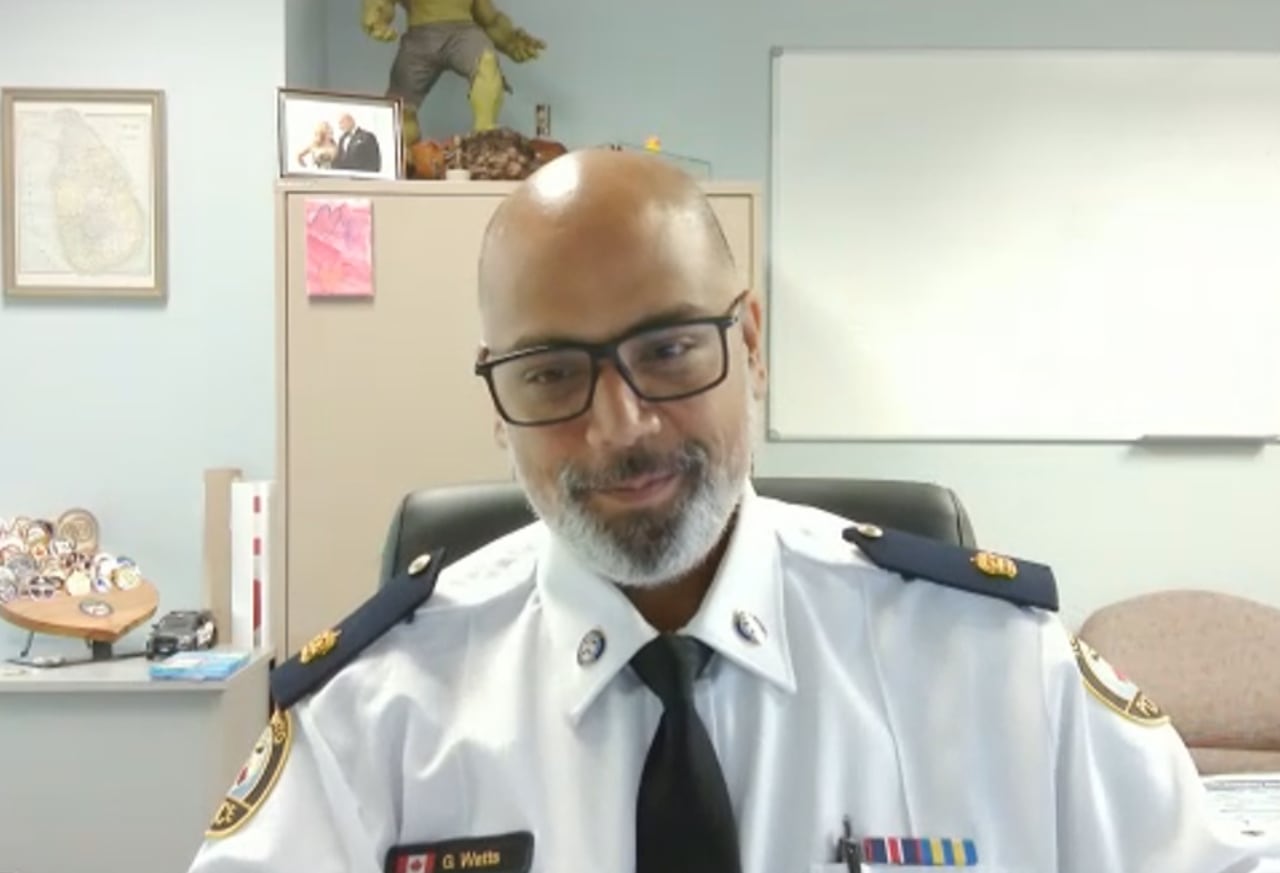 Supt. Gregory Watts with the TPS Communications Unit says new AI system will eliminate wait times for non-emergency calls. (Arrthy Thayaparan/CBC)
TPS has contracted Hyper, a Canadian company that specifically provides an AI solution for non-emergency calls. Once it’s implemented, callers to TPS’s *877 line will encounter an automated voice that they can speak to – similar to Apple’s Siri or Amazon’s Alexa.
The introduction of the Hyper system is just one of the ways TPS is tackling long 911 wait times, by freeing up more communications operators to focus on high-priority calls, according to Toronto Police Service Board chair, Shelley Carroll.
“You’re always going to need this to be a very human service, but technology can assist and make each human more efficient in that operator’s centre,” she told CBC Toronto.
The Halton Regional Police Service (HRPS) has been using the same technology since last November. In an email to CBC Toronto, Halton police Const. Jeff Dillon wrote that 911 wait times have decreased as a result.
Outside of non-emergency calls, it’s not the first time Toronto police have used AI. The police service admitted to using controversial facial technology tool Clearview AI in October 2019 and committed to stop using it in February of the following year.
911 calls will still be answered by human operators
Watts also wants to assure the public that a human operator will still be on the line when they call 911.
But the use of AI in a public-facing format does raise concerns for some.
When Morteza Zihayat, an assistant professor of human-centred AI at Toronto Metropolitan University, first heard about the system, he wondered how it would handle calls that don’t clearly fall under the non-emergency category.
“What if there is a misclassification and your systems do not understand the context in the way that we as humans understand?” he asked. “Or maybe it’s a non-emergency situation, but it’s escalated quickly to an emergency situation. So what’s going to be the process there?”
WATCH | 911 call wait times down to three seconds after hiring spree: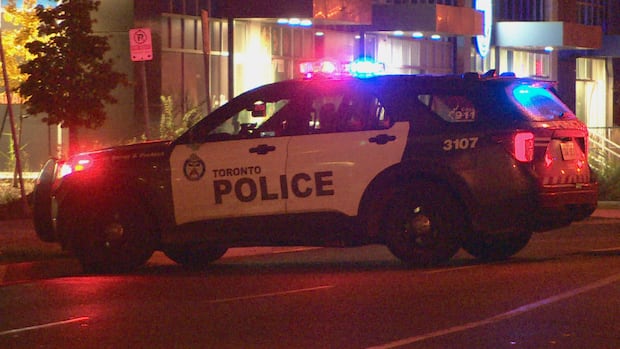
Toronto police say average 911 wait times down to 3 seconds
According to Toronto police, the average time for a 911 caller to connect with an operator is down to three seconds so far this year.
In an email to CBC Toronto, Hyper CEO Ben Sanders said if the system detects an emergency or a situation escalates, the call will immediately be redirected to a 911 operator.
This is an improvement over the former system where someone experiencing an emergency but calling the non-emergency line by mistake would have a longer wait before being redirected, he said.
Another concern for Zihayat is whether the system could provide incorrect information, such as oversimplified police procedures or inaccurate instructions for reporting a crime.
“Sometimes [AI systems] can confidently provide wrong or incomplete instructions,” he said, pointing to examples like ChatGPT.
System can’t provide incorrect information, says company CEO
But that’s not how Hyper works, Sanders explained.
“Unlike open-ended generative AI, Hyper operates within strict guardrails. It only provides answers grounded in agency-approved data, and if it can’t answer reliably, it hands the call to a human rather than risk giving incorrect information,” he wrote.
Zihayat also raised questions about caller privacy, but Sanders says Hyper has factored that in as well.
“Calls and data are protected with strong security controls, limited access, and strict use policies aligned with government and law-enforcement requirements. Ultimately, caller data is owned by the police department and not used by Hyper for any training or external purpose,” he wrote.