

Listen to this article
Estimated 5 minutes
The audio version of this article is generated by AI-based technology. Mispronunciations can occur. We are working with our partners to continually review and improve the results.
The death of a 79-year-old woman who was found frozen outside a seniors’ home in Quebec in 2024 could have been prevented, according to a coroner’s report released this week.
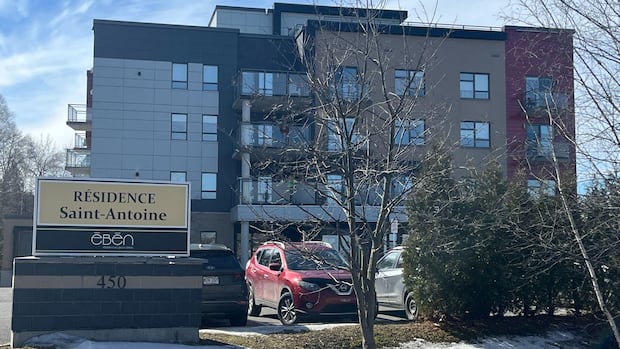
Réjeanne Jean was found on a balcony at the Résidence Saint-Antoine, a private seniors’ residence (RPA) located in Lévis, Que., on March 1, 2024.
Jean’s daughter, Caroline Desrosiers, said her mom was cognitively impaired and had been living in a secure unit in the residence for less than a year.
In a report released Monday, coroner Jean-François Bertrand concluded that Jean died of hypothermia and outlined several security and training issues in the residence.
Not only was the balcony door — accessible from the hallway — supposed to be locked, says the coroner, but the surveillance system failed.
Orderly saw Jean ‘confused’ just before she wandered
The orderly on call the night of the incident also failed to properly monitor Jean throughout the night, according to the report.
Before Jean wandered onto the balcony late Feb. 29, 2024, she was found by an orderly in the corridor “slumped” against the balcony door.
The orderly reportedly realized that the door was not locked and escorted Jean back to her room — noting that she was “confused and was not responding to him.”
“He then tried to find the key to lock the [balcony] door, but didn’t find it,” wrote the coroner.
“He failed to flag the situation to his superior and took no further steps.”
Exactly 10 minutes after the orderly escorted Jean to her room, the cameras captured Jean — barefoot with a blanket over her shoulders — heading in the direction of the balcony.
Staff only realized Jean was missing from her room the next morning at around 5:20 a.m., according to the report. They found the senior a few minutes later on the balcony unresponsive and in cardiac arrest.
Staff attempted life-saving efforts but she was transported to hospital by emergency personnel and declared dead at 6:25 a.m.
Surveillance system not ‘up to standard’
In the report, the coroner says the orderly specified that he didn’t know how to consult residents’ files and said he was unfamiliar with night procedures and the required frequency of resident room checks.
According to policy at the time, room checks were supposed to be performed every hour. Jean was not checked on for more than five hours.
The coroner also found that the surveillance system was “neither functional nor up to standard,” especially considering Jean was in the section of housing for residents with neurocognitive disorders and wandering behaviours.
WATCH | How to balance safety and autonomy in seniors’ homes:
Balancing safety and autonomy in seniors’ residences after 3 cold-weather deaths
After three Quebec seniors passed away in the cold in the last week, the owner of a seniors’ residence says there are measures private homes can take to ensure the safety of their tenants. A seniors’ advocacy expert says there is a fine line between providing autonomy and safety for the elderly in the wintertime.
Correction: A previous version of this story said the level of safety was at the discretion of each residence. In fact, certain RPAs (depending on their categories) were required to install anti-wandering security systems by July 2025.
Bertrand noted that several cameras and surveillance equipment “that could have allowed for the sighting of Ms. Jean had been out of order for several weeks.”
“No alarm notified the RPA staff when the cameras were activated by movement,” wrote Bertrand.
“It appears clear that Ms. Jean’s death could have been avoided if the RPA’s security cameras had been monitored and if the door leading to the balcony had been equipped with a device to promptly alert staff.”
Quebec’s regulation respecting the certification of private seniors’ residences — in place since July 2025 — requires the installation of security devices on every exit to alert staff in certain RPAs.
But Bertrand noted the regulation doesn’t apply to intermediate resource sections, also known as RIs, such as the one that housed Jean.
RIs are designed for residents with some loss of either physical or cognitive autonomy and are overseen by regional health authorities.
“Why are RI users not entitled to the same safety standards as those in RPAs?” questioned Bertrand.
“Users presenting with neurocognitive disorders are found in both RPAs and RIs; therefore, they must be able to benefit from the same services and the same safety standards.”
‘Profoundly sad incident,’ says director of RPA
Bertrand said it is “vital” to raise awareness on the importance of complying with the requirements. He recommended the CISSS Chaudière-Appalaches remind staff in RIs of the importance of properly controlling all exits in its facilities.
In an emailed statement, the integrated health and social services centre for the Chaudière-Appalaches region said it has taken note of the recommendations issued in the report and will ensure it’s following up with the “necessary seriousness it deserves.”
The coroner recommended the private seniors’ home install security devices on doors and an intervention procedure for when an alert is triggered. He also recommended for the home to ensure continuous monitoring of its cameras.
The seniors’ home takes the coroner’s report very seriously, says Xavier Houdot, the director of the Résidence Saint-Antoine.
“Above all, our thoughts are with the family and loved ones of Ms. Jean. This is a profoundly sad incident,” wrote Houdot, in an emailed statement.
“Following this incident, concrete measures have been put into place at the Résidence Saint-Antoine to reinforce security and prevent this kind of situation from happening again.”