
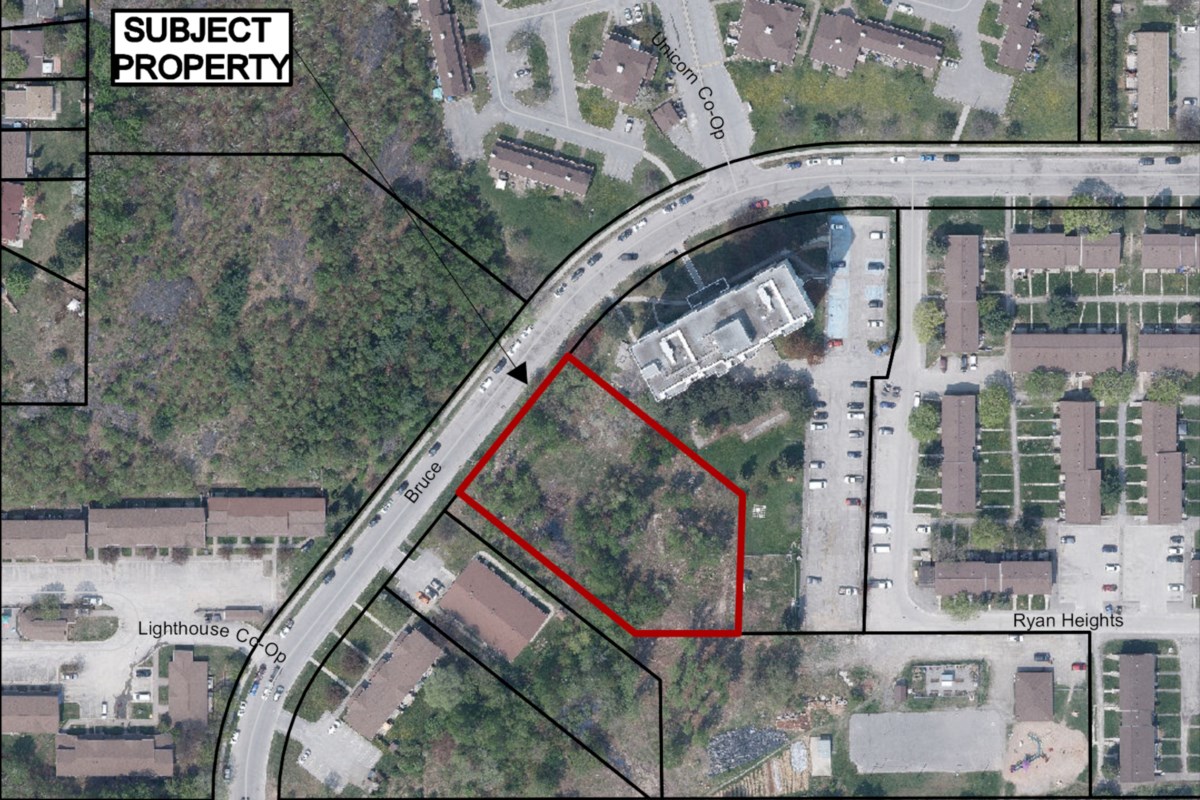
Tuesday night’s support was preliminary, limited to the city applying for the federal funds required to construct the 40-unit building and funding its operations
Throwing their support behind a 40-unit supportive housing building on Bruce Avenue, the city’s elected officials will now await the federal government’s decision on whether to provide funding.
“This is greatly needed, and we’ve seen the success of the Lorraine Street project and we need this next step,” Mayor Paul Lefebvre said of the project.
When it comes to tackling homelessness, he added, “This is the only way we can work our way through this.”
Although the city’s Roadmap to End Homelessness by 2030 identifies various other steps, the addition of at least two 40-unit transitional and/or supportive housing units to Greater Sudbury remain key, city Housing Operations director Barbara Dubois told city council members during Tuesday night’s finance and administration committee meeting in Azilda.
Plus, she added, the city needs 800 units of deep-core (rent-geared-to-income) and accessible housing.
A key barrier, Dubois said, is “a lack of permanent supportive housing options within our community.”
Although the 40-unit transitional housing complex on Lorraine Street is filling up, with 38 of its 40 units anticipated to be occupied by the end of next week, there are few places for residents to go after they’ve graduated from transitional housing programming.
“This is a really big need in the community and a good place to transition people from Lorraine Street who, at this time, can’t go to the other independent units that we own,” Dubois said.
Where the Lorraine Street project houses the chronically homeless and provides them with the necessary support to transition them into permanent community housing, supportive housing provides less-intensive support to help keep them on track once they’ve graduated.
“When they’re stabilized, they need a supportive housing option,” Dubois said.
Tuesday night’s city council support was preliminary, and limited to submitting an application for federal Build Canada Homes funding to help cover the project’s capital costs.
If this funding is approved, city council has pledged $1.25 to $2 million in annual operational funding, which ranges depending on the level of support offered.
The hope is that the province will step in to cover operational costs, Dubois said, adding that staff would also “engage supportive housing providers” to identify a partner and explore funding alternatives.
City council followed the exact same process with the Lorraine Street project a few years ago, meeting chair and Ward 9 Coun. Deb McIntosh said.
When the city applied for federal funding for the Lorraine Street project, city council also pledged to fund its operations, taking a “leap of faith” the province would step forward with operational funding, McIntosh said, which the province ended up doing in early 2025.
Build Canada Homes applications of this nature appear promising, city CAO Shari Lichterman told city council members, with a very similar project in Toronto proceeding to the next phase after receiving federal funding, which was announced earlier in the day.
“That’s, I think, a really good sign, and that’s the exact kind of project we’re looking at,” Lichterman said.
Between political and staff advocacy and work, she added, “We’ll be able to move this along really quickly.”
Last month, Sudbury Liberal MP Viviane Lapointe credited Lefebvre with having already visited Ottawa to secure meetings with key ministers on the subject of transitional/supportive housing and for being “effective in presenting Sudbury’s urgent needs.”
During the recent Rural Ontario Municipal Association conference in Toronto, Lefebvre said he raised the issue, including the Bruce Avenue project, with provincial ministers.
With city council’s approval, Dubois said staff would proceed with a Class C cost estimate and concept design to submit to the federal government along with their application, which would take approximately four weeks. From that point, she said they’ll be in “a holding pattern” as they wait for word from the feds.
“As soon as we get an answer we will certainly circulate back to council and give you an update,” Dubois told city council members.
If everything goes to plan, the 40-unit supportive housing complex would be constructed on city-owned land located west of 720 Bruce Ave.
Although the city is applying for federal funding to help pay for the building’s construction, they’re not without funds of their own.
The city has approximately $18.9 million in its Social Housing Capital Reserve Fund (in part due to the sale of 53 single-family houses during the past few years).
These sales have allowed the city to “right-size” their housing portfolio to include more single-bedroom and bachelor units, Dubois said. The city has also maintained their housing obligations by replacing the 53 units sold off with 40 units at the Lorraine Street build and 14 affordable units for seniors at a complex on Sparks Street.
Meanwhile, Dubois said the city would continue selling single-family and semi-detached units as they become vacant, to help further right-size their portfolio. There are 172 of these units to go.
During Tuesday’s meeting, Dubois clarified that proceeds from the sale of properties are automatically earmarked for residential capital projects, and not operations.
Although details remain murky, the province is also funding 48 scattered units of supportive housing as part of the HART Hub initiative with local service partners.
They’re currently in “pre-launch planning and preparations,” a representative from Monarch Recovery Services told Sudbury.com earlier this month.
“This work includes finalizing site details, recruitment, onboarding, and operational readiness activities to ensure the Hub can deliver safe, coordinated services when it opens.
“We will share more information publicly as we move closer to the launch in the coming weeks, and remain committed to keeping the community informed as timelines and details are finalized.”
Tyler Clarke covers city hall and political affairs for Sudbury.com.