

As winter rumbles on, most of us are going to great lengths to keep colds and flu at bay. Now there’s new evidence that taking a simple, and cheap, vitamin D supplement could be the solution. This week researchers from the universities of Surrey, Oxford and Reading, analysing data on 36,000 British adults, found those with a severe vitamin D deficiency were 33 per cent more likely to be admitted to hospital with a respiratory tract infection than those getting the right amount.
Unfortunately, many of us don’t. According to the Department of Health and Social Care, about one in six of us have low levels of vitamin D, with a deficiency more likely in winter months when we don’t get enough sunlight for our skin to produce it naturally.
“Vitamin D is vital to our physical wellbeing,” said Abi Bournot, the study’s lead author from the University of Surrey. And it’s not only integral to a healthy immune system. Boosting levels can have myriad other benefits for body and mind.
It can reduce the risk of colds, flu and Covid
Nicola Shubrook is the founder of Urban Wellness
CASSANDRA LANE
Vitamin D functions as a messenger in a similar way to hormones, says Nicola Shubrook, nutritional therapist and founder of the functional medicine clinic Urban Wellness. “It gets activated by the liver and kidneys into calcitriol — its active form — which can regulate hundreds of genes in many tissues, similar to oestrogen or cortisol.”
It activates VDRs (vitamin D receptors) located throughout our body, including in the heart, bones and lungs. When activated, VDRs have been shown to boost production of antimicrobial proteins that help to fight infection. The vitamin also improves the function of immune cells such as macrophages that help to fight viruses and calm excess inflammation that can worsen symptoms of a cold.
“Human trials show a daily low dose can help to support a healthy immune response,” Shubrook says. A 2022 meta-analysis in the journal Frontiers in Nutrition found those taking a vitamin D supplement were 22 per cent less likely to develop flu than those who didn’t, while other studies have linked vitamin D deficiency to increased risk of severe Covid.
• Can vitamin D slow ageing? Here’s why I take it
Take (at least) a 10mcg supplement every day — it doesn’t need to be an expensive brand
The NHS recommends everyone take a supplement of 10mcg (400IU) a day between October and March. But we all require different amounts, Shubrook says. “The darker your skin, the harder it is to make vitamin D naturally from sunshine. You can supplement and still have low levels.”
Symptoms of deficiency can include muscle pain and low mood, but the only way to find out if you’re deficient is with a blood test, which should be available through your GP but can also be paid for privately using an at-home finger prick test. The NHS defines deficiency as below 25nmol/l (nanomoles per litre) of calcidiol — the stored form of vitamin D — in your blood, while a level of 50nmol/l is adequate. For those deficient, 25mcg (1,000IU) supplements are widely available. The safe upper limit for most adults and children over 11 is 100mcg (4,000IU) a day, according to the NHS. The main (rare) side effect from taking too much is a build-up of calcium in the blood — hypercalcemia — which can cause symptoms such as vomiting and kidney stones.
In addition to pills, sprays and drops to put under the tongue are available (BetterYou Vitamin D 3000IU (75mcg) Daily Oral Spray, £10.40, boots.com). Evidence suggests they are all equally effective, but as a fat-soluble vitamin “any vitamin D supplement is best taken with a meal containing fat for optimal absorption,” Shubrook says. She sees no merit in buying an expensive supplement. “I use a fairly cheap brand.” Superdrug’s 25mcg tablets are £3.99 for 90; Boots’ own-brand tub of 180 10mcg tablets is £4.
• Read more expert advice on healthy living, fitness and wellbeing
Take it with calcium for stronger bones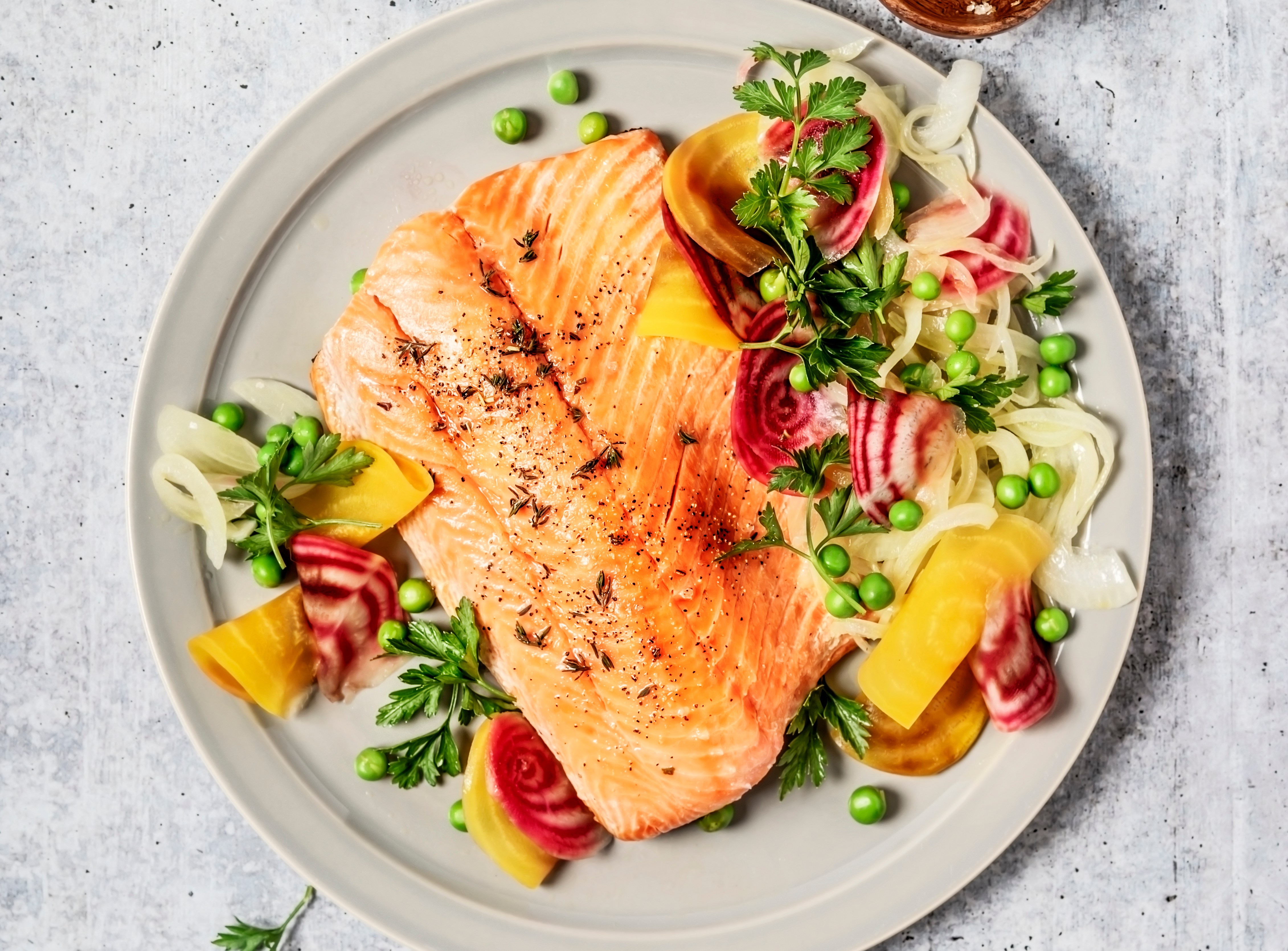
Vitamin D, found in oily fish like salmon, helps your body to absorb calcium from food
GETTY IMAGES
Vitamin D “helps improve the absorption of calcium from food in the gut, then transport it to the bones, where it helps form cells called osteoblasts”, Shubrook says. However, some evidence finds it only effective in strengthening bones when taken with a calcium supplement — a meta-analysis in the journal JAMA Network found that daily supplementation of 10-20mcg of vitamin D taken with 1,000-1,200mg calcium led to a 16 per cent reduced risk of hip fracture (Vitabiotic Ultra Calcium tablets combine 20mcg vitamin D with 1,000mg calcium, £3.65 for 30, vitabiotics.com).
Shubrook suggests the elderly and those at risk of heart disease also take a vitamin K supplement with vitamin D, which prevents calcium from accumulating in blood vessel walls, keeping them flexible.
• How to get vitamin D in winter — and how much you really need
How it can also help to boost your mood
“Vitamin D is involved in the production of the neurotransmitters serotonin and dopamine, important for mood,” Shubrook says. “Low levels can play a role in seasonal affective disorder.”
Natalie MacKenzie, a cognitive rehabilitation therapist, adds that VDRs are “highly concentrated in critical brain regions, including the hippocampus and the prefrontal cortex. The presence of these receptors means that vitamin D can directly influence the life cycle of neurons and the signalling between them, ultimately impacting cognitive health and performance.”
It also reduces inflammation, “a known accelerator of cognitive decline evidenced to influence conditions like Alzheimer’s disease,” MacKenzie says. “Large-scale observational studies and meta-analyses find strong correlations between low vitamin D levels and an increased risk of dementia and cognitive impairment.”
Muscle strength and energy can improve
Vitamin D activates VDR receptors in muscle cells, helping to regulate muscle growth. A meta-analysis in the Journal of the American Geriatrics Society found that daily vitamin D supplementation of 17-25mcg improved muscle strength, particularly in people with low levels. The vitamin also helps to regulate calcium in muscles, essential for their ability to contract and relax, and improves function in the cell’s mitochondria, responsible for fuelling energy.
Studies of older populations have found vitamin D inversely associated with a risk of falling, while a meta-analysis of trials in young adults in the Journal of Science and Medicine in Sport found vitamin D supplementation “significantly increased muscle strength in both upper and lower limbs compared with controls”. However, it was noted effects were larger in participants with low levels to start.
Put mushrooms on the windowsill to increase their vitamin D potency
Mushrooms provide vitamin D too and leaving them on a sunny windowsill can boost their levels
GETTY IMAGES
While it is “challenging” to get sufficient vitamin D from diet alone, Shubrook says, good sources include oily fish such as salmon and sardines, as well as tinned tuna and eggs. Mushrooms are also a good source and, she adds, their vitamin D content increases if you place them on a windowsill in sunlight as they contain a compound called ergosterol that converts to vitamin D2 on exposure to ultraviolet (UV) light, much like human skin creates vitamin D3 from sunlight.
Foods such as cereals, cow’s milk and plant milks are often fortified with vitamin D, which Shubrook is in favour of, “considering it’s so crucial and in winter we struggle to get enough”.