
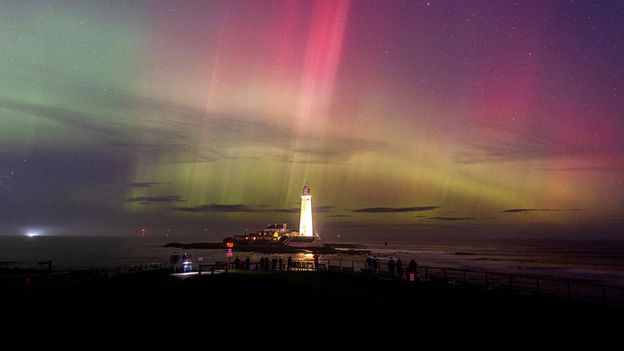
It’s called the corona, the crown, and it’s what everyone wants to see. It’s like you’re being beamed up into infinity. I’ve seen it quite a few times, luckily. Three in the morning at Skógafoss was a bit mad. Where I was staying in Iceland was a bit cloudy, but I knew clear skies were forecast at Skógafoss, so even though it was midnight and it was an hour and half’s drive, I went for it. I parked up and knew within 10 minutes that it was going to go crazy and, sure enough, it was right above me. It was the most incredible thing.
Why is 2026 a peak year for aurora spotting?
There is a natural 11-year cycle of activity of the Sun, when you get a lot more sunspots, and an aurora peak comes a couple of years after [the sunspot peaks]. There’s a bit of guess work, some scientists think this solar peak was the end of 2024, some think it has just gone in 2025. So, if it was 2024-2025, that means 2026-2027 are likely to be the most active for aurora storms.
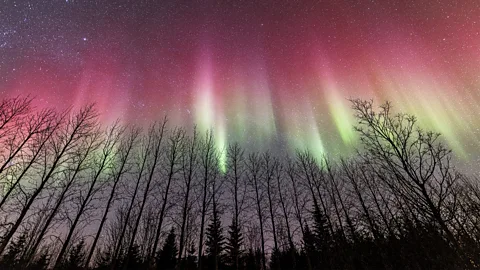 Wil PhotographyScientists believe 2026 will be a prime year for aurora chasing (Credit: Wil Photography)Why do you think the aurora is such a bucket list experience?

Most people know the aurora is beautiful. But… the aurora is there because the Earth’s magnetic field is protecting us from harmful radiation from the Sun. This radiation could literally kill us, but the atmosphere turns it into light, into a show for us to enjoy, and to be wowed by. It’s Earth protecting life, and I think at some deep level, humans, as part of the universe, as atoms, are aware of this.
What tips would you give people planning their own aurora-chasing trip?
Find a cabin or lodge in a location that has very dark skies. In a typical night, the aurora goes through phases. Most of the time, the phase is just a hazy glow. The most exciting time is the expansion phase, where you see structure, brightening, movement, the explosion of the aurora. This phase can sometimes last just minutes, so ideally you want to stay somewhere you can keep popping your head out rather than being in a position where you’re limited by the tours you’re going to take. By staying in the dark-sky area, you’ve got the whole night, rather than gambling it all on the few hours of a tour.
If you’re not driving and need to book a tour, do your homework. The right tour will have good local knowledge of things like light conditions, weather conditions [and] microclimates, which are a big thing in Norway [because of] the fjords. There are a lot of dodgy tours out there, so I would recommend reading the reviews.
BBC Travel’s The SpeciaList is a series of guides to popular and emerging destinations around the world, as seen through the eyes of local experts and tastemakers.
—
If you liked this story, sign up for The Essential List newsletter – a handpicked selection of features, videos and can’t-miss news, delivered to your inbox twice a week.
For more Travel stories from the BBC, follow us on Facebook and Instagram.