
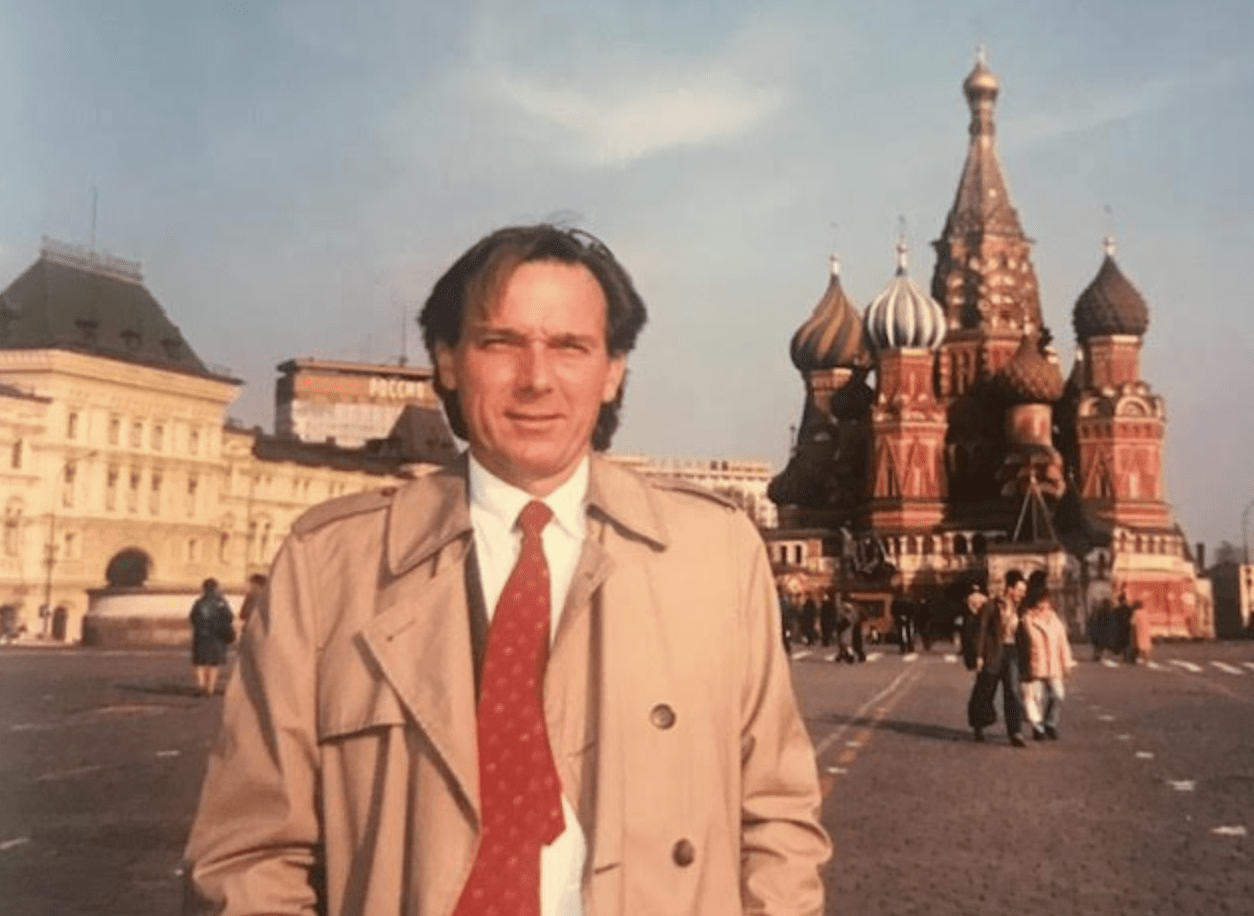
 Covering Russia for NBC News
By Peter Kent
January 24, 2026
This piece is part of our Policy series On Being Canadian.
When I was 23 years old, I applied for my first Canadian passport. I was a young journalist living in Calgary, preparing for a freelance assignment covering the Vietnam war, and I couldn’t be a foreign correspondent without one.
Instead of a passport, I received from Ottawa the following terse response: “You’re not Canadian.”
I had been living as an unwitting British citizen since arriving in Canada in the final years of WWII with my mother aboard the Red Cross hospital ship, Lady Nelson.
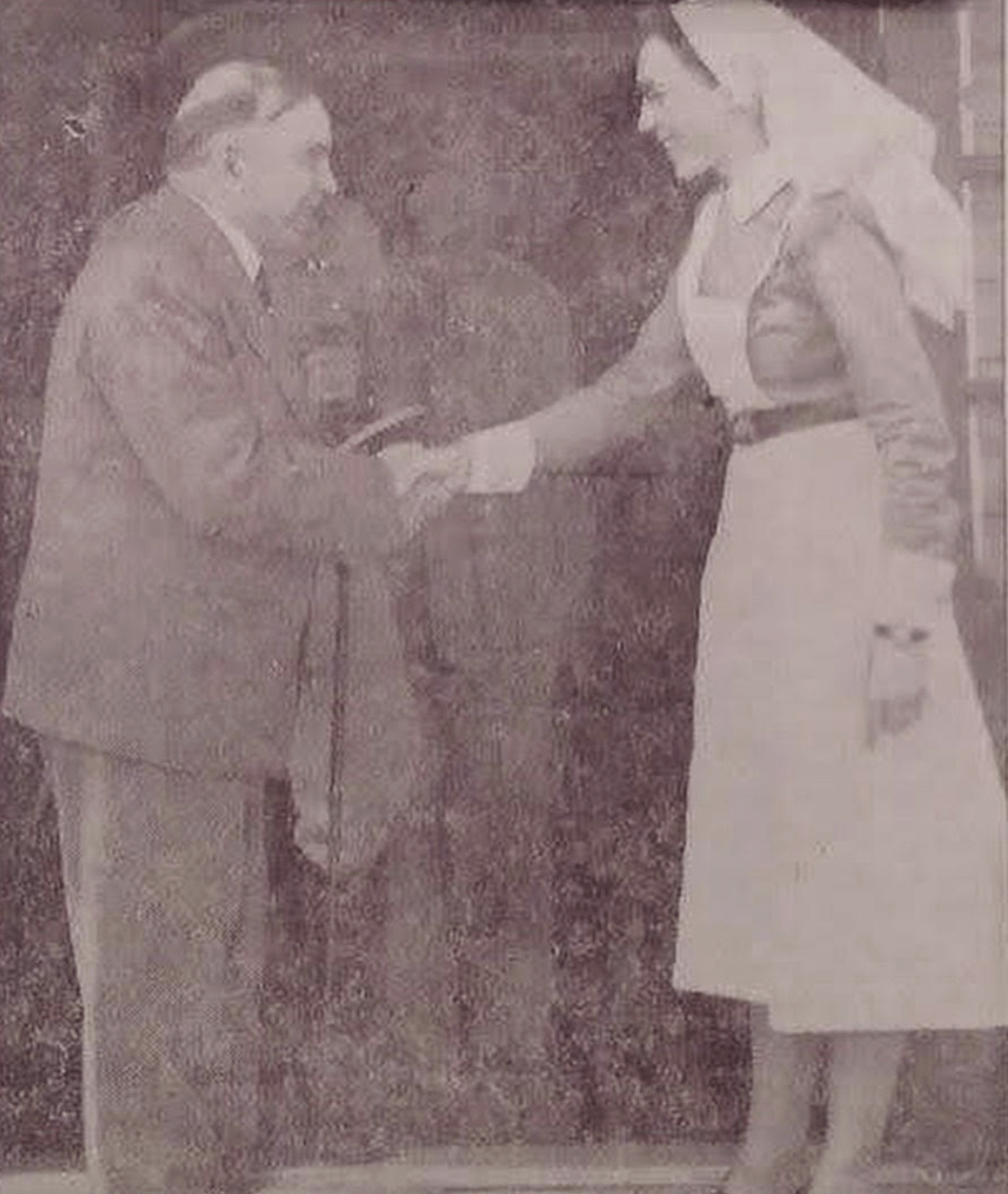
My mother greeting Prime Minister Mackenzie King at the
Currie Barracks Infirmary in Calgary, 1939/Toronto Telegram
My mom, Aileen Fears, was a Canadian Army nurse, or Nursing Sister Lt, born in Edmonton and raised in Calgary.
My dad, Parker, was a Canadian Army intelligence officer, born in Lacombe, Alberta.
They’d met and dated before the war. They connected again when they joined up and were separately assigned to England, Mom to a plastic surgery unit at the Basingstoke Canadian Army hospital in Hampshire and Dad to various posts across the south of England.
Theirs was a classic wartime romance of the kind featured in the films of the era — they married under an arch of fellow officers’ swords and the reception at the Waldorf in London was interrupted by an air raid, so they spent their wedding night with 100 other people in the basement bomb shelter.
I arrived in July 1943 at an army hospital in Camp Bramshott, the Canadian training facility set up in and around the Hampshire village of Bramshott.
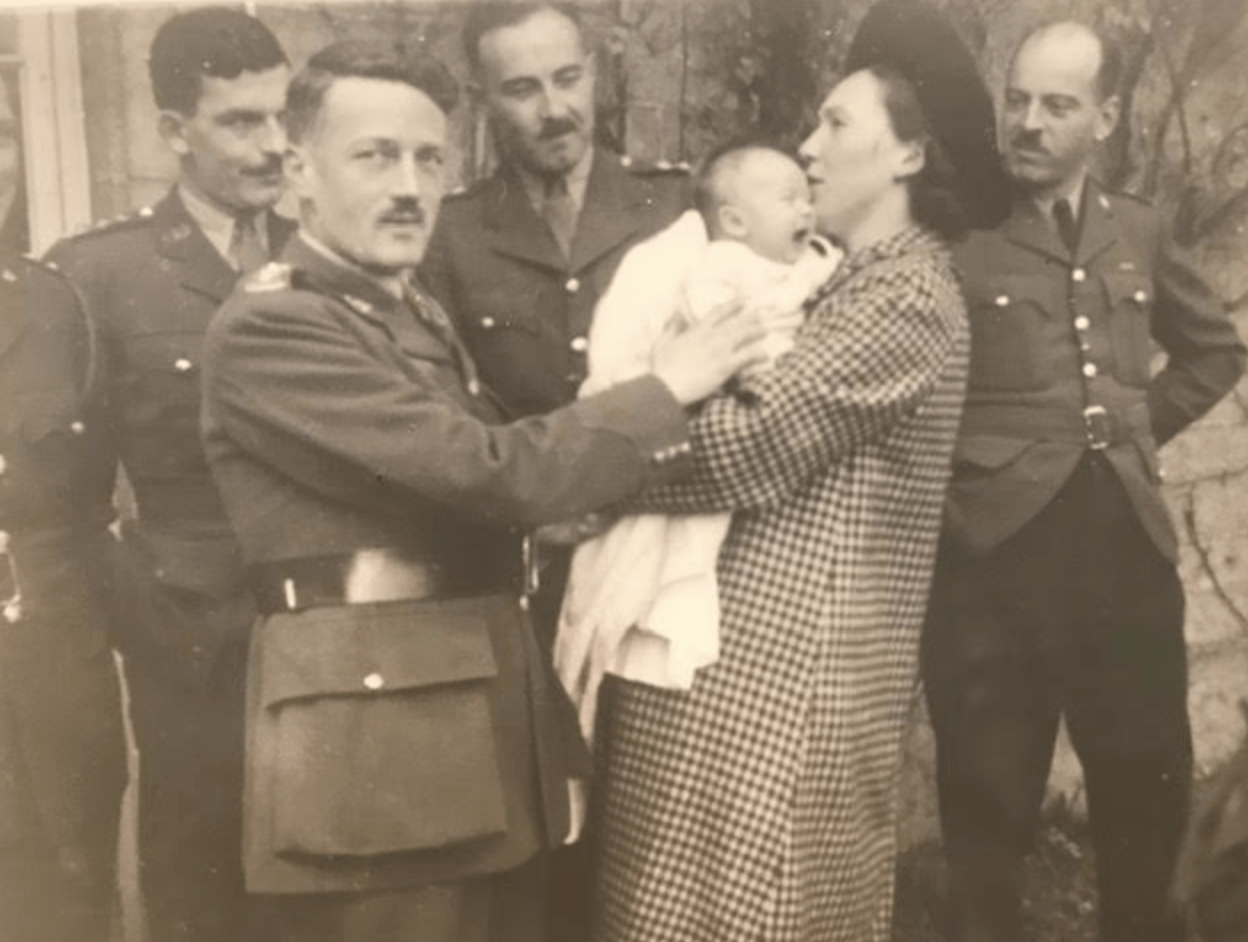 With my parents outside an officer’s mess at Wisborough Green stationing area
I’d enjoyed a relatively normal postwar childhood, the eldest of five children (all others born in Canada), as the family followed my journalist Dad, who was working in editorial management at a succession of Southam newspapers from Ottawa to Medicine Hat to Calgary.
After high school, I’d studied briefly in the Canadian Navy Venture Program in the dockyard in Esquimalt, B.C. And, I received a commission in the Army Reserve (150 Coy RCASC, Calgary) in 1963. No questions raised by Defence HQ in either case; my Canadian citizenship was assumed.
Mom was a Canadian Army nurse or Nursing Sister Lt, born and raised in Calgary.
Dad was a Canadian Army intelligence officer, born in Lacombe, Alberta.
They’d met and dated before the war. They connected again when they joined up and were separately assigned to England, Mom to a plastic surgery unit at the Basingstoke Canadian Army hospital in Hampshire and Dad to various posts across the south of England.
After a heady wartime romance of the sort often featured in movies of the era, they married under an arch of fellow officers’ swords.
In July of 1943, I arrived on the scene at an army hospital in Camp Bramshott, the Canadian training facility set up in and around Bramshott Common, in Hampshire, during both World War I and World War II.
He imposed one condition for me to join his mission, despite my protestations of unarmed, journalistic neutrality. He placed a .38 Smith and Wesson revolver on his desk and said he would load only one round; the implication of how it was to be used was clear.
While Canadian citizenship requirements allowing descent from Canadian parents abroad changed in 1947 with the Canadian Citizenship Act, but until I was 23, I was one of a host of so-called “Lost Canadians”. Until I applied for my passport, neither my parents nor I realized we should have adjusted my status after the war.
Fortunately, in mid-1960’s Canada, being an unregistered alien was not a particularly risky situation. I had a civilized, mildly bureaucratic route to naturalization and received a Canadian passport in time for my initial foreign assignment to Vietnam.
Arriving in Saigon in mid 1966, my primary focus was on the escalating war itself from the Gulf of Tonkin and the DMZ to the Mekong Delta. But I also spent time with the Canadian military and diplomatic personnel assigned, with Polish, Hungarian and Indonesian counterparts, to oversee the decade-old, clearly ineffective Geneva Peace Accords that had failed to balance the Cold War rivalries of the deepening proxy conflict between North and South Vietnam.
A Canadian Army NCO at the unit’s base in Saigon shared the challenges of the mission and gave me a Canadian arm band, which he said might come in handy if things went sideways during my time in-country. I never wore it when embedded with U.S. military units on the ground, in the air or on a carrier in the Gulf of Tonkin. But it was in my back pocket when I rode in the backseat in a U.S. Air Force F100F on a bombing and strafing mission near the Cambodian border.
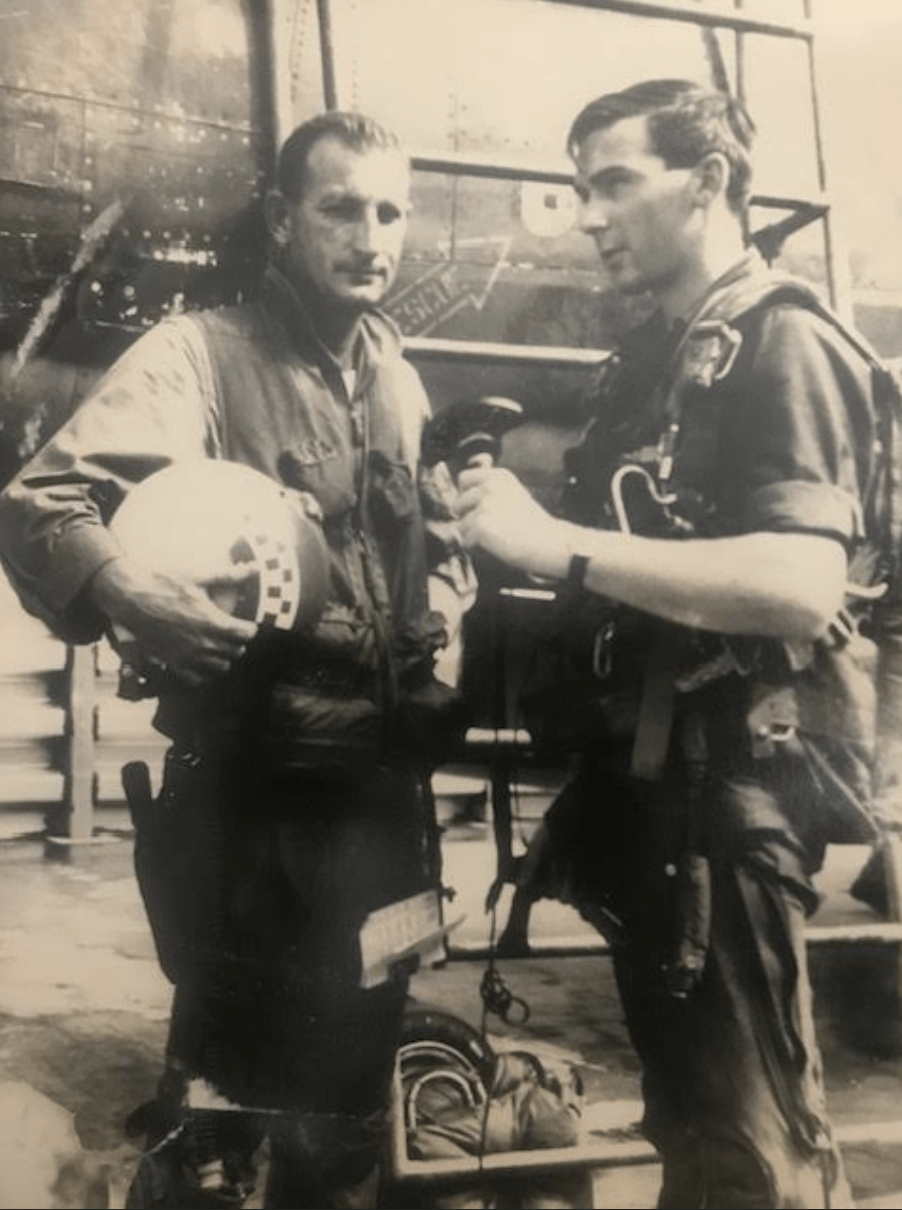
With Capt. Bob Norman at U.S. Air Base Bien Hoa
The pilot, Captain Bob Norman, had been shot down months earlier, parachuting to safety in allied territory. He warned me that if it happened again and we ejected to an enemy-held area, he’d be walked back to Hanoi as a valuable prisoner of war. A journalist, on the other hand, would likely be shot as worthless, he opined, and he doubted the Viet Cong would respect Canadian colours.
Still, Captain Norman and his two wingmates sardonically agreed that, in a worst-case scenario, I might flash the maple leaf arm band. But he imposed one condition for me to join his mission, despite my protestations of unarmed, journalistic neutrality. He placed a .38 Smith and Wesson revolver on his desk and said he would load only one round; the implication of how it was to be used was clear.
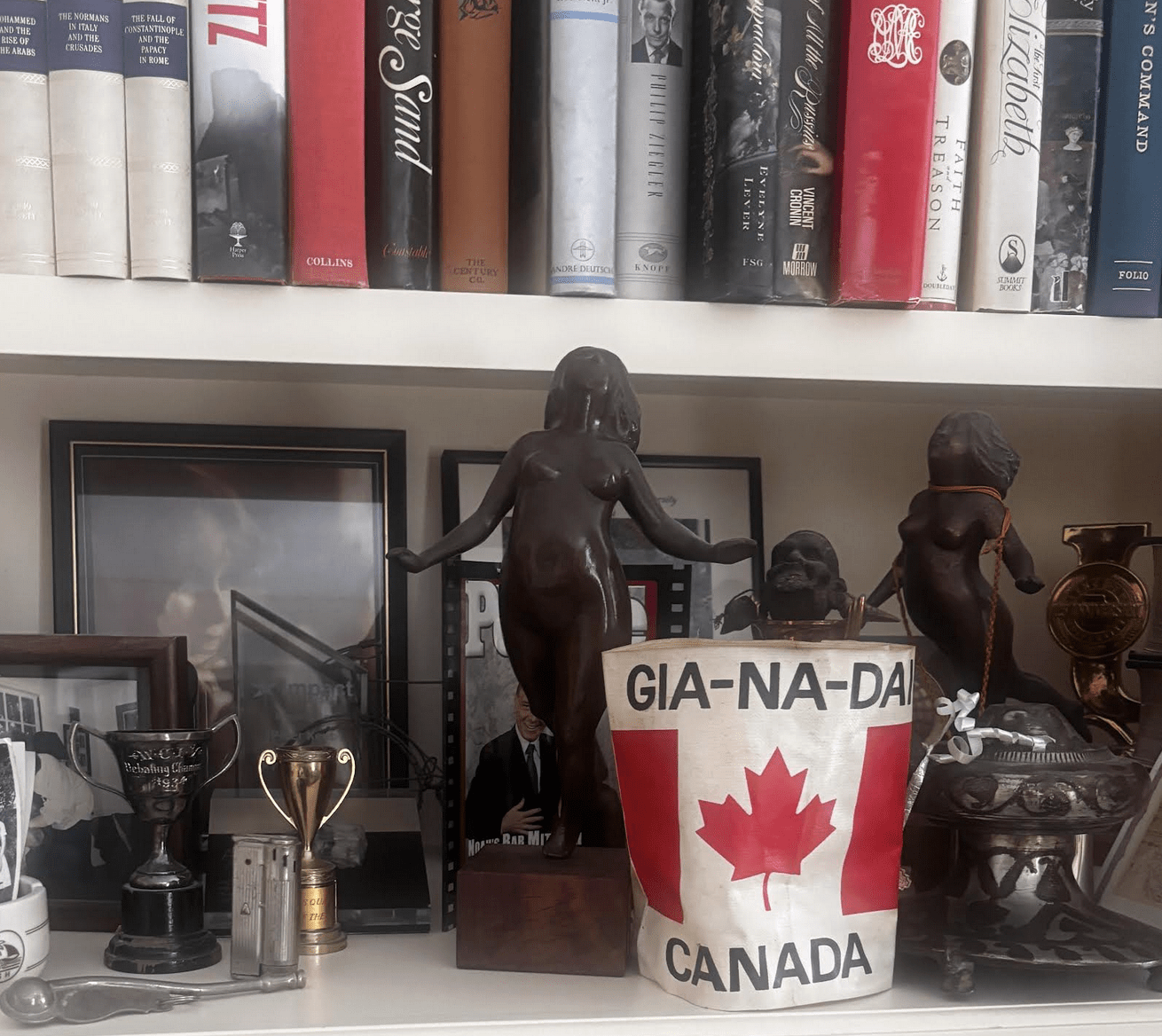
My Vietnam arm band from the Canadian International Control Commission
Fortunately, that hair-raising mission, as subsequent combat situations, came off without injury. The .38 stayed in a holster under my parachute and the “Gia-Na-Dai” arm band stayed in my back pocket. It resides today on my bookshelf.
From that first foreign foray as a callow young journo, for more than four decades as a reporter and news anchor, then, as a Member of Parliament, Canada’s Minister of State for Foreign Affairs (Americas), and Minister of the Environment — I’ve cherished my Canadian citizenship and identity for the opportunities and adventures it has provided around the world.
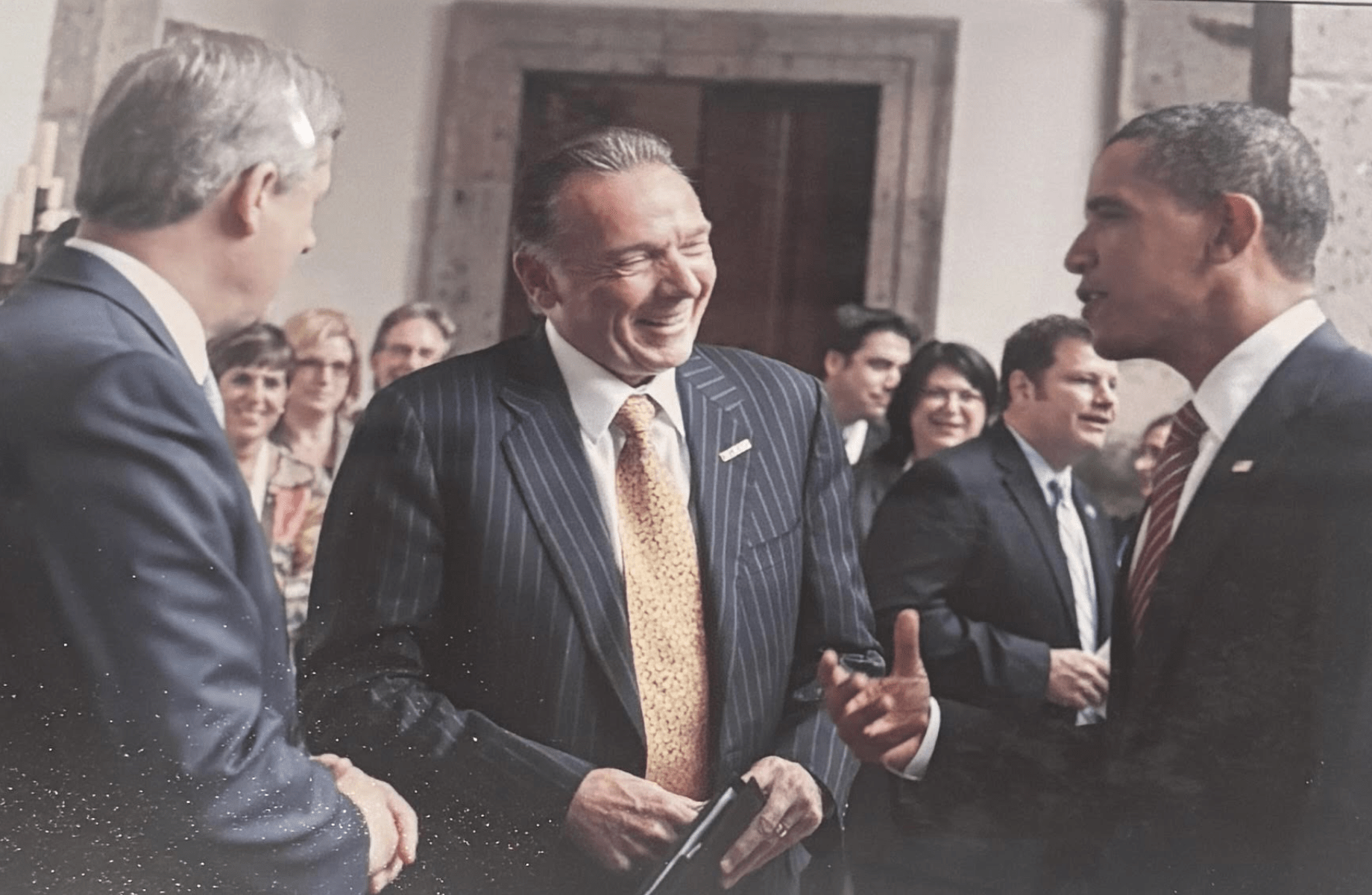 With Prime Minister Stephen Harper and President Barack Obama at the Guadalajara Three Amigos Summit in August, 2009/Courtesy
As a Canadian, I’ve shared the confidence of sources around the world, and the trust of fellow parliamentarians in foreign capitals. As a cabinet minister of a stable democracy, I’ve been afforded the benefit of the doubt as a representative of the interests of nobody more powerful than my fellow citizens. And as someone born in a war zone, who has witnessed war in all of its abasements, I’m grateful to carry the passport of a country whose relationship to power is best summed up as restraint by reflex and gallantry when required.
Most of all, as Canada negotiates the precarious path of shifting historical alliances and unexpected adversaries, on the way to what our prime minister has defined as a “new world order”, I’m hoping this nation remains one of the most respected, loved and admired countries in the world.
Peter Kent spent more than 40 years a reporter, producer and anchor for CTV, CBC, Global in Canada as well as NBC TV News and Monitor TV News in the U.S. He represented Thornhill as a Member of Parliament for 13 years, including three years as Minister of State for Foreign Affairs (Americas) and 2 1/2 years as Environment Minister. In retirement, he served as president of First Phosphate for a year and now focuses on late-life therapy with the bass guitar.