
A routine polar mission captured a shock no one expected, not on the surface but hidden beneath the ice. What did they stumble on under Antarctica that could make the oceans behave differently?
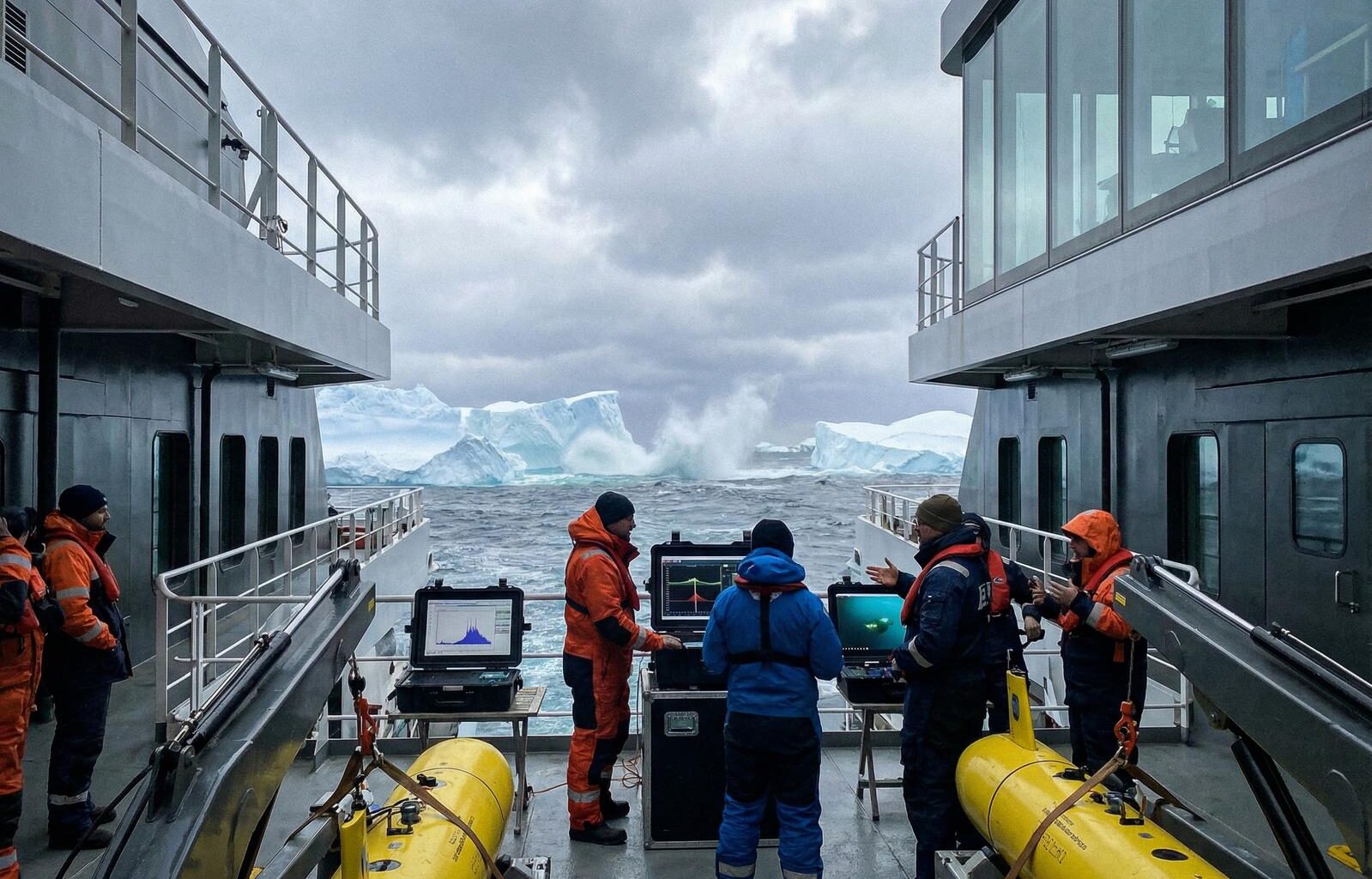
When a slab of ice shears off an Antarctic glacier, the drama usually plays out at the surface. Sensors aboard the British research vessel RRS James Clark Ross caught the hidden sequel: powerful undersea tsunamis that churn the ocean’s layers, shuttling heat and nutrients through the water column. The finding, once underestimated, now anchors an international effort led by the British Antarctic Survey and the POLOMINTS project to rethink how polar oceans feed back into the climate system. With satellites, drones and new polar ships like the RRS Sir David Attenborough joining the hunt, scientists are racing to gauge what this mixing means for ice melt and the global climate.
Iceberg calving and a hidden force beneath the waves
The magnificent, yet harrowing, sight of an iceberg detaching from its glacial roots in Antarctica has long symbolized the effects of climate change. But what happens beneath the surface, once those towering blocks of ice plunge into the sea? As researchers aboard the RRS James Clark Ross recently discovered, these dramatic events unleash undersea tsunamis, disturbing the deep ocean in ways few had imagined, even those studying polar regions for years.
A startling discovery in Antarctic waters
It was during a mission in the Southern Ocean near the Sheldon Glacier that the team aboard the aging research ship stumbled upon evidence of these undersea tsunamis. As icebergs calved with thunderous force, the sensors on board revealed massive waves rippling through the ocean’s depths. This wasn’t just surface-level turbulence. These waves propagated through the water column, blending distinct ocean layers and redistributing heat and nutrients in unexpected ways, yet to be fully documented in scientific models.
Imagine the scale: towering waves surging silently in darkness, reshaping the very fabric of the ocean. The implications were striking and unprecedented. For decades, researchers had focused on what iceberg calving meant for sea levels and marine ecosystems, but these undersea pulses, like whispers from the depths, had gone unnoticed until now.
How submarine tsunamis redraw the ocean’s map
What makes these tsunamis so significant lies in their mechanics. Much like dropping a stone into a pond, the sudden motion of these icebergs generates immense energy beneath the surface. This energy cascades downward, mixing ocean layers that are typically distinct in both temperature and nutrient levels. The results are far-reaching:
Heat redistribution: warmer waters reach delicate ice shelves, potentially accelerating their melt.
Nutrient upheaval: nutrients from deeper waters are brought to the surface, impacting marine ecosystems.
Ocean circulation shifts: these events may tweak ocean currents connected to global climate systems.
This intricate balance of redistribution leads scientists to reevaluate how icebergs contribute to long-term climate change. Could this new understanding alter predictions of sea-level rise? Or reveal vulnerabilities in ecosystems that rely on predictable nutrient flows? The questions have only begun to surface.
Technology and teamwork unravel the mystery
Breaking such ground wasn’t purely accidental. The British Antarctic Survey and the international POLOMINTS project had laid the groundwork. Alongside advanced sensors on aging vessels like the RRS James Clark Ross, modern tools such as satellites, drones, and autonomous submersibles played a crucial role. Even newer ships, like the high-tech RRS Sir David Attenborough, are now being tasked with continuing these investigations.
Such efforts demonstrate the importance of collaboration. British, American, and Polish teams, with backing from the Natural Environment Research Council, have joined forces to meticulously study the cryosphere and its global impacts. While advances in artificial intelligence further streamline the analysis, the unpredictable nature of Antarctic dynamics reminds us that the research is far from complete.
A ripple effect on global understanding
Antarctica’s secrets are revealing themselves in surprising ways, and each discovery seems to send shockwaves, both literal and metaphorical, across our understanding of Earth’s systems. The once-overlooked tsunamis caused by iceberg calving underline the delicate choreography between ice, sea, and sky. While much remains to be learned about these underwater giants, one thing is clear: what happens beneath the Antarctic waves resonates far beyond the poles.