
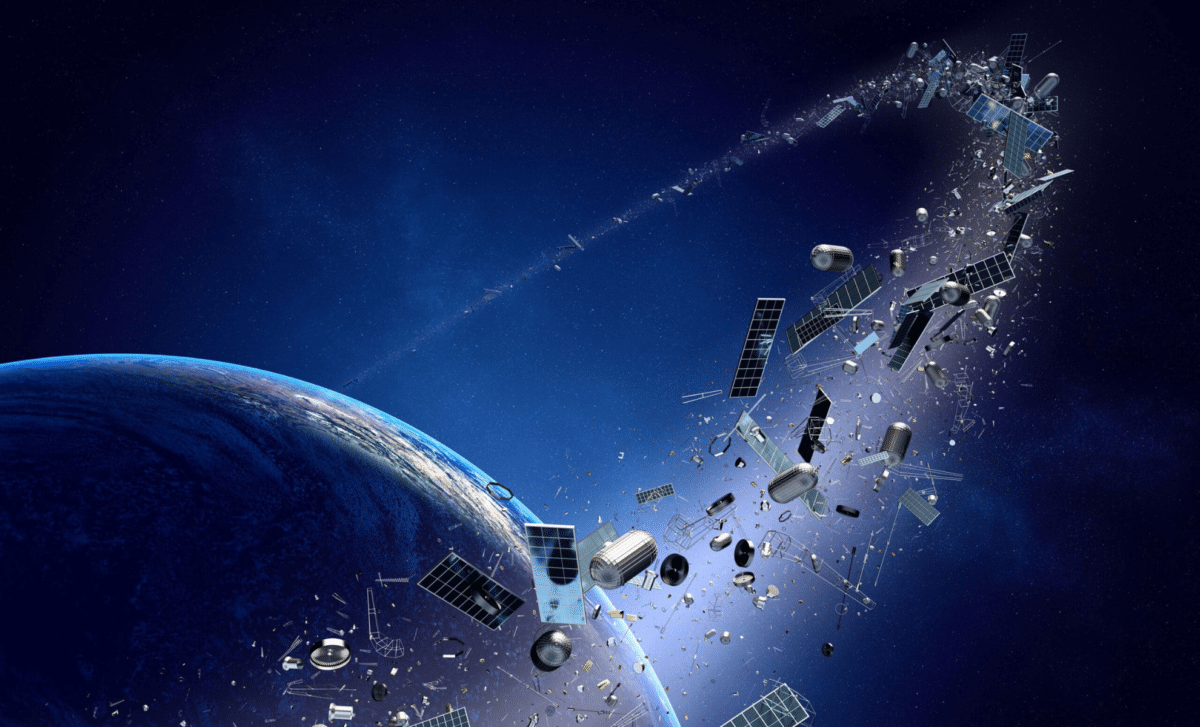
Low Earth Orbit is entering a fragile phase as new research published on arXiv warns that the near-Earth space environment could deteriorate far faster than previously assumed. The study suggests that under certain conditions, orbital stability may unravel in a matter of days, creating a cascade of debris events with little or no warning.
A Rapid Destabilization Scenario Emerges
The research describes a scenario in which low earth orbit becomes vulnerable to sudden systemic failure. Using advanced numerical models, the authors explore how dense satellite populations interact with existing debris. Their simulations show that once a critical threshold is crossed, collisions are no longer isolated events. Instead, each impact increases the probability of further impacts, creating a runaway effect that accelerates dramatically.
What makes this scenario alarming is the timescale. According to the study, orbital conditions could shift from seemingly stable to critically unstable in as little as two to eight days. This window is far shorter than current mitigation or response frameworks anticipate. Satellite operators typically rely on tracking updates, collision avoidance maneuvers, and coordination protocols that assume gradual change rather than abrupt collapse.
The findings challenge the assumption that space debris risk grows linearly. Instead, the models indicate a nonlinear process where small increases in object density produce disproportionate consequences. Once initiated, the cascade becomes increasingly difficult to interrupt, even with active intervention.
Consequences For Satellites And Everyday Services
A destabilized low earth orbit would have immediate consequences for modern infrastructure. Communication networks, Earth observation platforms, navigation systems, and weather monitoring satellites all depend on reliable orbital access. A dense debris environment would sharply increase collision risk, forcing operators to deactivate satellites or abandon key orbital regions.
The economic implications extend well beyond the space sector. Disruptions to global navigation, broadband connectivity, and climate monitoring would affect aviation, shipping, agriculture, and emergency response. Insurance costs for satellite missions could rise steeply, making new deployments financially unviable.
The study also notes that debris cascades do not respect national boundaries. Orbital space is a shared environment, meaning that actions by a limited number of actors can impose risks on all users. This raises governance questions that existing international frameworks are not equipped to resolve quickly.
Why Current Mitigation Strategies May Fall Short
Most debris mitigation policies are designed around gradual accumulation rather than sudden collapse. End-of-life disposal guidelines, passivation requirements, and tracking improvements help reduce long-term risk, yet they may not prevent rapid chain reactions once critical density is reached.
The arXiv paper suggests that active debris removal could play a role, though its effectiveness depends on scale and timing. Removing a small number of large objects may not be enough if numerous smaller fragments dominate collision probabilities. The authors point out that without coordinated global action, isolated mitigation efforts offer limited protection.
The study reinforces the need for predictive models that focus on short-term instability, not only century-scale projections. Early detection of tipping points could provide a narrow opportunity to intervene before a cascade accelerates beyond control.