
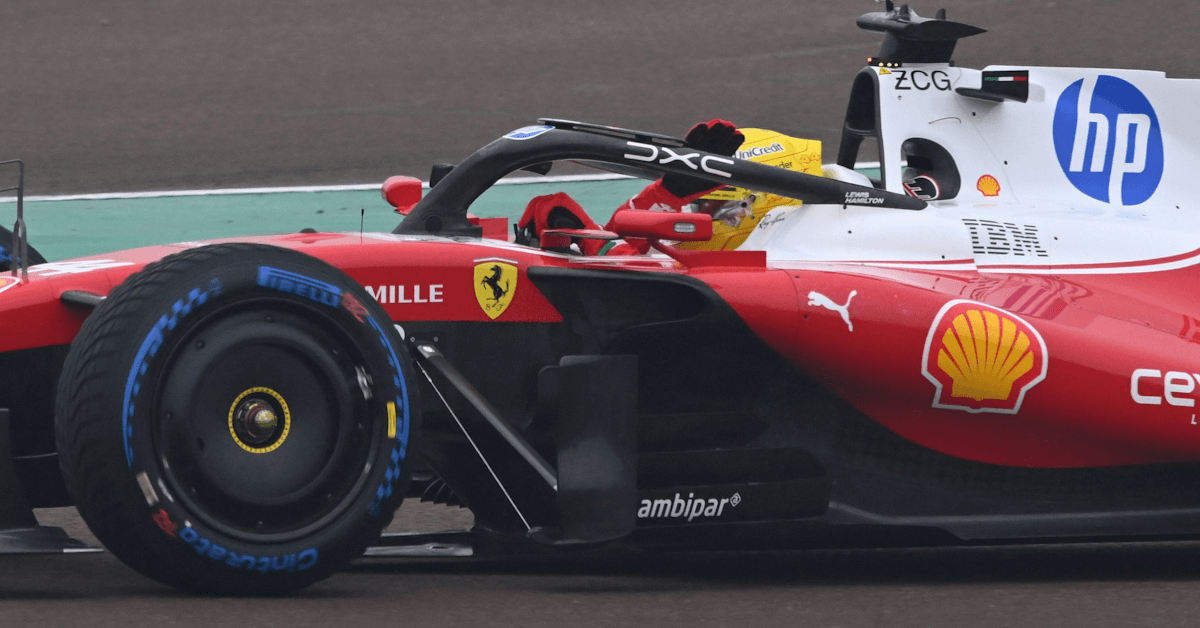
The 2026 Formula 1 championship season has effectively begun one month earlier than the paddock’s traditional schedule. A huge number of new features and 11 teams will battle from March through to December to decide the world champion in what promises to be a highly exciting season.
Tomorrow, the teams will begin taking turns on track for the Barcelona pre-season tests, scheduled from January 26 to 30. With the exception of Williams, which has not completed all its preparation work in time, the other 10 teams will all take part in this session, even though some have yet to officially unveil their cars. We are referring to Williams, Cadillac, Aston Martin and McLaren, which will only remove the covers in February.
In the meantime, however, we have already started to get to know several of the new cars. By observing the images released by the teams, we can begin to form an idea of what we might witness from now until the first race of the season, scheduled for March 8 in Melbourne.
Alpine A526
We decided to proceed in alphabetical order, starting with the Alpine A526. The 2026 season marks a radical change for the French manufacturer, with the end of its relationship with Renault and the beginning of a new chapter as a Mercedes customer team. The car already appears rich in detail, particularly when looking at the work done on power unit cooling, as well as the tapered shape of the sidepods and engine cover.
This area will certainly undergo circuit-specific adaptation changes, although we do not believe they will be particularly invasive. The components that could instead change significantly are those related to the bargeboards, the outer area of the front wing endplates and, potentially, even the fin above the engine cover.
In the areas mentioned above, the Alpine A526 shows solutions that look almost too simple and “clean” to be definitive. One certainty is the choice of a push-rod front suspension layout, a technical decision that currently appears to be the most popular, as all the cars revealed so far adopt this solution.
Audi R26
Next is the Audi R26, the first single-seater with which the German manufacturer has decided to begin its Formula 1 journey. Unfortunately, the car presented on January 20 is only a show car, the same one used by the FIA to announce the regulation changes, dressed in the livery that the Audi team (formerly Sauber) will use during the season.
In this case, it is impossible to anticipate anything meaningful. We will have to wait for the images coming from the tests over the next few days in order to carry out the first real analyses.
Haas VF-26
We then arrive at the Haas VF-26, a car that will continue to be powered by Ferrari power units. As we will see later, unlike the SF-26, the Haas engineers have chosen a much more generous airscope than the one used by the Maranello team.
In addition to the central triangular intake, the VF-26 features two well-defined “ears” on the sides and two large air intakes positioned on the sidepods. The trend, regardless of the engine supplier, seems to be to give cooling systems a prominent role during this first year of the new regulatory cycle, perhaps with the aim of ensuring greater reliability.
The size of the air intakes does not vary significantly among teams using Ferrari, Red Bull and Mercedes power units, with Audi and Honda still to be evaluated. The only clear exceptions, for now, are Ferrari and VCARB, which have taken two diametrically opposite paths.
The Haas VF-26 retains a push-rod front suspension layout, a larger fin compared to Alpine, less tapered sidepods with a softer silhouette, and an interesting solution on the outer side of the front wing endplates. Haas has added a horizontal wing element on the upper side, seemingly to generate more downforce and direct airflow toward the upper part of the tyre.
However, caution is required, as presentation cars may feature “fake” solutions deliberately installed to mislead rivals and fans alike.
Ferrari SF-26
Ferrari has chosen to return to a push-rod front suspension, following the general trend set by its competitors. This suspension layout creates fewer set-up complications and, considering the difficulties experienced by the Scuderia last year, it is a solution that Maranello knows well. Facing a regulatory reset with a familiar suspension concept is crucial, at least in the early phases of the project’s development.
In terms of cooling, the Prancing Horse appears to have made a very bold choice, opting for an extremely small airscope. The air inlet section relies exclusively on the central triangle, with the addition of a slot immediately beneath it. This slot coincides with the upper part of the driver’s helmet, meaning airflow could still be ensured, albeit potentially limited by the obstacles ahead.
The sidepod air inlet section, on the other hand, appears fairly generous and could compensate for this choice. What seems unusual is that the Maranello team may have selected a packaging layout different from that of Haas, despite using the same power unit.
At the moment, the Ferrari SF-26 is the most extreme car from a cooling perspective. It may have chosen to sacrifice some reliability in exchange for better aerodynamic efficiency compared to its rivals, possibly suggesting that Ferrari itself believes it has a significant power deficit relative to the competition.
The Maranello engineers have also revealed a very distinctive serrated-profile fin, from which hot air from the engine exits. At high speeds, this airflow will simulate the continuation of the dorsal fin in the upper area of the car.
Another interesting detail is the presence of several rods in the bargeboard area. These struts not only provide structural support but clearly serve a precise aerodynamic purpose, guiding airflow around the car. This solution has also been adopted by Mercedes and VCARB, confirming that this will be a key area of discussion throughout the season.
The front wing, by contrast, still appears rather simple compared to those of its rivals.
Mercedes W17
The new car presented by the Stuttgart-based manufacturer is a real visual spectacle. As with Alpine, the airscope intake section is generous, featuring two outer “ears” alongside the central triangle, as well as an adequate section for air entering through the sidepods.
Bold and highly fluid shapes guide the airflow toward the rear of the car. The engine cover features a concavity that vaguely recalls Ferrari’s 2022 solution. Very different concepts, but perhaps the work done in Brackley this year draws inspiration from that era.
The fin and front wing are very simple, and the front suspension once again adopts a push-rod layout. Like Ferrari, the W17 also features rods connecting the bargeboards to the central body of the car, indicating similar solutions adopted by the two top teams in this area.
Red Bull RB22
In its first year without the direct influence of Adrian Newey, Red Bull nevertheless retains a very strong and recognizable identity. Significant emphasis has been placed on cooling for its first fully in-house power unit, developed in Milton Keynes in collaboration with Ford.
The airscope intake is very similar to Mercedes’, while the air intake area in the sidepods appears much smaller than that of its competitors. Red Bull continues to use the same sidepod concept introduced last year, guiding airflow from above toward the hot components that need cooling.
This solution may be what allows the team to reduce intake size in favor of aerodynamic efficiency. The sidepods and engine cover feature a highly distinctive, tapered design, while the fin is very small, at least in this initial version.
On the outer sides of the front wing, a small flap appears, already more detailed and refined in shape and size compared to what has been seen on the Haas. The front suspension layout is push-rod here as well.
VCARB-03
We conclude our overview with the VCARB-03, the third car produced by the Faenza-based team since it changed its name to Visa Cash App Racing Bulls. In this case, despite using the same Red Bull power unit, the new Italian car stands out for its extremely oversized air intake sections dedicated to power unit cooling.
Perhaps the performance data of the unit developed in Milton Keynes inspired so much confidence that the Faenza engineers decided to sacrifice aerodynamic efficiency in favor of reliability. This may have been a strategic decision, although when compared with the work done by other teams, it could also represent excessive oversizing.
It will be interesting to see whether changes are made between the tests and the first race in Melbourne.
Aside from the sidepod and engine cover areas, which are closely linked to the power unit, the VCARB-03 appears almost too simplistic in all the other solutions shown at launch. It also adopts a push-rod front suspension layout.
Like Ferrari and Mercedes, the VCARB-03 features a rod connecting the bargeboards to the car’s body, although in this case the position is more central compared to its rivals.
Jan 26, 2026Maria Lombardi
Let other Scuderia Fans know about us


