
The UCI’s new measuring stick and so much more.

Dave Rome and Matt de Neef
The start of the WorldTour is a great place to find out who is riding what for the new season. There are new paints, new wheels, and occasionally even bigger items to spot.
As a tech editor, I probably shouldn’t announce this, but I find it increasingly difficult to get excited about the new stuff. Rather, I get my geek on by spotting the little nuanced differences and or the easily overlooked finer details. The type of stuff that, in isolation, may not matter, but when added together, separates a good bike from a great bike.
Here’s a quick look at a few tidbits from the Tour Down Under that caught my attention. Some of these you may have heard in the latest Geek Warning pit walk episode, through the prologue tech coverage, or seen in either the Bikes of the 2026 Women’s WorldTour or Bikes of the 2026 Men’s WorldTour.
The UCI’s new measuring stick
The big tech news for the 2026 race season is that a number of new regulations are now in play. There are new limits on bar widths, rim depths, and the use of time trial helmets.
UCI confirms handlebar rules and bans some aero helmets
Governing body backs down on lever width rules but doubles down on new helmet regulations.

Bar widths have certainly dominated the chatter, mostly because some unreasonable dimensions were first proposed by the UCI. As previously reported, the rule now in place requires that the narrowest point of the handlebar (typically measured between the brake levers) is no less than 280 mm inside-to-inside. Meanwhile the bar must be at least 400 mm wide (outside to outside, including bartape) at the drops. There are also rules around how much flare a bar can have and the depth of the tops.
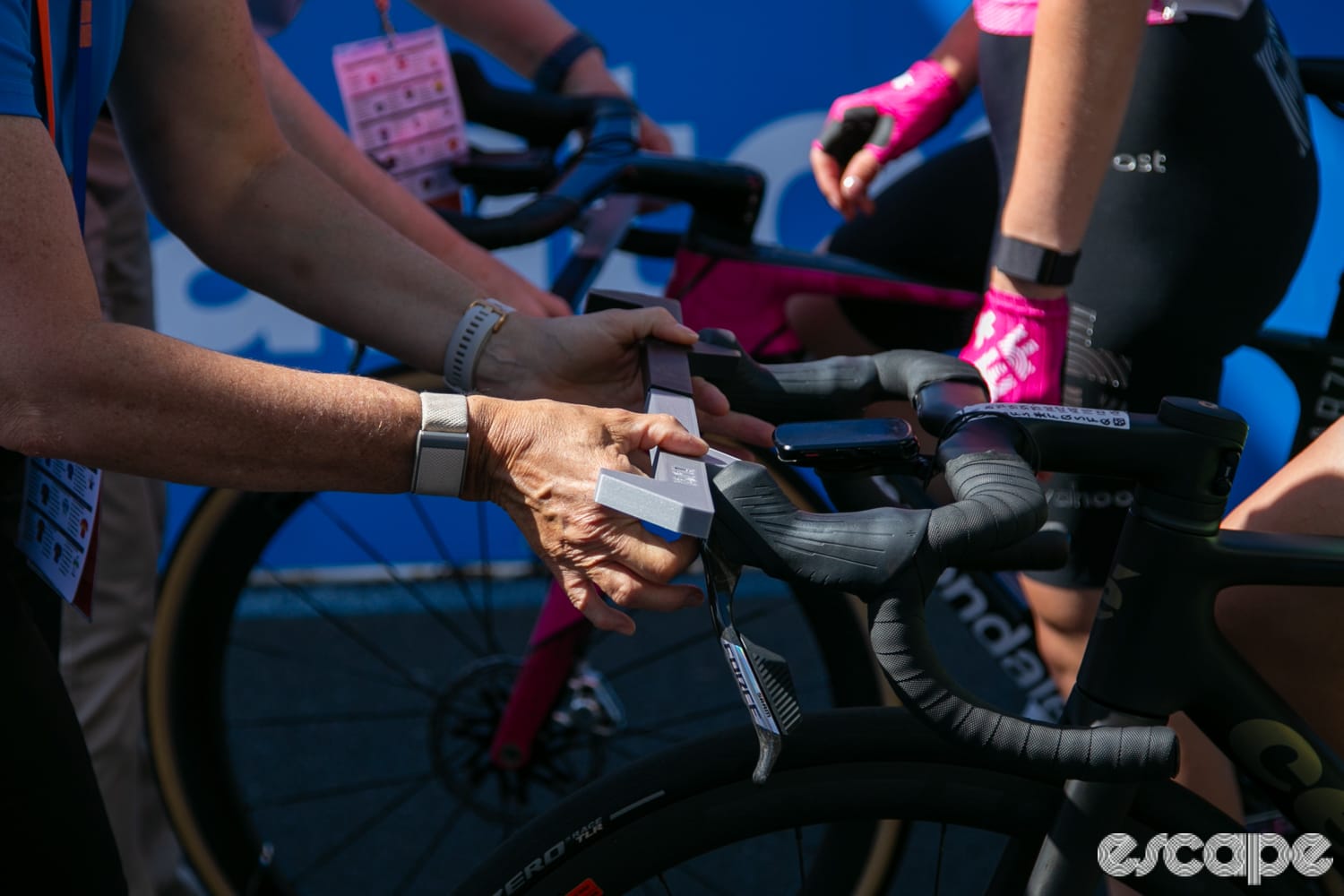
It was clear that the UCI’s commissaires are strongly focused on this one technical regulation while on the ground for the Tour Down Under. Prior to each day’s start, they have been seen measuring each rider’s bars with a fixed-length measuring stick. That stick has also made an appearance at the end of stages, including on stage 2 where UAE’s Jhonatan Narváez failed the test having swapped to a spare bike earlier in the day. With no further mention of this infringement in the official documentation, it’s clear he wasn’t barred (eh, eh?) from the race. (Unfortunately, he did crash out on stage 4 though).
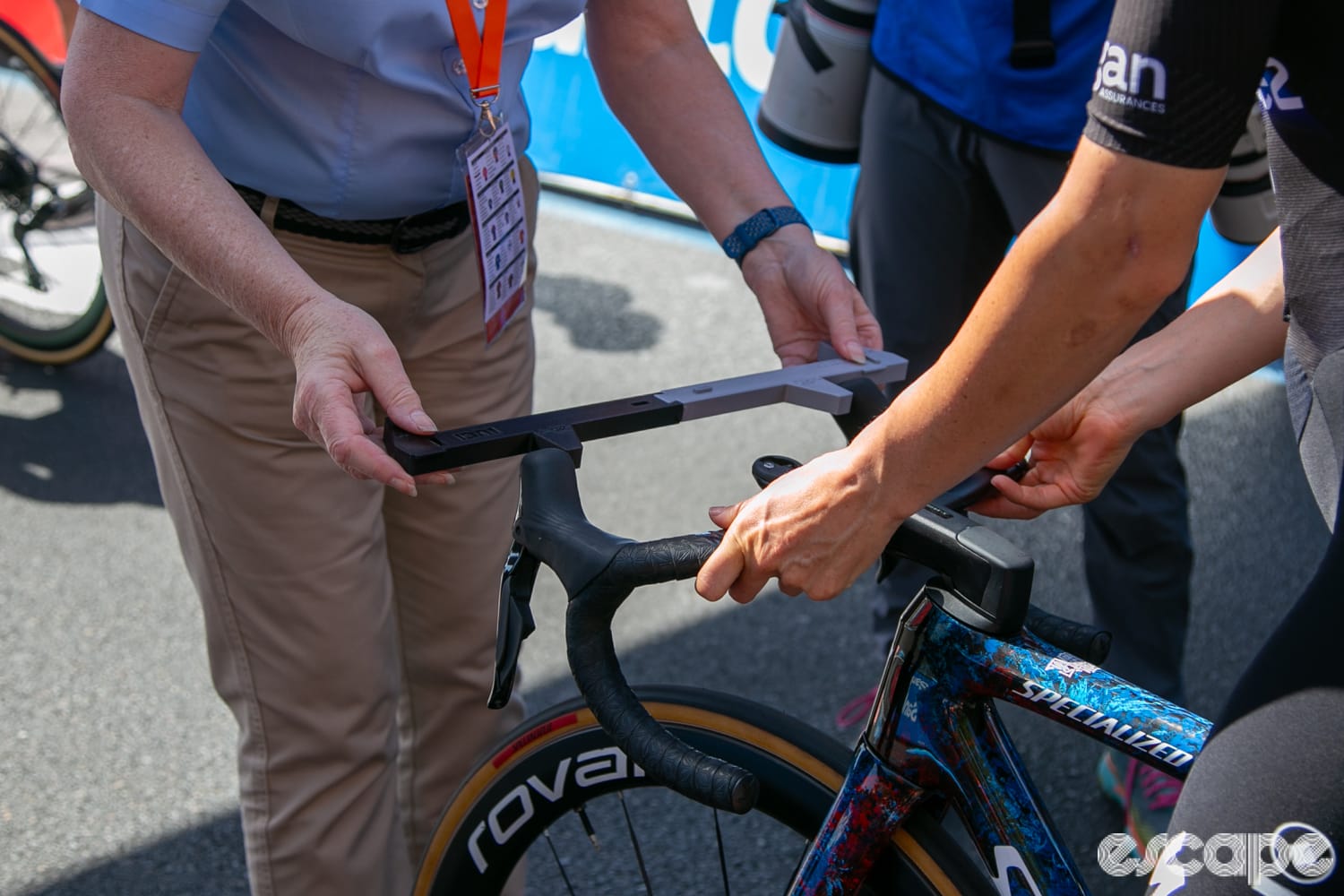
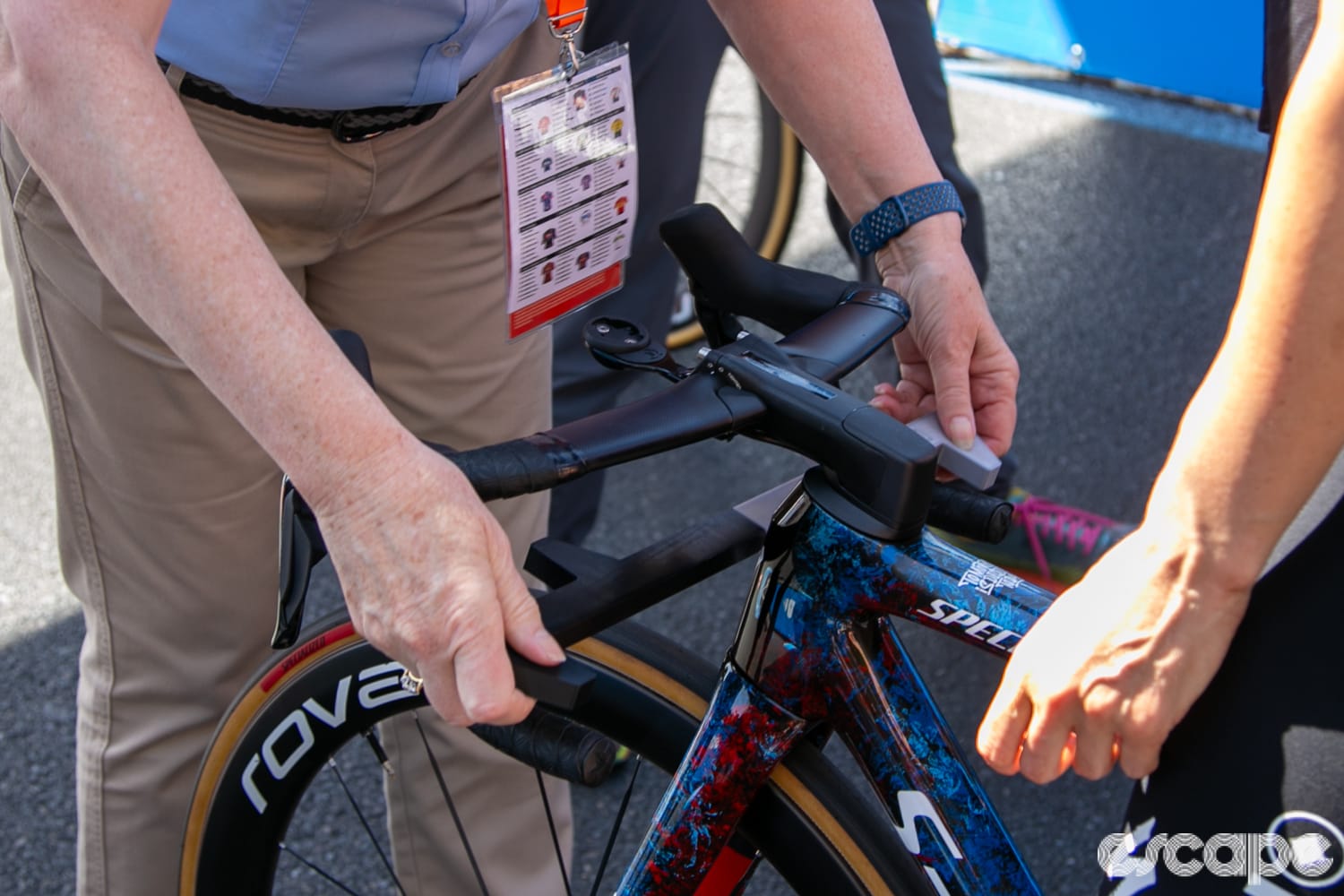
Measuring the inside and then the outside.
The tool used is a simple, 3D-printed go-no-go gauge, with arms for checking the minimum distance between the hoods, and one for checking the outer width at the drops. It takes just a few quick seconds to use, and if the tool doesn’t fit, the bike fails the check. In all cases seen so far, bikes that failed merely needed the brake levers straightened a touch on the spot.
UCI measuring bars at the women’s Tour Down Under. (Video: Matt de Neef)
I’m confident that some teams are 3D-printing their own measurement tools (the design files are available on the UCI website) and simply setting up hood placement to meet the minimum requirement.
Slammed saddles
Sneaking into the rule book is a relaxation over the setback position of saddles. And by sneaking, I mean I was oblivious to it until my colleague Ronan Mc Laughlin mentioned it to me. Previously, the nose of the saddle had to be a minimum of 50 mm behind the centreline of the bottom bracket, which was a rule that played a big role in the current popularity of short-nose saddles.
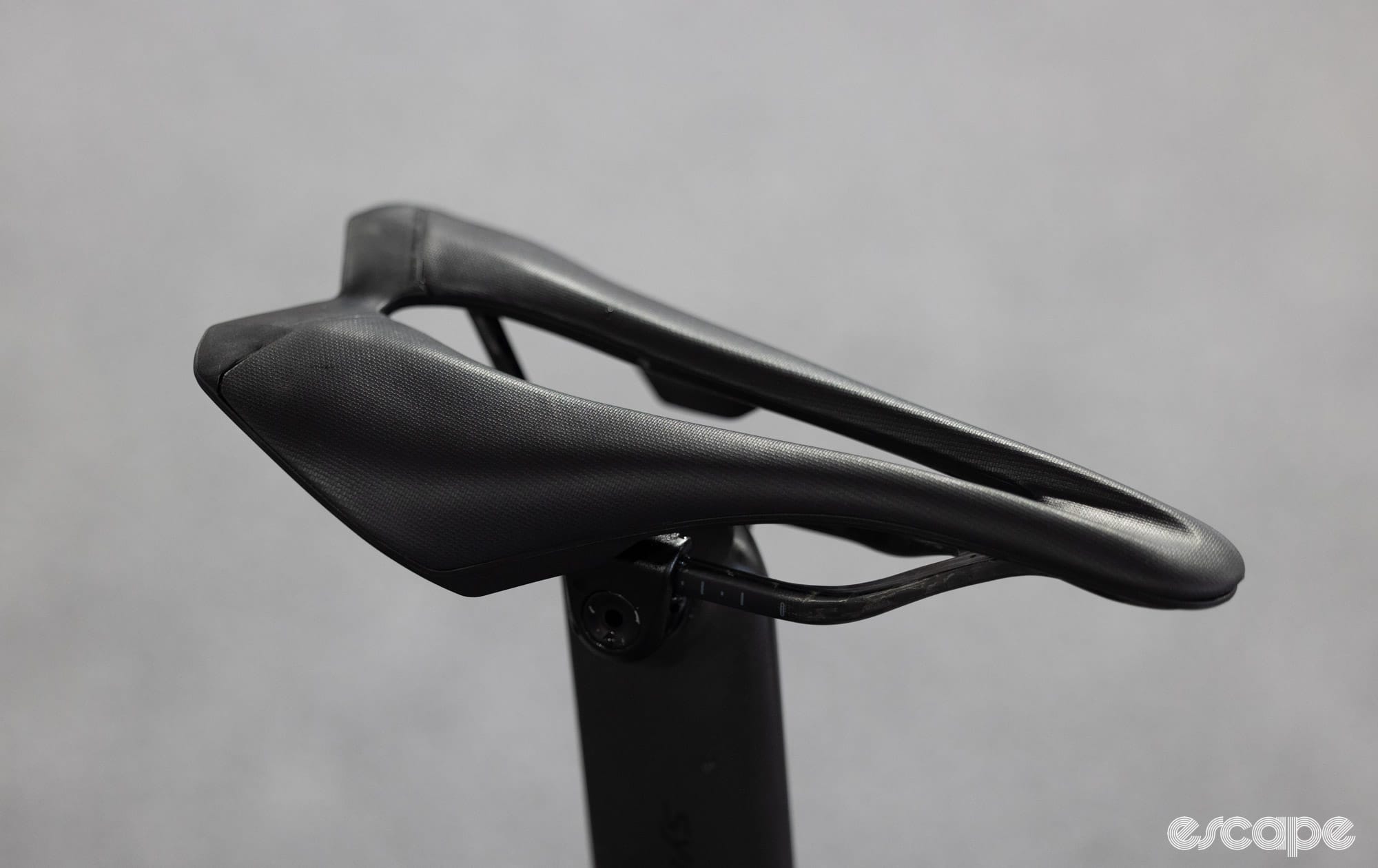 Very few saddles were placed in the middle of the rail.
Now the UCI has changed the rule, simply stating “The tip of the saddle shall be positioned behind the vertical plane passing through the centre of the bottom bracket spindle axle and must under no circumstances cross this plane.” Most basically, the figure is now 0 mm.
The outcome is a few saddles slammed further forward than we’ve seen in pro road racing to date. It also feels like we’re seeing more traditional-length saddles in use, likely to close the gap between how far forward riders want to be and what their bikes actually currently allow.
Without question, bike fit in the pro peloton is changing and the relaxing of this rule will prove a big one in allowing riders to adopt positions more similar to what’s long been popular in triathlon, mountain bike, and gravel. Expect many brands to follow bikes like the new Factor One, where seat tube angles are steeper. Meanwhile, we’ll likely see setback seat posts increasingly become a relic of the past. Heck, it may even bring a few further changes in saddle design.
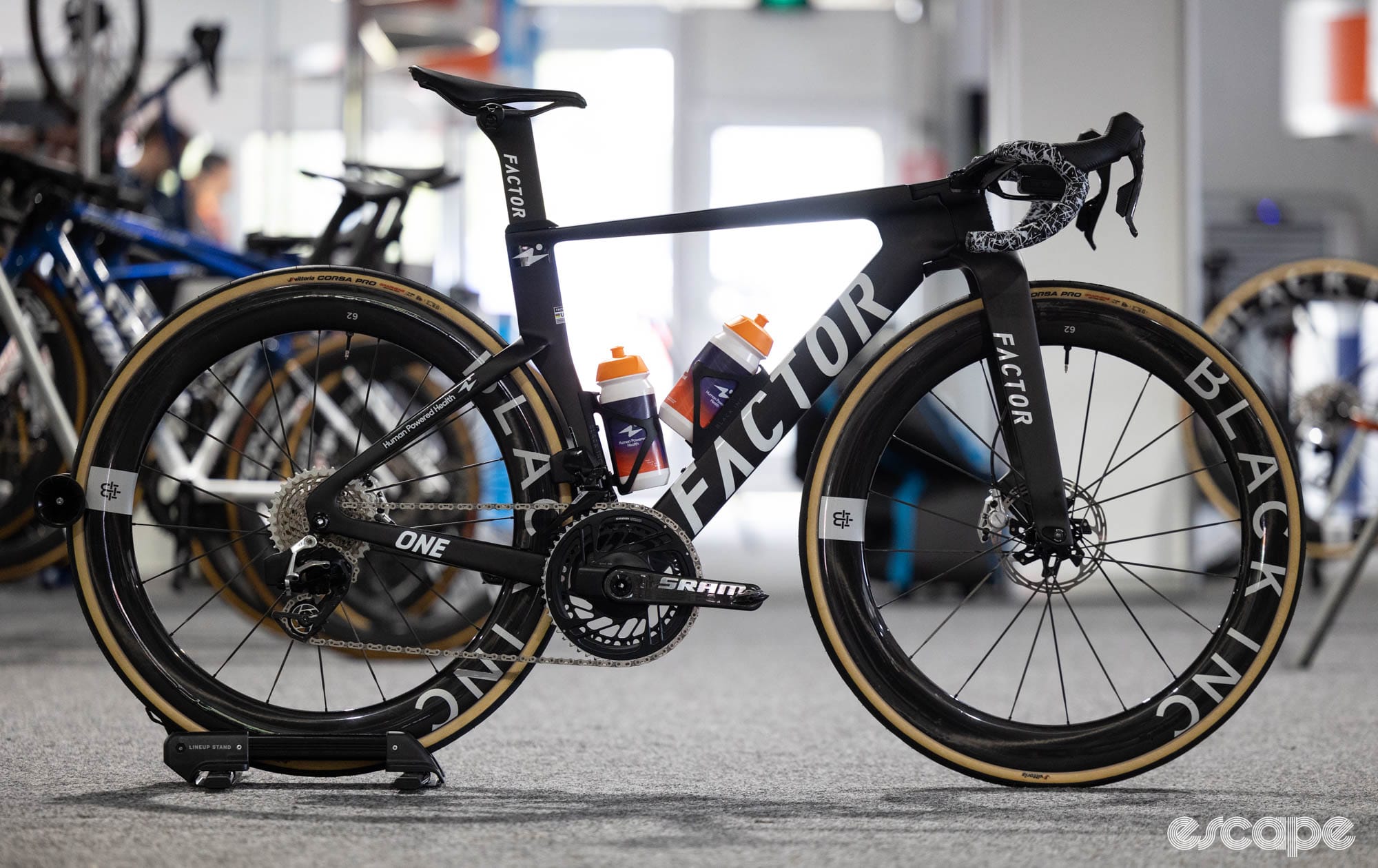 Steeper seat angles are coming. The impracticality of aero bottles
Aero bottles can help improve the airflow around a bicycle, but not without compromise. The highest-profile team to use aero bottles is Lidl-Trek, where the American bike company had publicly announced how important those proprietary bottles are to the performance of the eighth-generation Madone SLR.
As we’ve seen in Adelaide, the men’s Lidl-Trek team remains committed to those aero bottles and it provides a nice big branding opportunity for the newly partnered Gatorade. However, the women’s squad are back on round bottles, with the team suggesting that regular round bottles are just easier to catch when flying through the feed zones.
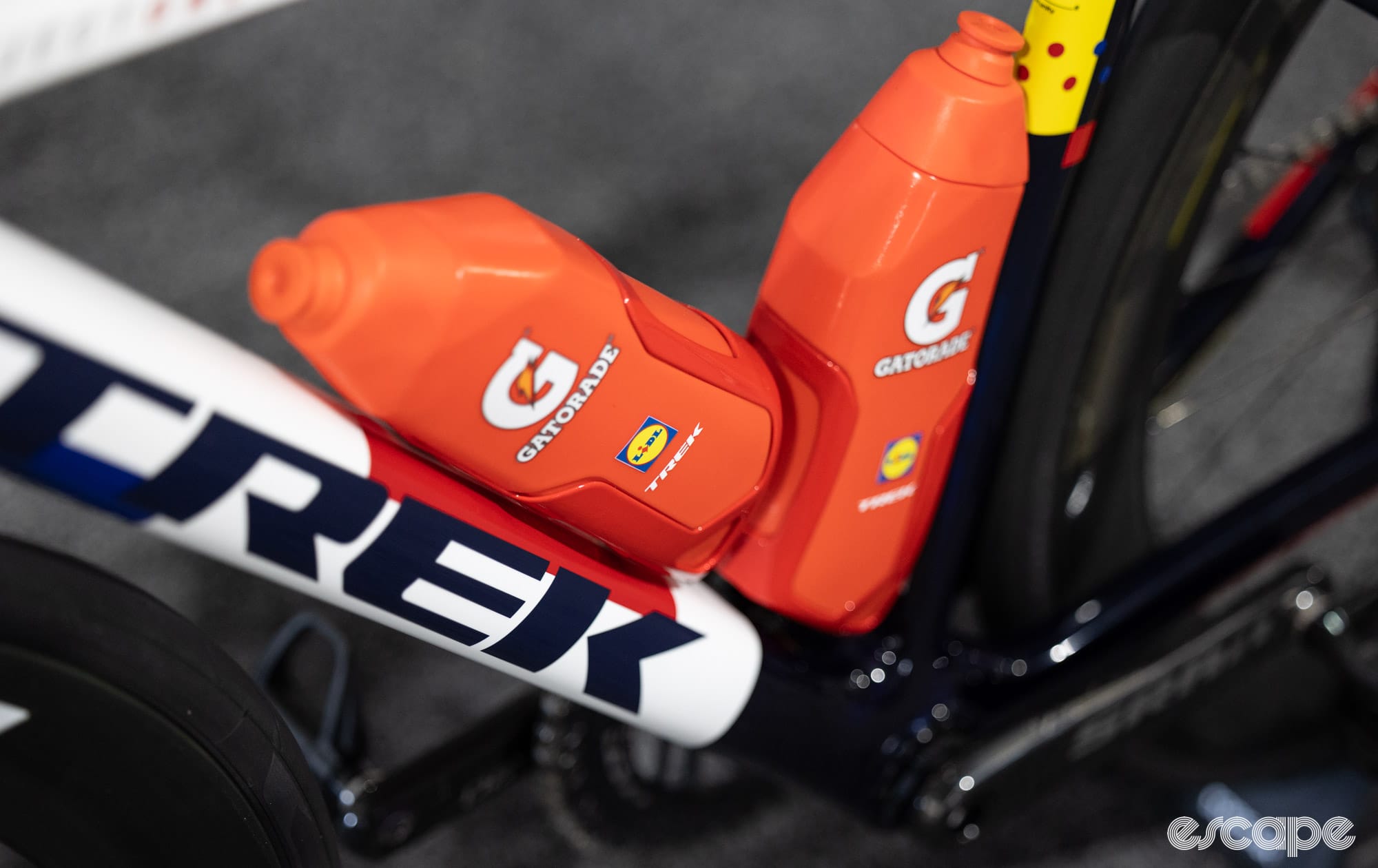
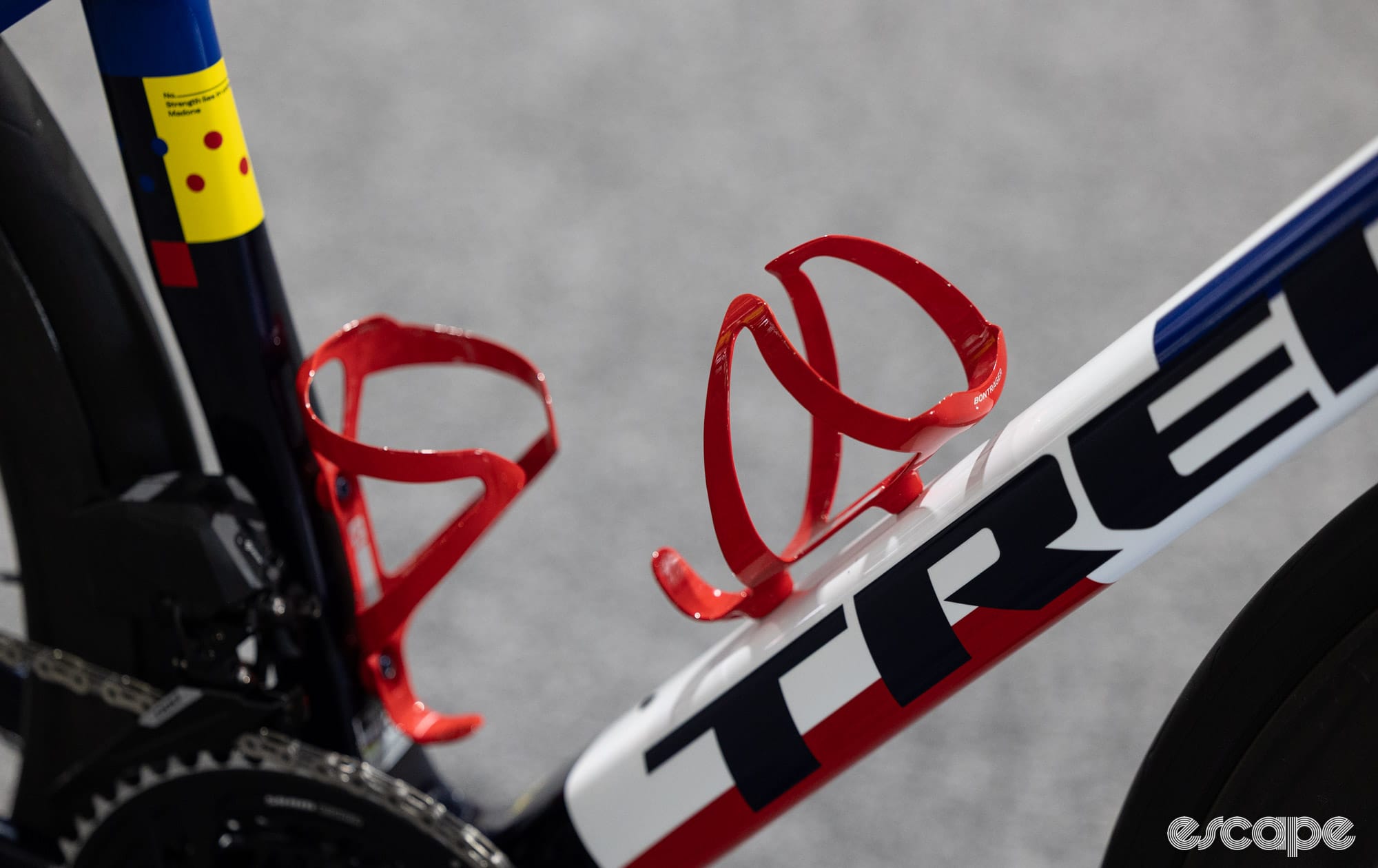
Men are using the aero bottles, while the women are using traditional bottles.
Another team seen using aero bottles is Groupama-FDJ United on its new Wilier Filante ID2 aero bike. However, in stage 4 of the race, Remi Cavagna was in a breakaway with regular cages and round bottles in use. With such hot weather, it’s expected the team switched back to regular bottles for ease of keeping hydrated via Shimano neutral service.
If catching or grabbing a bottle from another team car wasn’t a big enough barrier, then it’s worth considering the cost. WorldTour teams tend to go through thousands of bottles each season, and rumour has it the costs here are why so many teams are aligned with bottle cage brands that also manufacture bottles (Tacx, Elite, and Specialized).
Either way, aero bottles can make a measurable difference, but that doesn’t mean they’re the practical choice for professional racing.
Weight-weenie aero bikes
This post is for paying subscribers only
Subscribe now
Already have an account? Sign in
Did we do a good job with this story?
👍Yep
👎Nope