
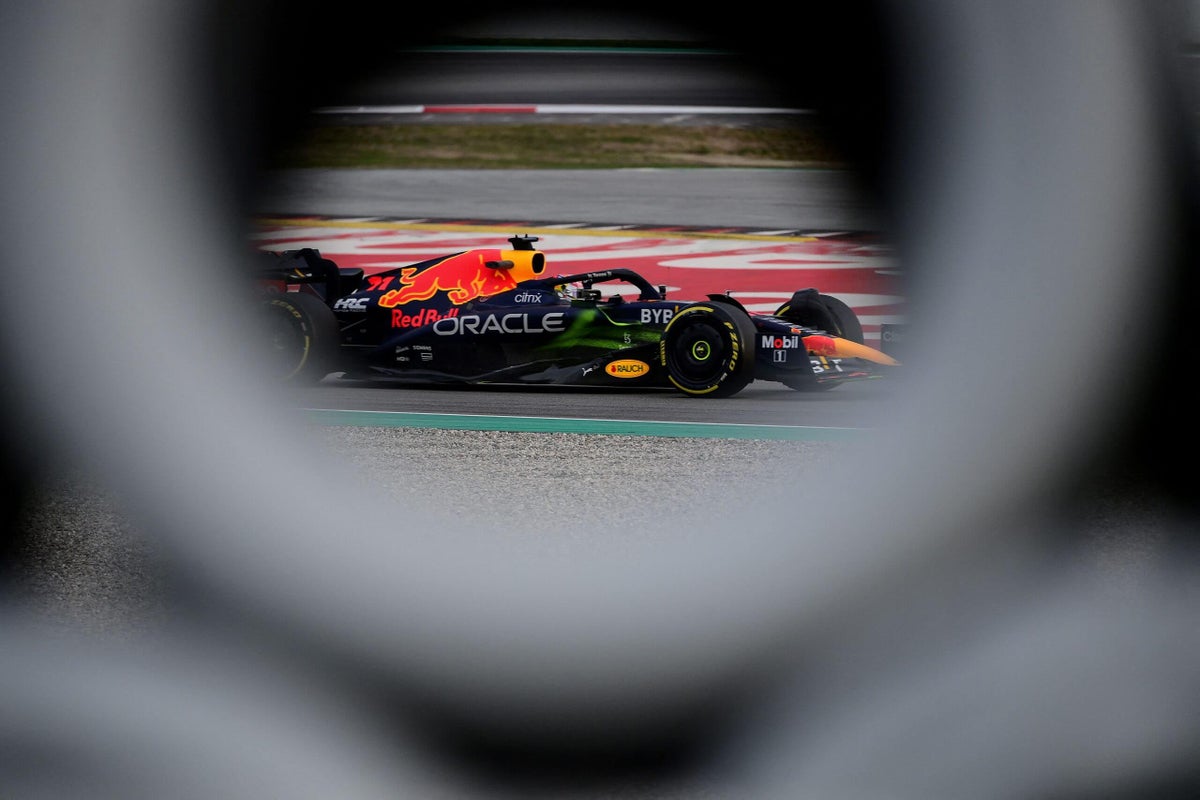
After a short offseason and the biggest set of car design rule changes in recent history, Formula 1 officially gets back on-track this week in Barcelona, Spain.
The five-day test, officially dubbed as a “shakedown,” will be held at the Circuit de Barcelona-Catalunya and provide the teams with their first opportunity to complete extended running with their new cars. It’s taking place without the prying eyes of the media or fans.
The first test is one of the most important phases of any new F1 season. It gives teams an understanding on whether all of their hard work over the winter has paid off and met the goal of delivering a car capable of fighting for wins, championships, or, in some cases, regular points finishes.
It’s also an opportunity to scope out the competition for the first time. While most teams had converged on the design shapes by the end of 2025, with all cars looking very similar, the long set of new regulations offers the chance for new approaches and innovations.
Teams will be keeping a close watch on the competition to judge their interpretation of the new rules, while doing what they can to keep any clever design tricks of their own secret.
Although some teams — including expected frontrunners Mercedes and Ferrari — have already completed a handful of laps with their new cars to ensure all systems are working properly, this week will give the drivers a first proper taste of how the 2026 models will handle.The cars are expected to be very different to drive compared to those used last year.
Here’s a look ahead to one of the most important weeks on the 2026 F1 calendar.
How will the test work?
F1 teams have privately rented the Barcelona-Catalunya circuit, used for the 2026 Spanish Grand Prix, for five days this week (Jan. 26-30).
In recent years, F1 has held just a single, three-day preseason test in Bahrain. With such a significant change in car designs this year, teams were eager to get extended testing to ensure they are fully prepared for when racing begins.
Each team will be able to field one car on any three of the five days in Barcelona, and teams can complete as much mileage as they want within the allotted on-track hours.
Both McLaren and Ferrari have confirmed they will not begin testing until at least day two, with McLaren stating it wanted as much time as possible to improve the performance of its new car before its on-track debut.
But Williams will not be taking part in the test after encountering delays with building its new car, the nosebox of which still needs to pass the FIA’s crash test that has to be cleared before a car can be driven. Instead, Williams will be conducting a virtual test of the new car to prepare for the first of two three-day tests in Bahrain.
Those events, on Feb. 11-13 and Feb. 18-20, give teams nine days in total of preseason running in 2026.
Why is it called a ‘shakedown’?
The term “shakedown” is widely used across motorsport to describe the first, informal run-outs for new cars — be it in F1, sports car racing or rallying. Teams will often conduct their own private shakedowns ahead of a new season to ensure the car is functioning as expected, making use of filming day or demonstration run allowances within F1’s restricted testing rules. The filming days are limited to 124.3 miles of running, while demonstration runs can only last 9.3 miles.
The last time a bigger shakedown such as this took place was before the 2022 season, which was also the last time there was a major chassis design change. That event was also held at the Barcelona track.
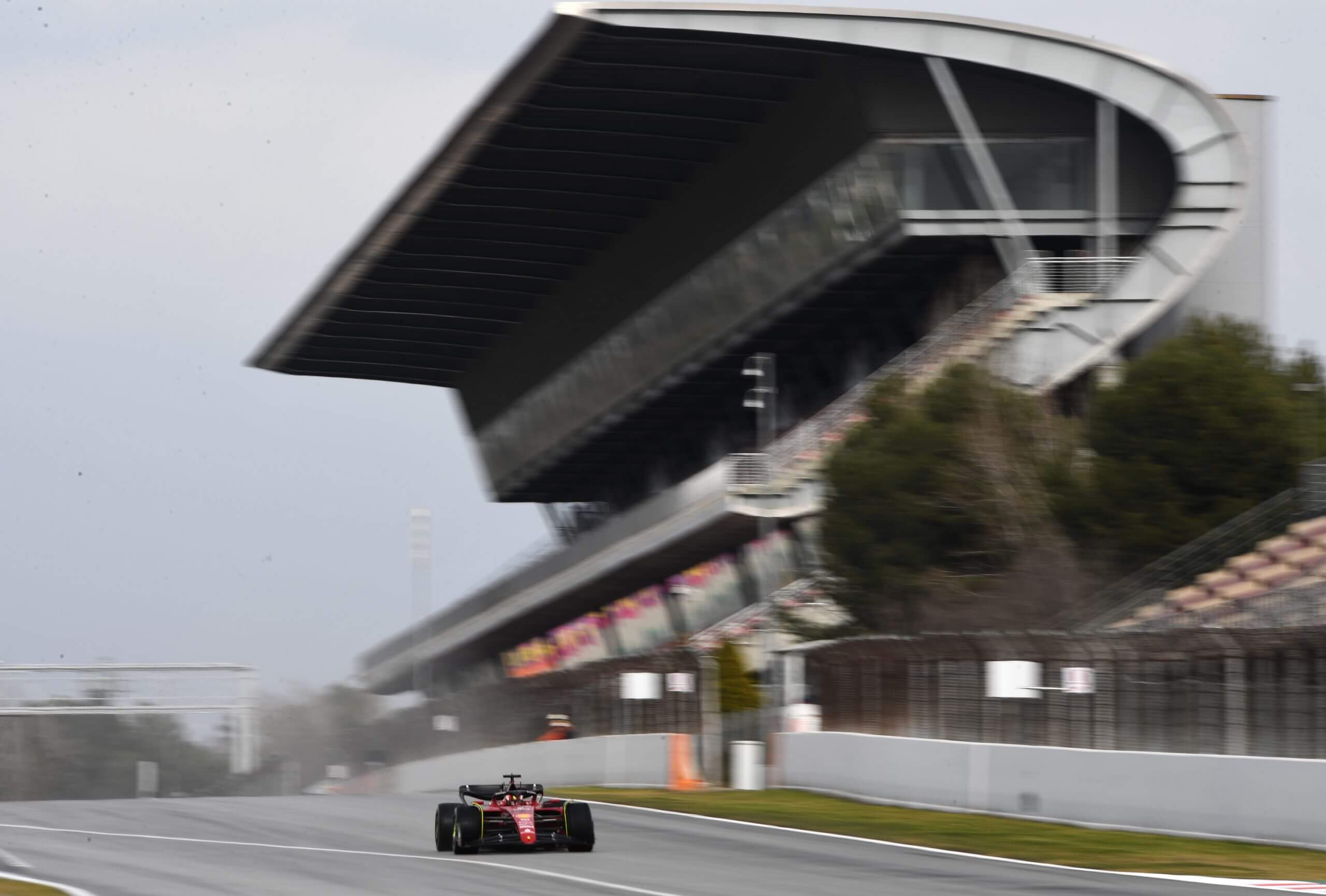
Carlos Sainz testing for Ferrari during the 2022 Barcelona preseason F1 test. (Rudy Carezzevoli / Getty Images)
The 2026 preseason running will be unrestricted in terms of how many miles teams can complete, around the three-of-five-days limit.
The term “shakedown” has been used for this event because F1 has an agreement to hold official preseason testing each year at the Bahrain International Circuit, which explains the difference in terminology. In teams’ press releases and communications, they have also been using the word shakedown instead of test to describe the Barcelona running.
Given the slightly different format to the test running, calling it a shakedown does at least help avoid some confusion, even if teams will get just as much track time as they will in each Bahrain test.
How will I be able to watch the Barcelona action?
The short answer is that you cannot.
The teams opted to decide to make this event private, meaning it will not be broadcast live — as last year’s preseason test in Bahrain was — nor will there be any media access. In 2022, the media could access the Barcelona track, but the action was not broadcast live.
The intention in keeping the 2026 Barcelona preseason event private is to make this an informal first outing for the cars. The teams fear that given the scale of the rule changes, some new designs could run into early trouble.
The last time F1 introduced new engines was in 2014, when many teams encountered a lot of teething problems. No team completed more than 31 laps on the first day of preseason testing (about half a race distance), while the then reigning champion squad, Red Bull, completed just three.
It set the tone for a very stop-start preseason that featured lots of stoppages and red flags due to car issues.
Although teams do not anticipate an exact repeat, with this year’s new engines still using hybrid technology, keeping the closed doors at Barcelona does at least provide a degree of privacy should things go wrong.
The teams also felt that a live broadcast wouldn’t be very compelling, given the inevitable lulls in action over five days, since not every team can run every day.
Another thought was there could be some confusion from new fans over lap time results at a point when these are hardly representative, given the focus on finding performance may possibly come as late as the final Bahrain test — or even the first race, in Australia — for some squads.
What will the teams and drivers be able to learn?
The focus for the teams and drivers in Barcelona will be getting a basic understanding of their new cars. The goals are to build mileage and reliability.
Everything on the cars is new for this season. Not a single part that was used on the 2025 models will carry over to 2026. This includes the steering wheel, which is usually the one part that can be used again across seasons.
But the way the 2026 cars function is very different. The engines are still hybrids, but they now have three times as much electrical power. The new systems must be used carefully by the drivers. There is now a near 50-50 split between the power coming from the combustion engine and the battery, down from an 80-20 split in 2025.
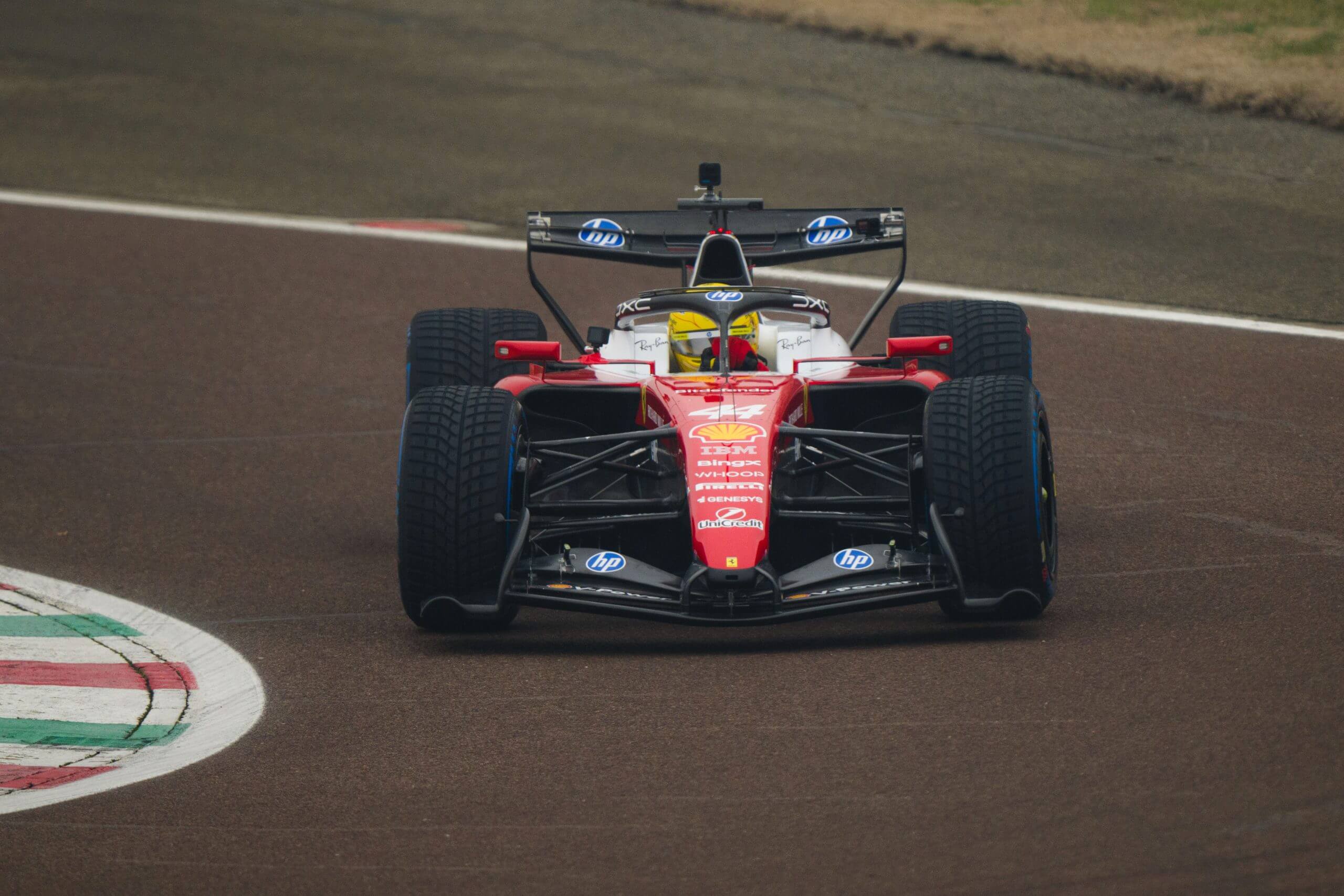
Lewis Hamilton driving Ferrari’s 2026 F1 car at its Fiorano test track last week. (Callo Albanese / Getty Images)
The drivers must adapt to managing power efficiently with new engine features such as Overtake Mode, as well as work harder to recharge the battery with tactics such as running at maximum revs through corners or even pulling first gear at points around a track where this was not required with the old cars. Overtake Mode is added energy to boost speed at certain points in a lap to aid overtaking, replacing DRS. Boost is similar to the old F1 battery deployment system that provided extra power anywhere in a lap.
The 2026 cars also feature active aerodynamics, with flaps in the front and rear wings adjusting automatically to help the cars gain straight-line speed. They will alternate between Straight Mode (when the flaps flatten) and Corner Mode (when the flaps rise to add downforce).
Overall, the 2026 cars will be vastly different to drive. As Haas driver Esteban Ocon put it in a team statement: “We can forget everything that we’ve learned since go-karts on how to go fast.” It places even more emphasis on the Barcelona event for the drivers and teams.
“It’s a whole discovery period where we really have to get as many laps as possible,” said Ferrari’s Lewis Hamilton, in a video released by his team. “We have to learn so much. We have to compact so much in those nine days that we have.”
And what can fans learn about F1 2026?
Judging the performance of the F1 field based solely on a private test will be extremely difficult, not only due to the lack of access or typically comprehensive F1 timing information.
Few teams have suggested they will go to Barcelona with much of a focus on performance. Instead, to Hamilton’s point about the week being a discovery period, they want to learn all they can and get their cars running reliably before chasing lap time with updated parts that will arrive around the Bahrain tests.
Ferrari team principal Fred Vasseur said in December he thought most teams would take an ‘A-spec’ car — essentially a basic launch version — to Barcelona before then bringing many upgrades to Bahrain.
McLaren, however, has hinted it may push harder for performance in Barcelona. The team opted against doing its own shakedown and will wait until at least day two of the week in Spain before debuting the MCL40, the car McLaren hopes will defend both its drivers’ and constructors’ titles in 2026.
Rob Marshall, McLaren’s chief designer, claimed that “between Barcelona and Melbourne, what you see is probably pretty much what we will bring to the first race.”
The Bahrain tests will inevitably offer a clearer picture of how the story of F1 2026 can be written and who the early pace-setters will be.
But not maximizing the value of Barcelona’s running — regardless of what you call it — would leave some teams playing catch up going into F1’s new era. Williams is already in this position.