
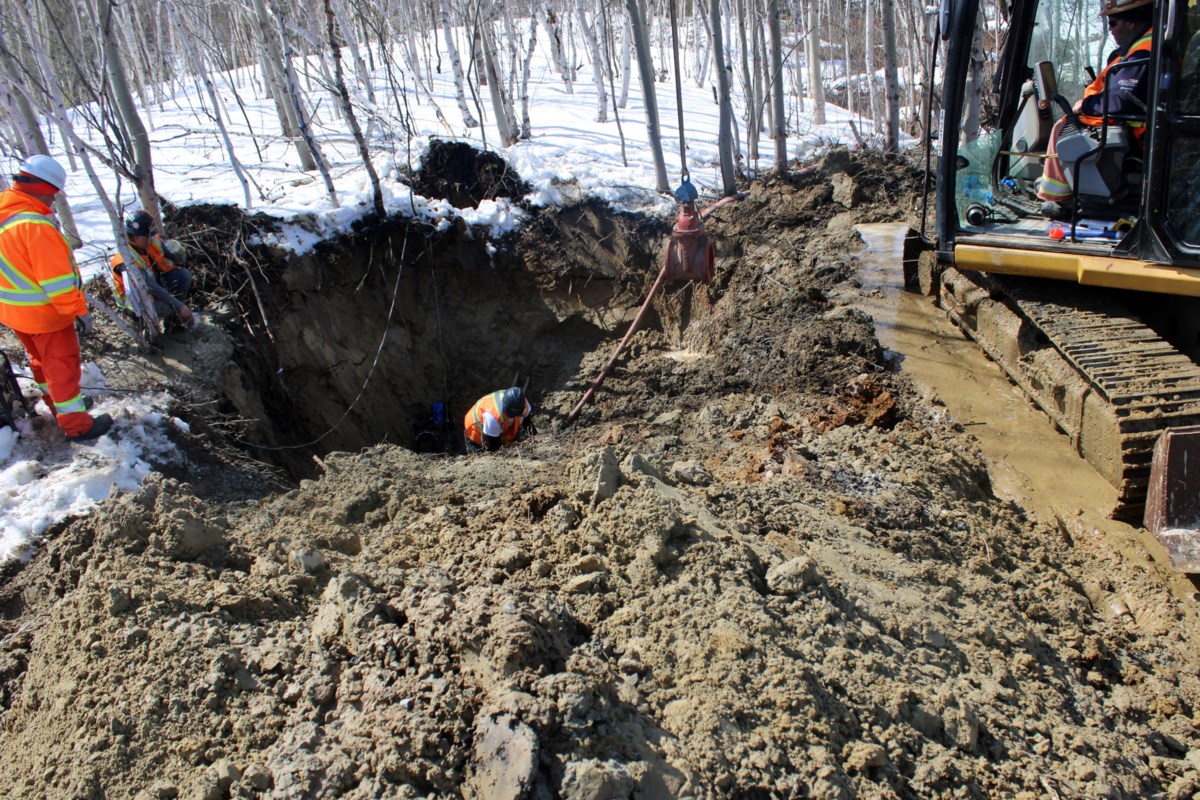
Earlier this month, the Region of Waterloo halted new development applications in a certain area until an unexpected water capacity issue is resolved
In the wake of significant upheaval in the Region of Waterloo regarding water capacity issues, the City of Greater Sudbury does not face similar challenges.
Although there are infrastructure constraints in Greater Sudbury, they’re well-established and pintpointed well before development applications move forward.
So described City of Greater Sudbury Planning Services director Melissa Riou.
At issue at Region of Waterloo is a water supply shortage in the Mannheim Service Area, which supplies water to Kitchener, Waterloo, Cambridge and surrounding communities.
Development applications and service agreements have been put on hold in the affected area, and already approved projects have been put at risk. Two top-level officials in charge of the situation parted ways with the Region of Waterloo around the time the water issue came to light.
The Mannheim Service Area appears to have used flawed methodology in determining water capacity, Riou said upon reviewing news coverage of the water shortage situation, clarifying that Greater Sudbury does things differently.
An integrated model was used by Mannheim Service Area, which means they factored in the same overall capacity estimate for the entire water supply system, even though the capacity in individual areas could vary.
“Their model was assessing the system as one entire system, so it wasn’t able to distinguish the area where they had deficiencies or a lack of capacity from the other,” Riou said.
“Overall, the system appeared as though it had sufficient capacity, but when you took the next level down … it appeared that one of the subsystems within the system was working fine and one wasn’t, and it was compensating.”
Greater Sudbury takes a more compartmentalized individual service area approach, she said.
“We have eight different water systems and 14 different wastewater systems, and there are a number of ways we monitor to ensure that we have sufficient water and sewer capacity across the city.”
Greater Sudbury’s Water/Wastewater Master Plan is updated every five years (and slated to receive an update this year), and the city’s Enterprise Asset Management Plan similarly tracks the status of municipal infrastructure.
“It helps us plan to make decisions in terms of where we need to make investments based on the life cycle of those assets, so the condition they’re currently in,” Riou said.
These plans help the city determine where new or improved infrastructure is required, such as the $70-million water/wastewater project in Lively/Walden and the $19.4-million Lasalle/Elisabella water/wastewater upgrade, both of which are ongoing alongside various sewage lift station upgrades.
Upgrades of this nature are intended to help accommodate future growth, Riou said.
As for capacity in existing neighbourhoods, she said that developments, including residential developments of 10 units or greater, are run through a model to determine whether there’s adequate water/wastewater capacity.
This model has managed to catch capacity issues upfront, she said, noting that they evaluate not only the overall capacity of water/wastewater treatment plants, but also the linear infrastructure which links developments to these facilities.
Where capacity issues are found, Riou said the city works with the developer to resolve matters.
With the city flagging capacity issues early on, at pre-consultation discussions with developers, and maintaining confidence in the capacity model they use, Riou said there’s no current threat that what has taken place within the Mannheim Service Area will happen locally.
Despite Greater Sudbury’s water/wastewater infrastructure appearing to be better understood than that of the Mannheim Service Area has been, the city is not in the clear.
Greater Sudbury city council contends with a chronically underfunded network of underground pipes whose average age is almost 49 years, and a well-established need to twin the water main pipe from the Wanapitei Water Treatment to Sudbury’s Minnow Lane neighbourhood.
The estimated cost to a twinned line is a currently unfunded $75 million, and city council’s current rate-increase plan for water/wastewater rates is expected to close the infrastructure spending gap in 18 years.
Tyler Clarke covers city hall and political affairs for Sudbury.com.