
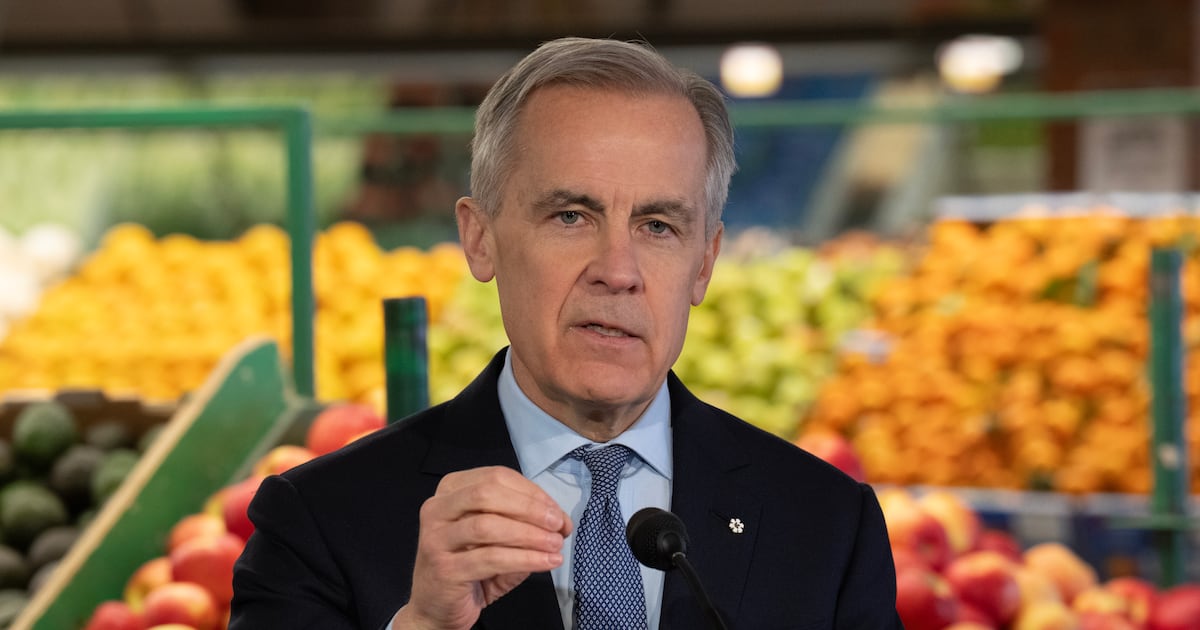
With Parliament resuming after the winter break, Prime Minister Mark Carney has unveiled a boost to the GST credit as part of a suite of new affordability measures.
Carney made the announcement in Ottawa on Monday, launching what’s called the “Canada Groceries and Essentials Benefit.”
“Canada’s new government is acting today to provide a boost to those Canadian families who most need one, while creating a bridge to longer-term food security and affordability,” Carney said.
The quarterly GST payments will see an increase of 25 per cent over the next five years beginning this July, and will also include a one-time top-up of 50 per cent this year.
What you can expect
According to the federal government, a family of four will receive up to $1,890 this year with the increases, compared to $1,100 a year as the credit exists now. That same family would later see about $1,400 a year over the next four years.
A single person, meanwhile, would receive up to $950 this year compared to $540, and about $700 a year for the next four years.
The new measure, which the federal government says will impact more than 12 million Canadians, was not included in the budget last fall.
Asked on Monday if the Conservatives will support the GST credit, Opposition House Leader Andrew Scheer wouldn’t answer directly but called it a “recycled Trudeau-era policy.”
“Mark Carney is trying to recycle a Trudeau-era policy by giving Canadians their own money back. The better approach is to permanently remove Liberal taxes on food production and end the inflationary practices that this Liberal government has enacted for the past 10 years,” Scheer added.
New measures to tackle food insecurity
In addition to the GST credit, Carney announced $500 million from the government’s Strategic Response Fund will go directly to food suppliers that he says will help them “expand capacity and increase productivity.”
An additional $150 million, meanwhile, will be put towards a new Food Security Fund for small- and medium-sized businesses to help lower the cost of food production.
The federal government is also providing $20 million to the Local Food Infrastructure Fund to support organizations such as food banks, while also working to develop a National Food Security Strategy.
“This strategy will include measures to implement unit price labelling, so you can easily shop and compare in this era of ‘shrinkflation,’ as well as support for the work of the Competition Bureau in monitoring and enforcing competition in the market including across supply chains,” Carney said.
Unit price labelling shows how much a product costs per standard measurement and allows consumers to compare similar items and brands.
According to the latest Statistics Canada figures released last week, food prices rose five per cent in December year over year, with coffee up 30.8 per cent and beef up 16.8 per cent.
Poilievre pushes Carney on affordability
Carney’s affordability announcement comes as Conservative Leader Pierre Poilievre continues to push the federal government on the issue.
In an open letter to the prime minister over the weekend, Poilievre offered his party’s help to “turn rhetoric into reality, by fast-tracking policies you have long delayed,” with affordable groceries being among the issues highlighted.
Speaking to reporters on Parliament Hill on Monday, Government House Leader Steven MacKinnon urged Poilievre to “get out of the way” and help get bills passed during this next Parliament sitting.
“Mr. Poilievre stated that he would fast track ideas that make food affordable. He has that chance with these brand-new affordability measures,” MacKinnon said.
Carney, meanwhile, told reporters on Monday that he is “focused on results for Canadians,” and is not considering a snap election when pressed multiple times.
With files from CTV News’ Senior Political Correspondent Mike Le Couteur and CTV News’ Spencer Van Dyk