
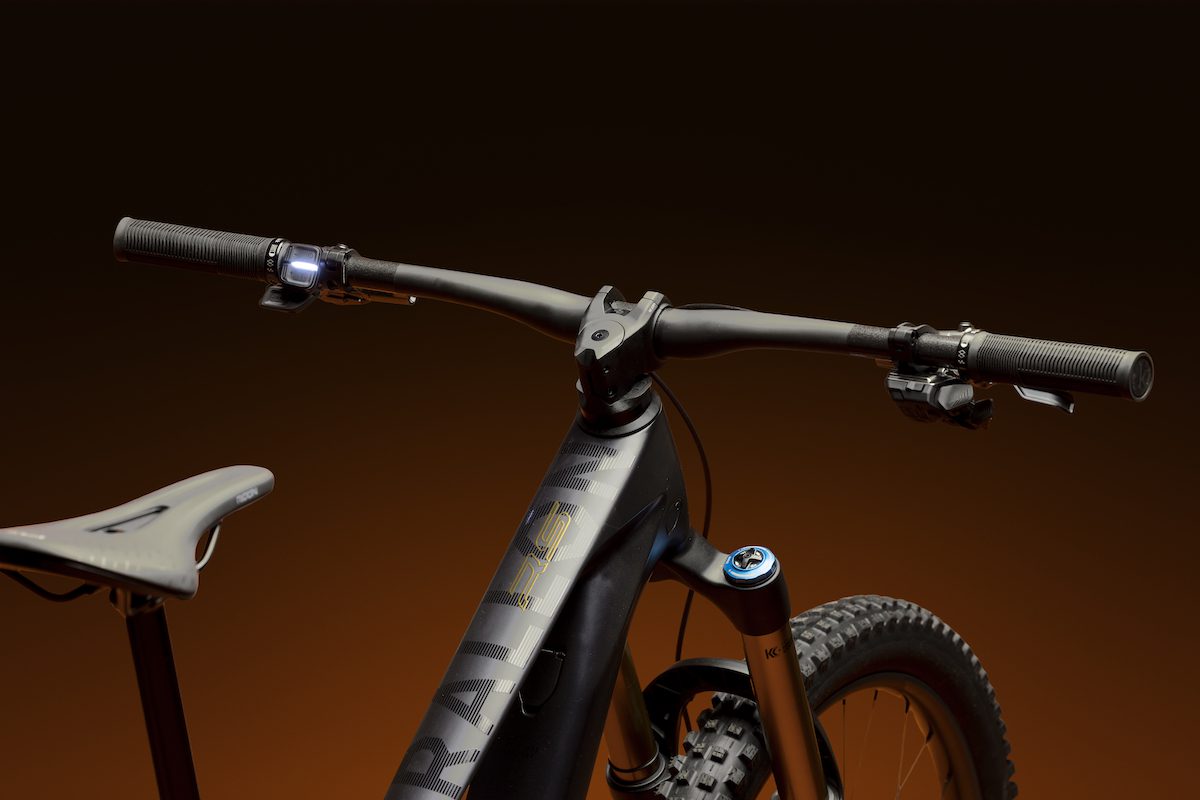
Electric mountain bikes are better than ever and more popular than ever. But what the ideal eMTB looks like is far from settled. Orbea is pushing back against the “more power” crowd with its new smarter and lighter Rallon RS.
Now, Orbea already has several well regarded eMTBs out there. The Rise and Wild serve the enduro and trail crowds with significant added watts. Orbea’s chosen to go with the Rallon name, its line of non-electric enduro bikes, for the Rallon RS for a reason. The Basque brand wants this bike to feel as much like a mountain bike as possible, just way smarter. And… more expensive.
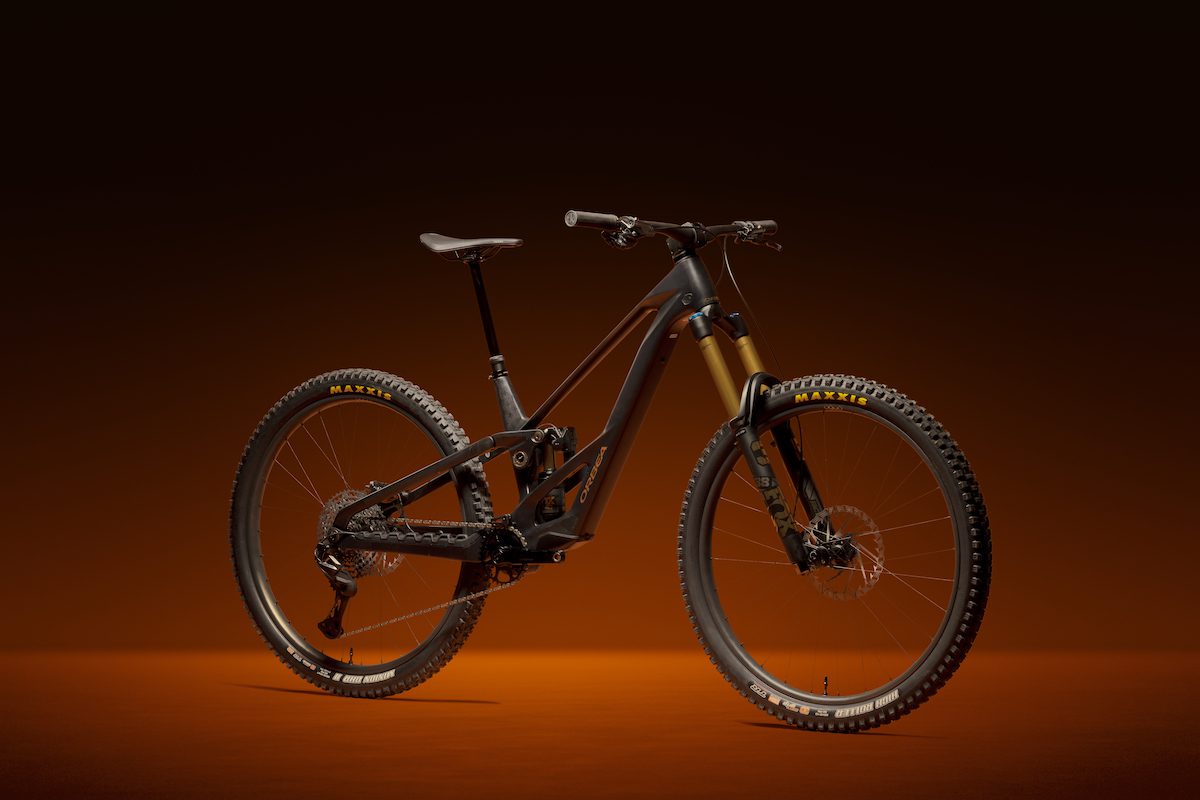
Rallon RS: A mountain bikers eMTB?
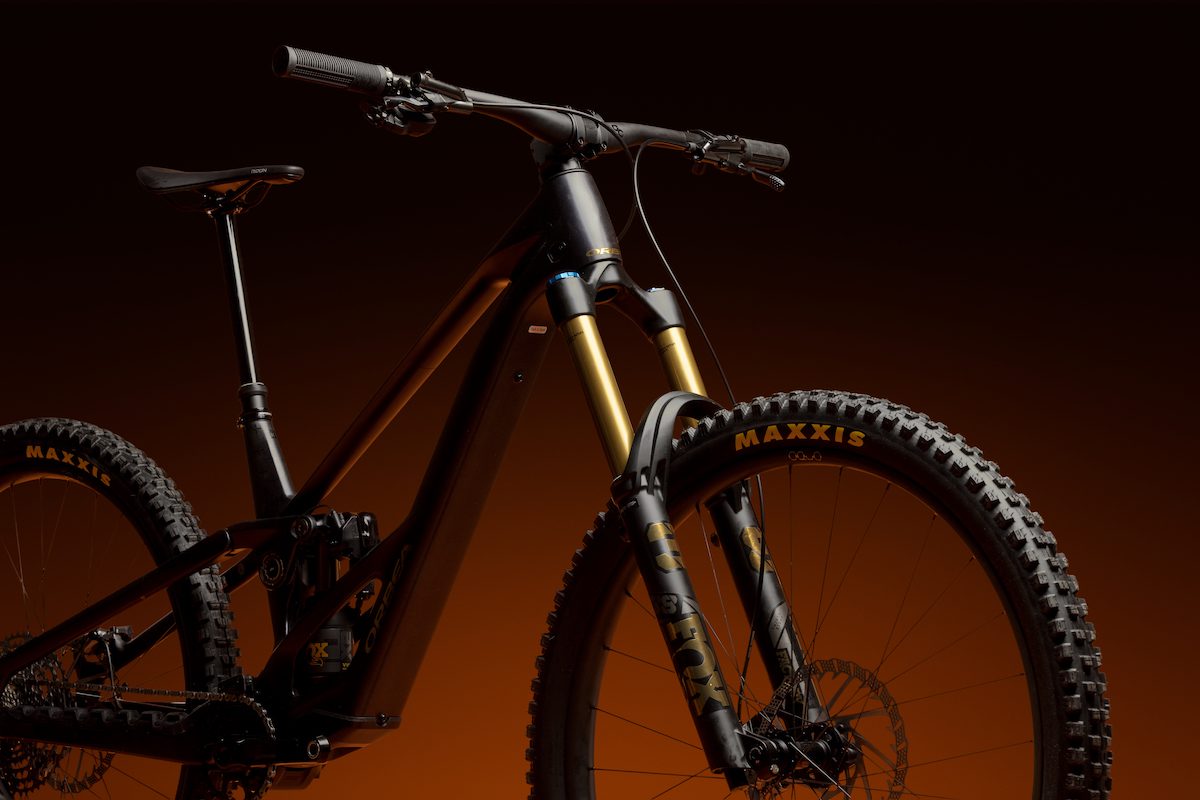
Aside from the motor and RS integration system, the Rallon RS is a Rallon. It uses a carbon fibre frame, delivers 170mm rear wheel travel with a 170mm fork. There isn’t a downhill version of the Rallon RS yet, but this is the same general layout as the DH/Enduro convertable frame Orbea earned serious kudos for last year.
There are two main features of the Rallon RS that set it apart from the Rallon and the Wild. One is integration and the other is, obviously, power. The whole idea behind Orbea’s RS system is that these two elements should work together with the Rallon’s existing downhill performance as seamlessly as possible. That’s what sets the Rallon RS on its own as more than just another light eMTB.
Rallon + TQ = Rallon RS
We’ll start with power. While there are some wildly powerful e-bike motor systems out there, Orbea opts for less. In fact, TQ’s HPR40 system is one of the least powerful currently available. It’s “just” 200 watts max with 40 Nm torque. Just is in quotations because, as Orbea points out, that’s still like having a World Cup racer helping you up every hill. Or, as Orbea puts it, a “helping hand” that doesn’t “dominate the rider experience.”
Orbea goes further, giving the TQ a “RS Tune” that sees it ease into its power band and “never exceed the rider’s power”. That’s pretty much the opposite of a lot of systems that try to deliver as much power as quickly as possible. Orbea suggests the intent is to help out when help is needed most, on the hardest bits of climbs, not all the time and not instead of a riders power. I.e. it adds to, instead of overwhelming the rider’s power.
Purposeful power not more power
This low power approach flies in the face of 2025’s endless search for more power, obviously. Orbea justifies it quite succintly:
“Many long-travel bikes claim to balance climbing and descending, but often deliver a level of motor support that removes the satisfaction of the climb. Orbea approached this differently. The objective was to improve the pedalling feel on climbs by reducing the usual compromises that come from the extra weight of a long-travel chassis and the rolling resistance of aggressive tyres”
The bonus of this system is that it’s just 1,170 g, which should help the Rallon RS preserve the original ride feel of the unplugged Rallon.
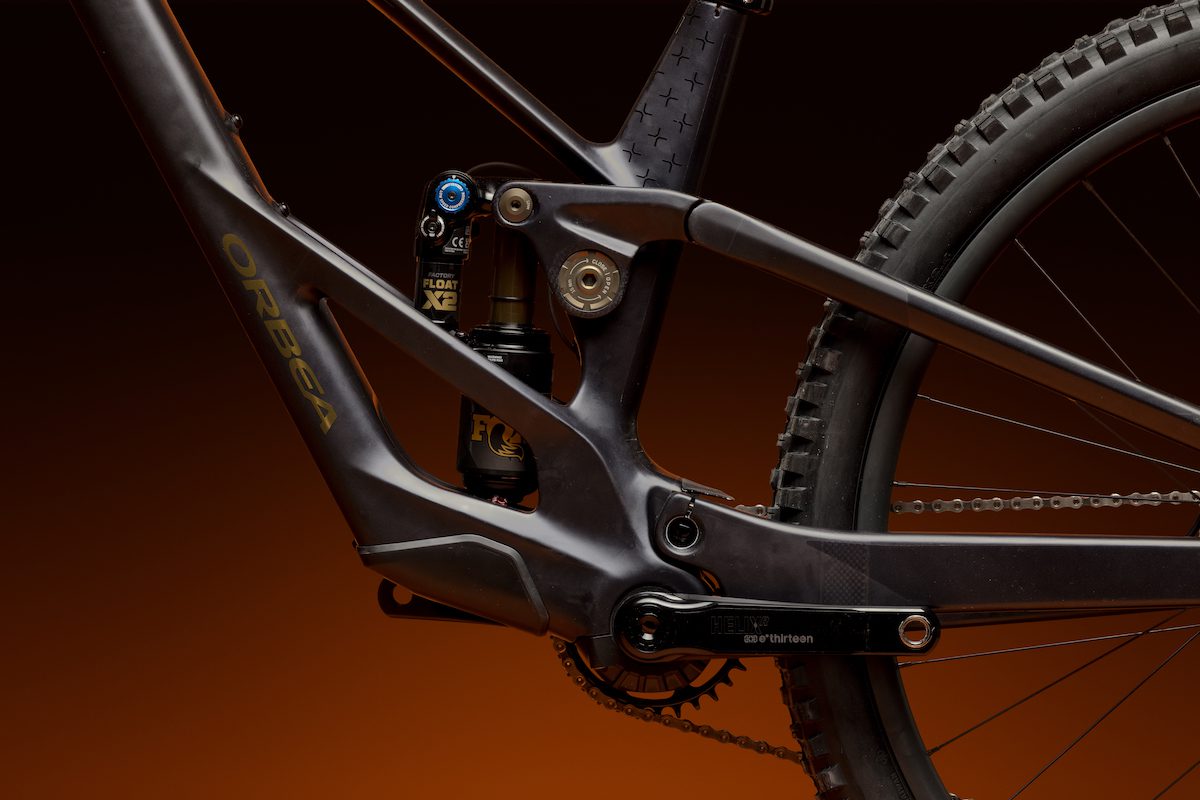 A TQ motor and slender downtube make this look more like a Rallon than a Wild
In addition to possibly the least powerful motor out there, Orbea uses one of the smallest batteries out there. At 290 Wh, the TQ fuel tank in the Rallon is smaller than the Overtime Pack range extender Rocky Mountain offers for its Powerplay eMTBs. it also is about half the energy of the Trek Slash+ battery, which aims for a similar purpose for a slightly more powerful TQ motor. Again, the goal is light weight and light assist, and the pay-off is that the smaller battery is lighter. Orbea does offer a range extender option if you can already feel the range anxiety creeping in.
But, at the same time, Orbea’s making some pretty strong claims about the range of the HPR40 and 290Wh combo. The brand estimates 1,200-1,800m elevation gain or 2-3 hours of ride time off the main battery alone. I’ll add the caveat that individual results may vary, as range depends a lot on the person and terrain. But that sort of range could make sense, even with the smaller battery, as the HPR40 is asking much less from its energy supply than a near-instant 1,000W draw would.
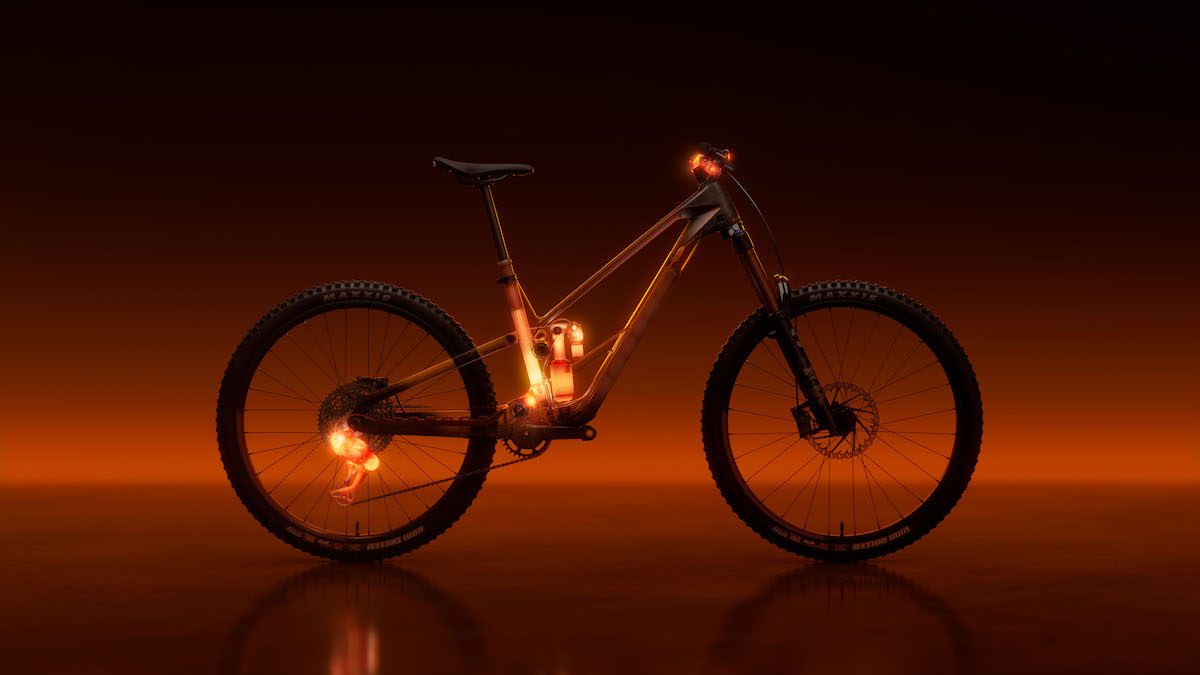 It doesn’t actually glow in real life. Photo: Orbea.
Orbea + Fox + Shimano = RS total integration
While a little power is one big idea, the second big move from Orbea is to make the Rallon RS one integrated system, not multiple isolated systems. That means, for starters, the Shimano Di2 drivetrain, TQ drive unit, Orbea wireless dropper and Fox’s Neo system all draw power from the main battery. More than that, though, they communicate to deliver a bike that is constantly responding to the terrain before you have to tell it to via RS integration. What you do with your dropper post, or your cadence, can change how your suspension works.
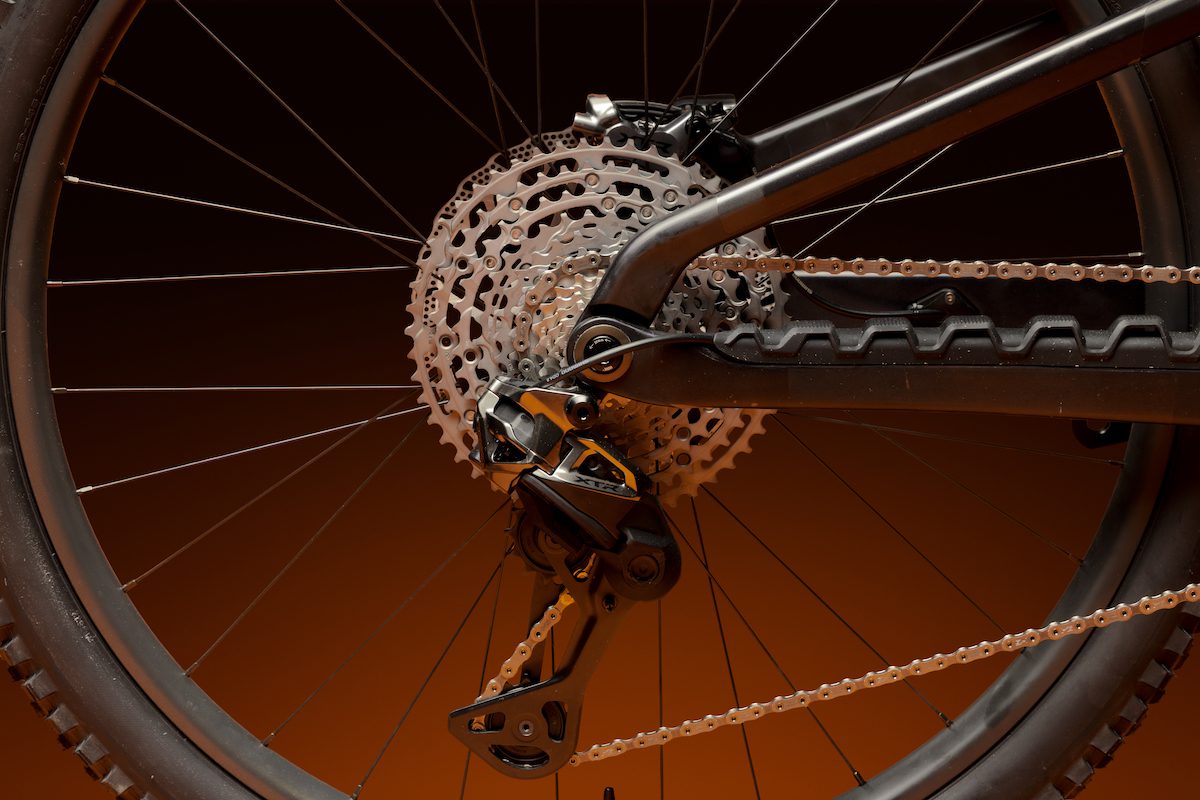
This is a novel way for brands to go up against SRAM’s Powertrain/Flight Attendant combo, without being forced entirely into a SRAM ecosystem. It requires integration between the four brands, Orbea, TQ, Fox and, to an extent, Shimano. But it also leaves the door open for broader integration into Orbea’s RS system. Which is nice, for consumers.
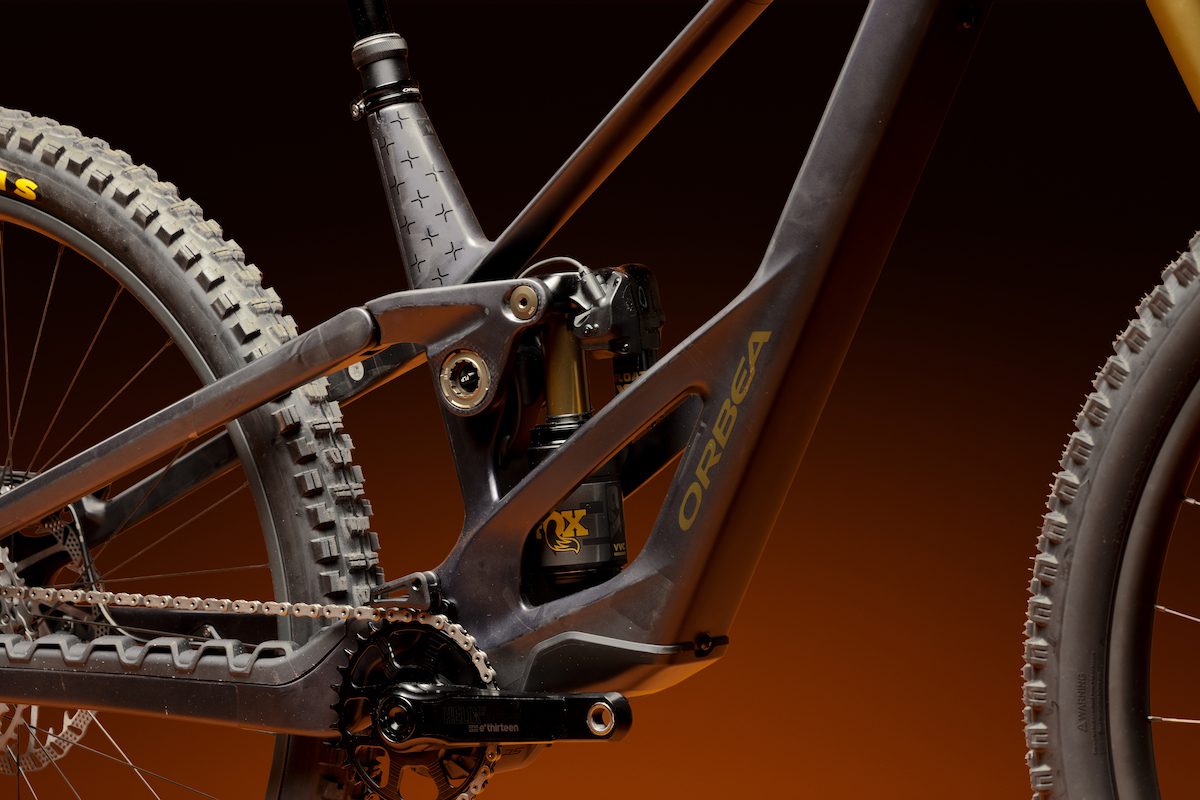
Fox X2 Live Valve Neo integrates into RS system
Integrating Fox’s Float X2 Neo shock means more than drawing power from the Rallon RS’s battery instead of its own power supply. The Neo taps into Orbea’s RS system to use multiple system inputs, like dropper post position, cadence and speed, to adjust the shock mode. Post up? firmer for climbing support. Post down? Wide open for maximum descending performance. You can override all of this with Orbea’s RS HMI remote, too. That’s not just switching between open and closed. The remote actually toggles between tune modes (set up via Fox Neo app) on the shock.
Using Fox’s Neo system allows Orbea to adjust the Float X2’s tune to prioritize descending capabilities, as the system will automatically firm up for climbing. On the Rallon RS model with a standard X2, Orbea says the shock will have a similar tune to what is on the non-electric Rallon.
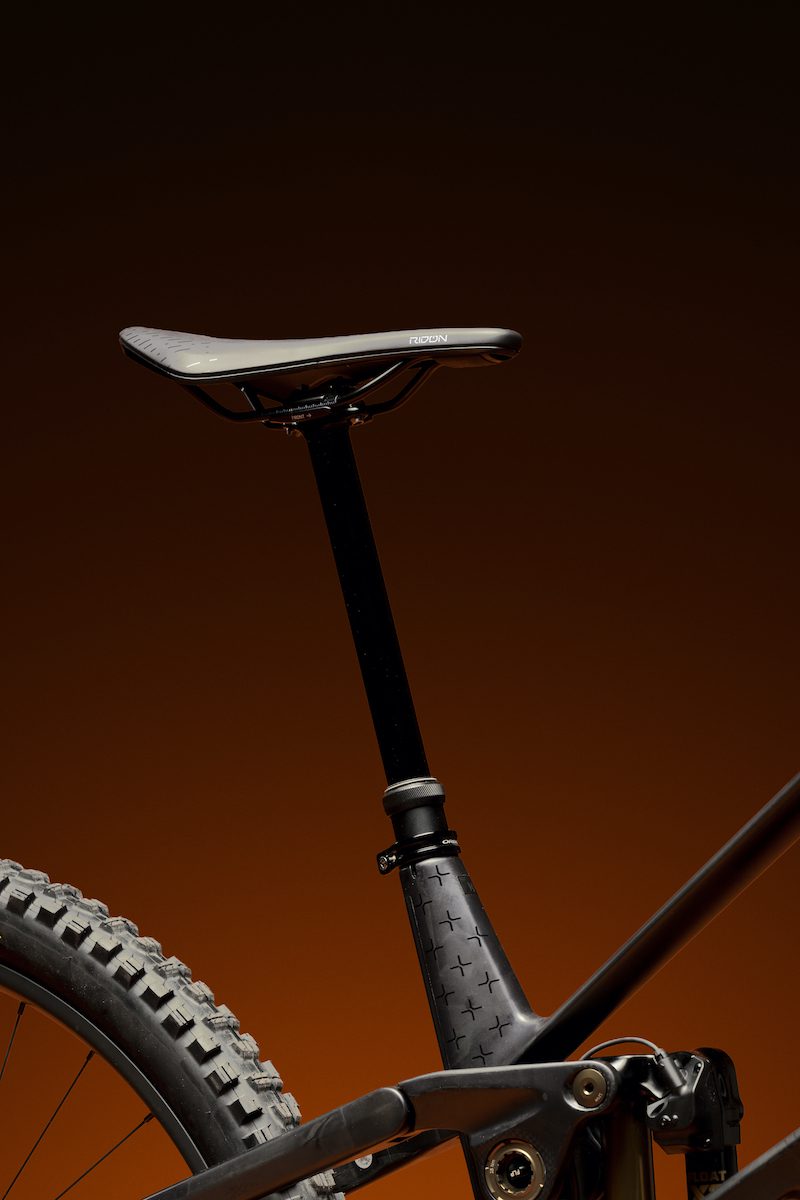
Smart dropper post adds to performance
Orbea includes its new smart dropper post in the Rallon RS. “Smart” means more than just communicating with the Neo shock. Orbea sets the smart dropper up with an automatic partial drop or, and this one is interesting, a push-to-drop function that allows you to push the lever in advance you know you’ll need to drop the post, then drop the post within a set timeframe instead of having to do both at the same time.
All the other options: Still a Rallon
Since Orbea wants this to be as close to the experience of riding a Rallon as possible, the Rallon RS includes a suite of adjustment options. It can run matching 29″ or 29/27.5″ wheels. It has a +/- 0.75-degree angle adjust headset. There’s a high/low flip chip hiding inside the removable BB casing that adds a further half-degree head angle adjustment as well as 7mm of BB height adjustment.
Also like the Rallon, there’s room for long-travel dropper posts on the Rallon RS. Small and Medium frames have clearance for a 210-mm travel post while L and XL have room for a 240mm post.
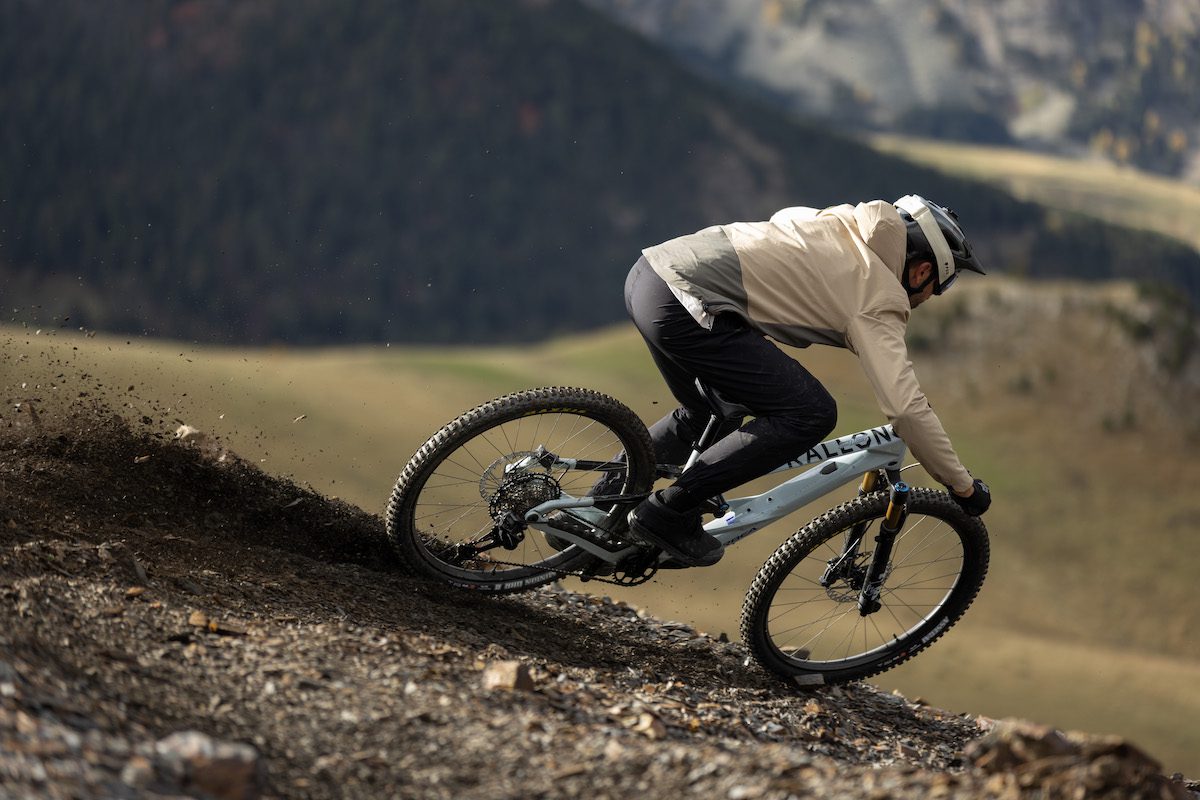 Looks like a Rallon, climbs like a Rallon RS. Photo: Jérémie Reuiller
Orbea Rallon RS: Models, pricing and thoughts
At launch, this will only be two Rallon RS models available. Both are available as either a mullet or 29″ bike out of the box. All that integration and electronics comes at a, well, staggering price.
The Rallon RS LTD comes with Fox’s Float X2 Factory Neo Live Valve shock, Shimano XTR Di2 drivetrain, and XTR brakes, OQUO carbon wheels and Fox 38 Float Factory 180mm fork for a whopping Euro 15,000. We don’t have CAD pricing at this time, but that’d be, uh, well over 20,000 Loonies.
A Rallon RS Team whacks a full €4,000 off that price, via a Float X2 Factory (not Neo), Shimano XT Di2 drivetrain and brakes, alloy OQUO wheels and, well, the same 38 Float Factory fork.
For some perspective, that Rallon RS LTD is about €5,000 more expensive than a Rallon LTD. That Rallon LTD also comes with a Fox Neo shock and wireless drivetrain. It’s just not tied into an RS system and doesn’t have a TQ motor. Is 200W assistance worth a 50 per cent increase in price? Man, I don’t know. That’s a lot of cash and both are well outside my personal budget. But I do like the concept of an e-bike where the “assist” actually looks like an assist. Not like the bike doing almost everything for you. A few other brands use TQ, but most still use it as a motor. I do like Orbea’s idea that the motor assist should never exceed the riders power, let alone double or triple it.