
Formula 1’s winter break didn’t last long.
The 49-day gap between 2025’s final race in Abu Dhabi and the start of the first preseason test in Barcelona on Monday was barely longer than Brian Clough’s reign as manager of soccer club Leeds United (44 days) or Liz Truss’ time as UK Prime Minister (45).
One of the tightest turnarounds in recent F1 history stemmed from the introduction of all-new car designs, plus new engines, for the 2026 season. Given the scale of that change, the most wide-ranging in the sport for a decade, it was reasonable that the 11 teams wanted more testing time — up from the single three-day session we’ve become used to.
The compromise was such a condensed offseason this year.
The enormity of work to be completed before the Barcelona test began put added pressure on all teams. Williams has opted to miss the running altogether after hitting delays — it is yet to pass a final FIA crash test for its new nosebox, which the rules require before a car can test — and Aston Martin won’t be on the track until Thursday at the earliest.
Both cases give some credence to concerns held across the grid about how ready they would be for the start of testing.
The last time F1 embarked on anything close to such a big rule change was in 2014, when it introduced V6 hybrid engines to replace the old V8s. On the first day of preseason testing that year, no team completed more than 31 laps, and the previous campaign’s front-runner Red Bull spent most of that test servicing its car in the garage due to significant engine teething problems.
Fears of a repeat were an obvious part of the rationale to hold this year’s Barcelona test behind closed doors and prohibit media access.
The nature of modern-day F1 meant that if any teams did hit serious trouble, people would soon know anyway, be it due to the work of those around the circuit or information dripping out of the paddock. But at least those early setbacks would not get broadcast for the entire world to see — the single tests held in 2023-25 were all fully televised events.
Instead, the opening day in Barcelona this week largely proved to be a success for the teams that opted to venture out and, in many ways, for F1 as a whole, too.
The tight offseason and extensive car changes proved no barrier for many in terms of completing an extensive amount of running. This has provided early confidence that 2026 will be a far cry from that stuttering start 12 years ago.
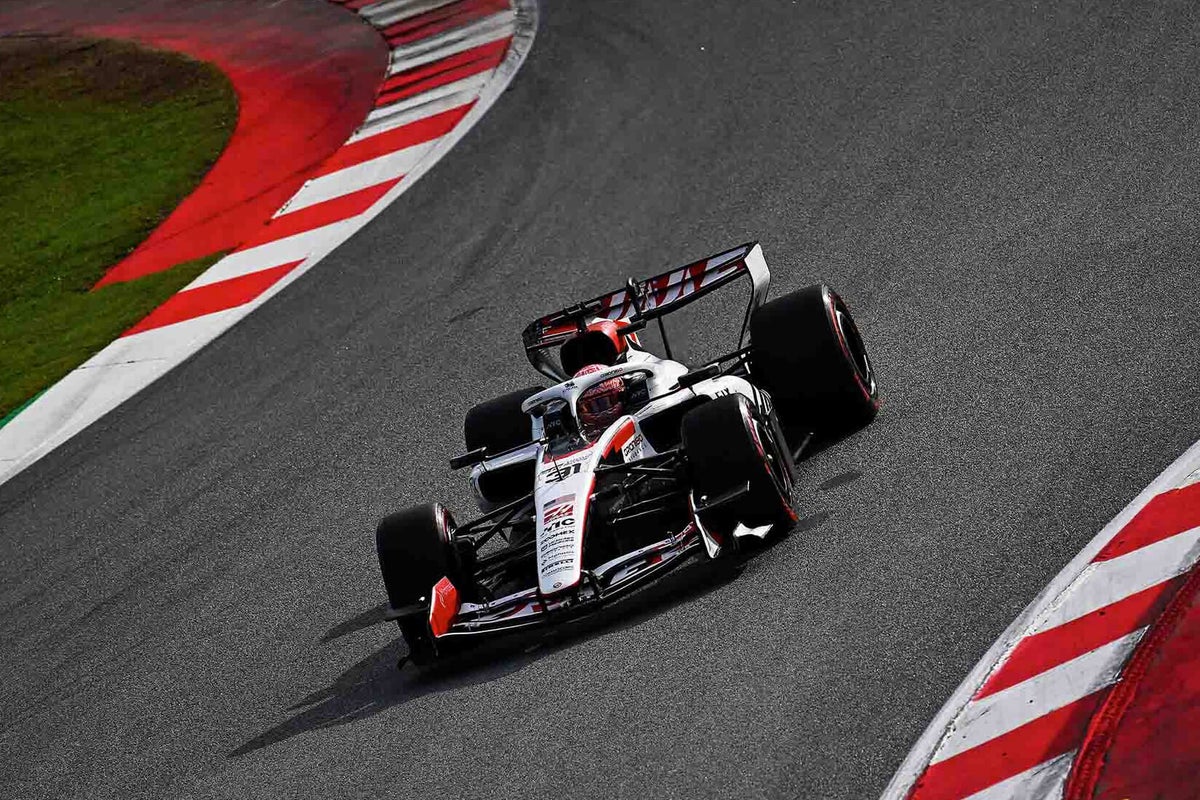
Of the seven teams to venture out on Monday — Ferrari and McLaren sat out as planned, in addition to the Aston and Williams absences — Haas won the early mileage bragging rights, with Esteban Ocon putting in a mighty shift of 154 laps, equivalent to a two-and-one-third race distance at Barcelona. Mercedes was a close second, completing 151 between Kimi Antonelli and George Russell. Red Bull also passed the century mark, with Isack Hadjar on a seemingly trouble-free extended outing for its first engine, designed together with Ford.
Those Haas and Mercedes lap counts would have been impressive by 2025 standards, let alone with such different cars. On day one of testing last year, Haas managed 160 laps, albeit on a longer layout in Bahrain, equivalent to 864km. Its day one count in Barcelona totaled 717km. Still, an impressive haul.
At the opening test in 2014, held at Jerez in northern Spain, eight teams managed a combined total of 93 laps on the first day of running. Both Haas’ and Mercedes’ tallies on day one this year were more than five teams managed through that entire Jerez test, which stretched over four days.
In a Mercedes statement issued on Monday evening, Russell pointed out how well the rest of the field had performed.
“The Red Bull power unit has completed a lot of laps which, given it’s their first engine they’ve built, means they’ve clearly done a good job,” he said. “Haas also managed a similar amount of running to ourselves, so the Ferrari power unit has also put together plenty of mileage (Haas is a Ferrari engine customer team).
“It’s not quite how it was in 2014! The sport has evolved so much since then, and the level, in every single aspect, is so high now.”
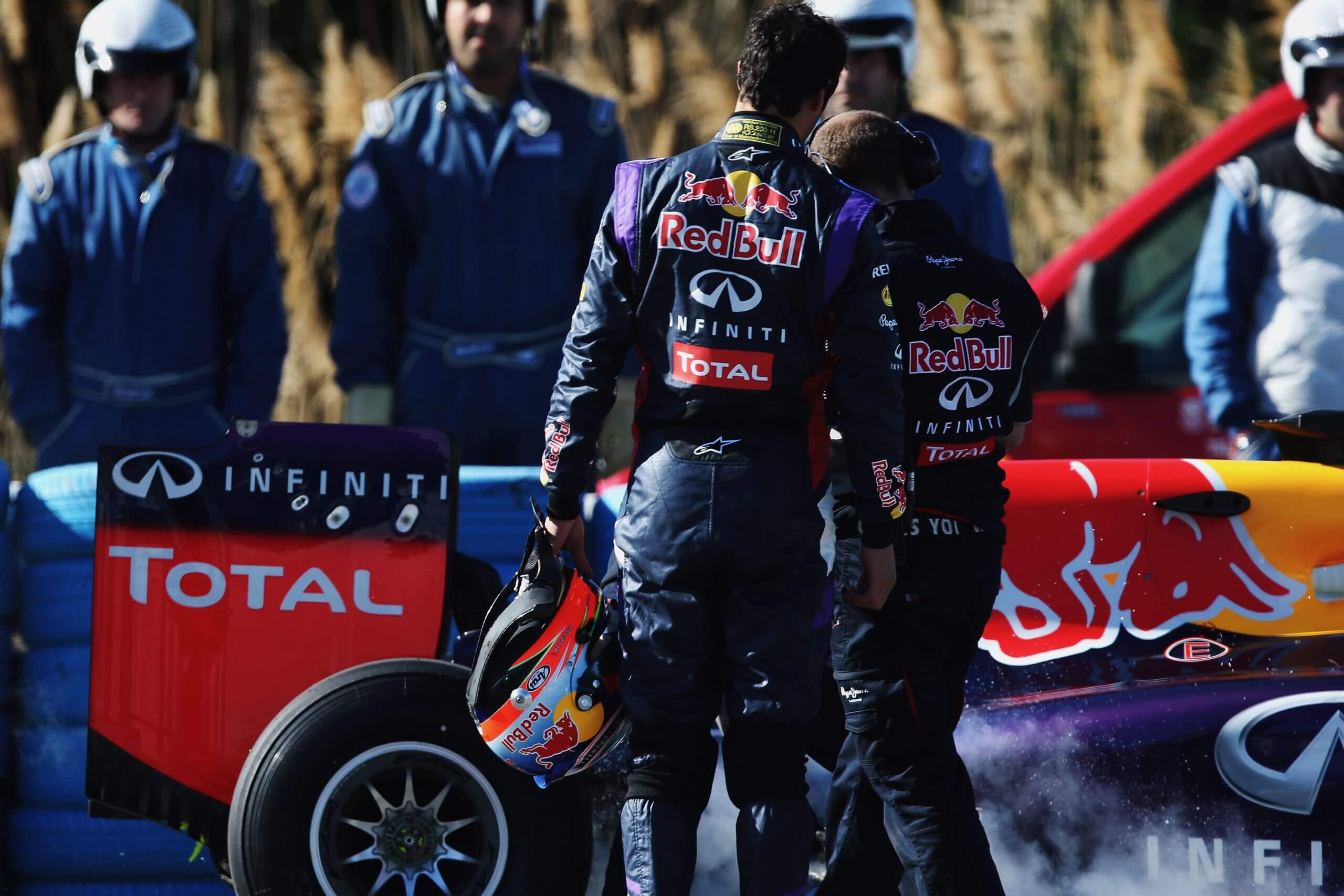
Daniel Ricciardo stands by his stricken Red Bull car during preseason testing at Jerez in 2014. (Mark Thompson / Getty Images)
Russell is correct. F1 is now in a much stronger position than it was 12 years ago in all ways.
Besides its global boom in popularity, the embracing of digital media by F1 commercial rights holder Liberty Media — the sport’s official social media channels are offering some clips from inside the Barcelona track this week — and the expanded schedule, the teams themselves are also in much better positions.
Seven of the 10 teams scored a podium last season, pointing to the enhanced competition and quality. There is also financial health across the board, thanks to cost-cap rules introduced in 2021. Even F1’s 11th team for this season, Cadillac, already has more than 500 staff, assembled with plenty of prior experience. Cadillac is ready to compete immediately, backed by big-money investment.
In 2014, the minnow Caterham and Marussia teams that joined the championship four years before still weren’t fighting for podiums or even regular points; their goal was simply survival. Even that proved beyond them. Both would be out of business within three years.
But where F1 is also in a much healthier position today comes in the teams’ experience of working with hybrids. This was not as present at those early tests in 2014.
Although there had been a degree of electrical engine power used on the previous cars (Kinetic Energy Recovery Systems, or KERS, was a battery boost provided by stored braking energy that drivers would use tactically, had been available in cars since 2009), the switch to integrated hybrid technology with the V6 engines going into that season required significant adjustment.
Although the 2026 engines have posed a big creation challenge to the teams, today they can tap into over a decade of experience using similar technology. Yes, there is now new fuel and three times the electrical power, but they’re still V6 hybrids. There’s a familiarity with the hardware being used.
“In 2014, there was a lot of stuff that we were inventing, and that was really tough,” Hywel Thomas, the managing director of Mercedes High Performance Powertrains, told The Athletic in an interview in January.
“For this one, the technology exists. We know what a V6 looks like. We know what a 350kW battery system looks like. They’re in road cars now.”
Backed by their existing hybrid engine experience, all 11 teams will have been setting goals that seem ambitious in order to be in as strong a position as possible for the start of the season. Thomas called this “jeopardy” that in 2014 centered on proving the new technology, as well as being as fast as possible.
But the first step on this journey, starting this week in Barcelona, was completing as many laps as possible, so they can understand how the new car-shapes and engines are working together.
It is why, as much as this may only be the first of three extended preseason outings for the field in 2026, teams such as Haas and Mercedes should take pride in their day one mileage.
Issues through this period of the year are inevitable — and welcome, given that discovering them is the point of testing, so they don’t sneak up on you in the races — but to start so well can only be a good sign for F1.
For all the secrecy around the Barcelona test and the various reasons for keeping it behind closed doors, any concerns over a lack of reliability have quickly dissipated. That in itself should be a credit to modern-day F1, and the impressive work of the engineers to get so many cars up to speed so quickly.