
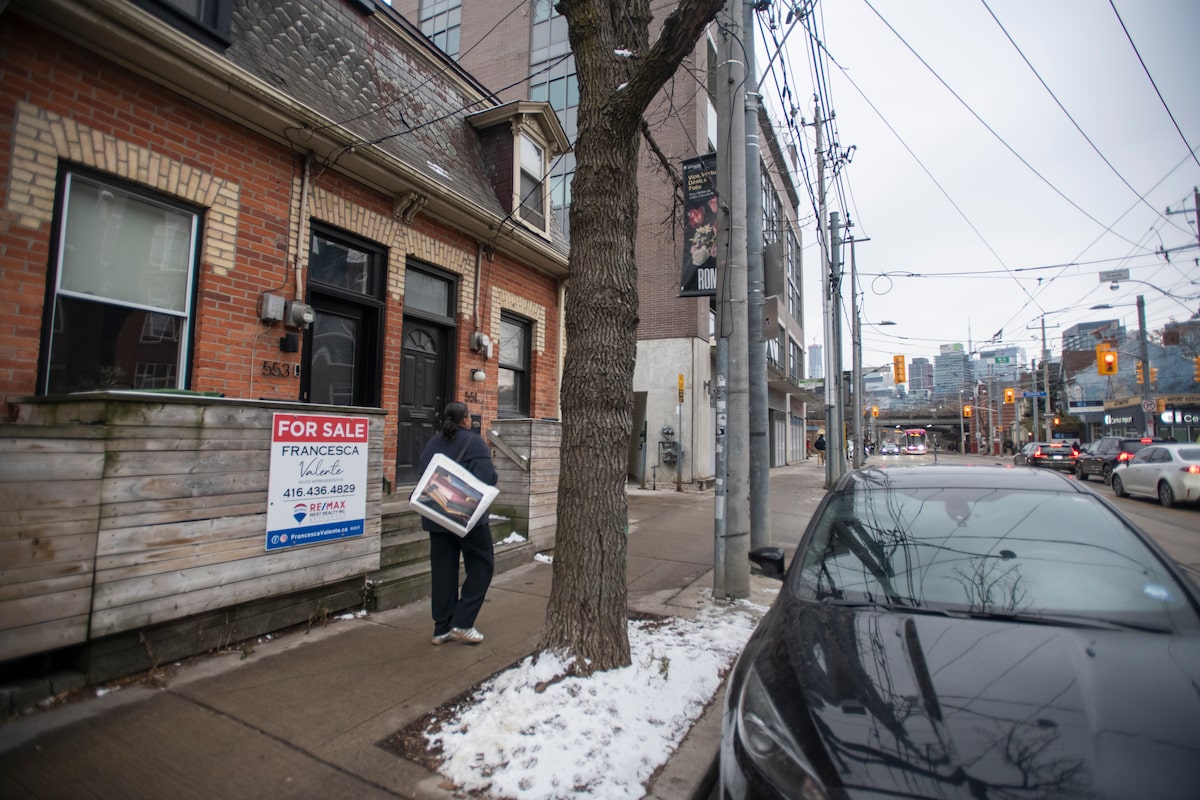
Rishi Sondhi, an economist at Toronto-Dominion Bank, says the level of home sales in Toronto is ‘so low, you almost have nowhere but up to go on a per-capita basis.’Fred Lum/The Globe and Mail
The slide in Toronto-area home sales and prices will likely come to a halt later this year as economic uncertainty diminishes and buyers become more resolute, predicts Rishi Sondhi, economist at Toronto-Dominion Bank.
The country’s largest city has also endured as the weakest real estate market since 2023, and he expects buyers to unleash some of the pent-up demand that has been building over time.
“The level of sales is so low, you almost have nowhere but up to go on a per-capita basis,” Mr. Sondhi said in an interview.
As for the broader Canadian landscape, Mr. Sondhi is predicting a subdued 2026 with a gradual, modest recovery in the laggard cities and a slight cool-down in the hottest markets.
In TD’s view, the Bank of Canada will keep its benchmark interest rate in the neutral range, and the bond market, which influences rates for fixed-term mortgages, will remain fairly steady.
In a recent report on the province-by-province outlook, Mr. Sondhi says real estate sales are setting off on shaky footing this year after a loss of momentum in the fourth quarter of 2025.
The disappointing showing, which followed a more upbeat third quarter, suggests consumers were fretting about jobs and economic growth, he says.
Mr. Sondhi cautions that Toronto condo prices have likely not reached bottom given the lofty level of inventory.Fred Lum/The Globe and Mail
“It’s not unusual for housing markets to take a breather after a robust previous quarter.”
In the Greater Toronto Area, the sharp correction in the condominium segment is dragging down the performance of the overall market, he adds.
Recent sales are at levels comparable with the downturns of the global financial crisis and the recession of the early 1990s, he says, adding that many of the people trading properties today need to move after a change in circumstances.
“Some of the buying you’re seeing now is the buying that just has to happen.”
Despite a drop in prices, townhouses, semi-detached homes and detached houses remain out of reach for many aspiring buyers.
Mr. Sondhi adds that some potential buyers hovering on the sidelines may be betting that prices have farther to fall.
What might a condo market recovery look like?
He cautions that condo prices have likely not reached bottom given the lofty level of inventory.
“It will be a gradual process to soak up supply,” he says. “Increased demand could tighten up the market a little bit.”
Indeed, the latest numbers from the Toronto Regional Real Estate Board show a slight pickup in transactions for resale condos as 2025 wound down.
Mr. Sondhi says nine straight quarters of decline in benchmark condo prices may have reached a point where buyers are tempted again.
“Basically you could get a condo at a price that prevailed in 2019.”
Looking farther into 2026, Mr. Sondhi is not expecting one catalyst to unleash pent-up demand among Toronto buyers so much as an eventual easing in trade tensions between Canada and the United States that will bolster confidence.
Barring a shock, Mr. Sondhi expects buyers to move past the anxiety that permeated the real estate market after U.S. President Donald Trump returned to office around this time last year and threatened Canada and other trading partners with hefty tariffs.
The Architourist: Grey clouds hang over Toronto real estate, but some see a silver lining
“You’re going to be further and further removed from the initial blow in early 2025.”
The macro economic backdrop is also likely to improve, in his opinion.
When those factors come together, prices in Ontario should stabilize and then inch into positive territory, he says.
After Ontario, British Columbia has the second most lacklustre real estate market in Canada.
Sales in Vancouver slipped about 4 per cent in 2025 from the previous year and the benchmark home price dropped 10 per cent.
Many of the elements that weighed on sales in Ontario were also behind the downturn in British Columbia, Mr. Sondhi says, including economic uncertainty, stretched affordability and a likely deterioration in investor enthusiasm.
B.C.’s 20-per-cent tax on house flipping also took effect in January, 2025.
Per capita sales levels in the province were 40 per cent below long-term norms in December, 2025, he notes, which lends support to his theory that significant pent-up demand has accumulated.
In 2026, Mr. Sondhi expects modest growth in the average home price as sales of higher-priced homes apply upward pressure.
Despite the soggy markets in Ontario and B.C., Mr. Sondhi points out that in many cities in Canada, sellers have the upper hand.
Sales in Saskatchewan remain brisk, he says, with buyers pushing prices up 9 per cent in 2025 amid tight supply.
Mr. Sondhi expects price growth to slow this year but remain solid overall. Saskatchewan’s economy is set to gear down in 2026, he cautions, but the province will still outperform the country as a whole.
Alberta’s housing market shows more balance between supply and demand than those in neighbouring provinces, says Mr. Sondhi, who reckons that the frothy prices of the recent past have prompted sellers to list at the same time new construction was ramping up.
The Next Move: Incoming luxury tax hike may spur home sales in affluent pockets of Toronto
Mr. Sondhi expects market conditions to remain fairly balanced in 2026 while job growth and population gains slow. The flattish oil prices TD is forecasting will likely restrain growth in economic output, household incomes and home prices.
Looking east to Quebec, Mr. Sondhi notes home sales posted a strong gain in the province last year with a boost from job and income growth. Consumers also showed surprising brio given the economy’s exposure to the trade war, he adds.
House prices have jumped, which in turn means that affordability has worsened.
After a strong run, Mr. Sondhi sees per capita sales losing steam this year. Price growth in Quebec will likely remain firm in the early part of the year, he adds, but may soften as 2026 wears on.
Prices in Newfoundland and Labrador’s housing market have been rising at a torrid pace compared with the country as a whole, says the economist, pointing to the robust economic growth in the province underpinning sales.
Affordability is favourable to buyers and supply is tight, Mr. Sondhi notes, but he predicts growth in prices and sales will cool in 2026, along with the province’s economy.