
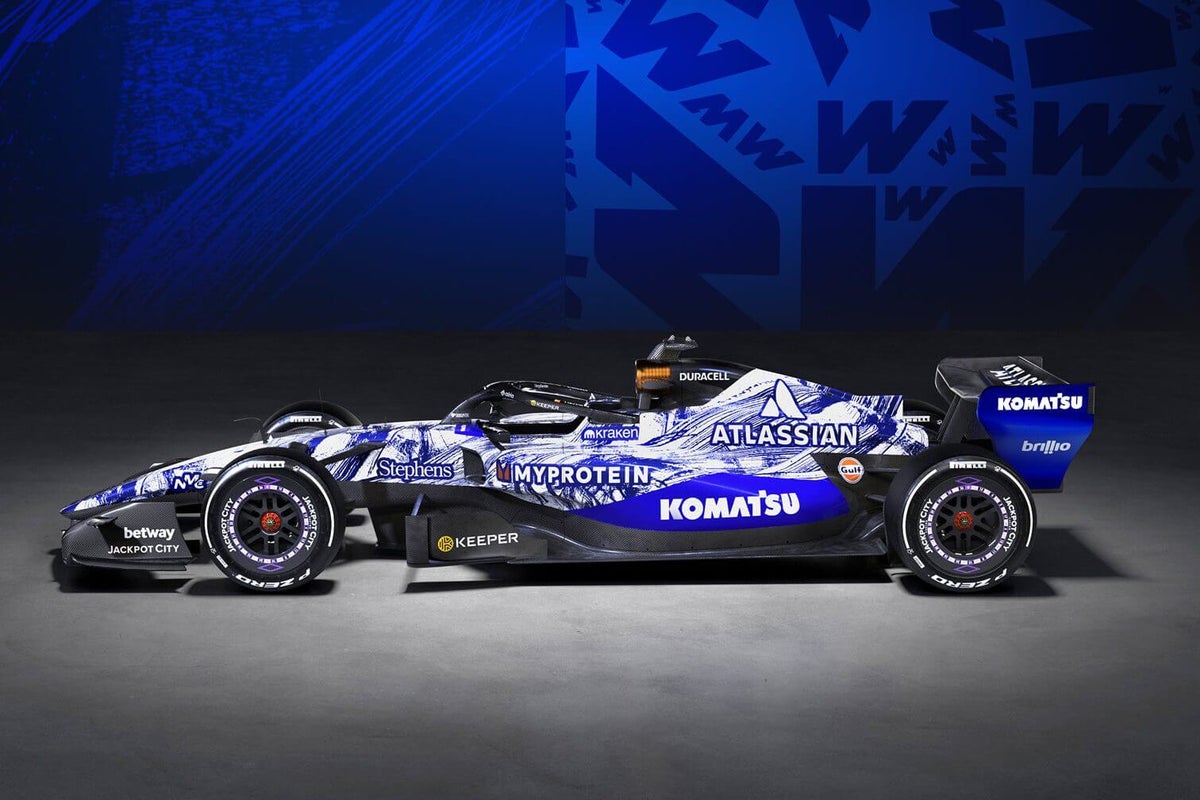
Williams has claimed it could have participated in the first Formula 1 preseason test in Barcelona after missing it due to delays in part production, but it would have compromised the start of its season.
Williams announced last week it would not be taking part in the five-day shakedown at the Circuit de Barcelona-Catalunya, which started on Monday, citing internal delays.
The team was yet to pass the final FIA crash test for the nosebox of the car, but the FW48 chassis has since passed all of the mandatory checks and tests before it is permitted to go on-track.
Speaking to reporters about the decision on Wednesday, Williams F1 chief James Vowles called it “incredibly painful” but said it was “the result of our determination to push the limits of performance under the new regulations.”
Vowles said the Williams F1 car for 2026 was “three times more complicated than anything we have put through our business beforehand,” which stretched the company and its processes at a point when it is undergoing a transformation to upgrade the facilities after years of underinvestment.
“We started falling a little bit behind and late in parts, and there (are) compromises you can make as a result of it,” Vowles said. “We have absolutely pushed the boundaries of what we’re doing in certain areas, and one of those is in certain corresponding (crash) tests that go with it.
“But those were a blip in the grand scheme of things. They are one item out of quite a few that were pushing us absolutely beyond the limit of what we can achieve in the space of time that we have available to us.”
All 11 F1 teams were able to test their new cars for 2026 for the first time at a private test in Barcelona, with allowances to run on three of the five days of the test. Only Williams has opted to miss the test entirely, while Aston Martin will not be on track until tomorrow — the penultimate day of running — at the earliest.
Vowles said it would have been possible for the team to make the test in Barcelona, but that would have led to a negative effect on its plans for spare parts and updated components for the two upcoming tests in Bahrain, the season-opening Australian Grand Prix “and beyond.”
“The evaluation of it was for running in a cold, damp Barcelona, against doing a VTT (Virtual Track Testing) test, against the spares situation — frankly, there were zero points for running in a shakedown test,” Vowles said.
“We made the decision, and I stand by it, is to make sure that we’re turning up at Bahrain correctly prepared and prepared in Melbourne as well.”
Using the VTT, Williams is able to complete a shakedown of its new car, engine and gearbox on a rig at its factory. While valuable, Vowles acknowledged it was “not the same as running on track.”
He said the team was “ready to run in Bahrain” and that it planned to give the new FW48 car, which will be driven by Carlos Sainz and Alex Albon this year, its on-track debut in a filming day ahead of the first public test of preseason, which begins in Bahrain on Feb. 11.
Will Williams be behind its rivals going to Bahrain?
The last time Williams missed a preseason test in 2019 served as the nadir in its recent history, an embarrassing low that set the tone for a rough season, which it spent adrift of the rest of the grid.
A lot has changed since then.
The investment in the team since its takeover in 2020 has been heavily focused on preparing it to fight for wins and world championships yet again, with Vowles, who took charge in 2023, seen as the man who can spearhead those efforts.
Vowles was always clear that he wanted to push Williams to the limit to push through those changes, which is why he deems missing the Barcelona shakedown to be a consequence of its efforts. To him, being aggressive now, even while taking this painful decision, will be worth it in the long run.
“I’m confident we won’t be behind,” Vowles said, pointing to the six days of test running to come in Bahrain and the warmer (and therefore more useful) conditions than in Barcelona this week.
He also noted that Mercedes, Williams’ engine and gearbox supplier, has also been conducting useful testing this week that can be useful to Williams.
Yet no matter how thorough the team’s preparations will be going into Bahrain, it will arrive there several hundreds of laps behind some of its rivals. In a season where there is so much change in the car design rules, plus the introduction of new engines, not having that data can only be a setback for Williams.
The team is a world away from where it was in 2019, having risen to fifth in last year’s championship and scored two podiums courtesy of Sainz. But it will go into the Bahrain tests playing catch-up, and hoping its call to skip Barcelona proves to be the right one in the long run.