
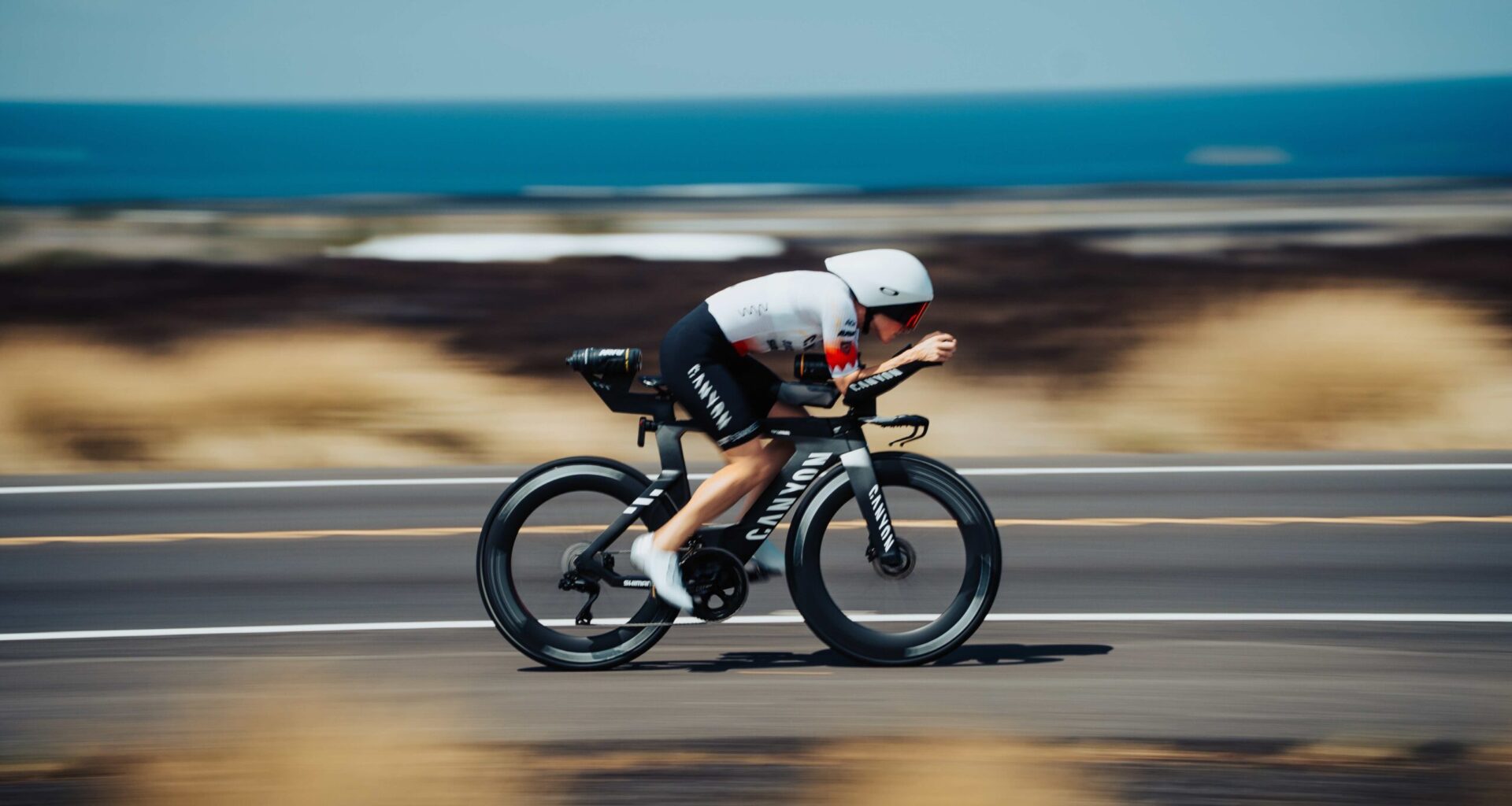
As early race season approaches, many of us are starting to get more serious about our training, looking to develop our skills and perhaps even hit some new personal bests this season.
There are a myriad of ways to go about improving your cycling, and much of it depends on your current training (and where there’s room for progression), along with understanding your strengths and weaknesses. Yes, knowing your weaknesses is a good thing – it can help open the door to your biggest gains and breakthroughs!
Here are a few considerations to help you assess your own cycling and make the most of the season ahead.
1. Increase Your Volume – and Ensure the Right Balance Between Training Zones
One of the most well-established ways to improve endurance performance is simply to do more of it. If it’s feasible within your lifestyle and schedule to gradually add time in the saddle this season, it may be worth considering.
With that said, how your training volume is distributed also matters. The amount of time spent in different training zones, each targeting specific aspects of fitness, is a key variable. Regardless of overall volume, getting this balance right can meaningfully improve your cycling performance.
Current training guidance often favours a polarized approach, with roughly 20 percent of training time spent at higher intensities (such as focused intervals or strength-oriented work) and the remaining 80 percent devoted to aerobic Zone 2 riding. As race day approaches, particularly for longer events like Ironman 70.3 or Ironman, a more pyramidal distribution is often introduced temporarily, incorporating specific race-pace efforts to fine-tune fitness ahead of competition.
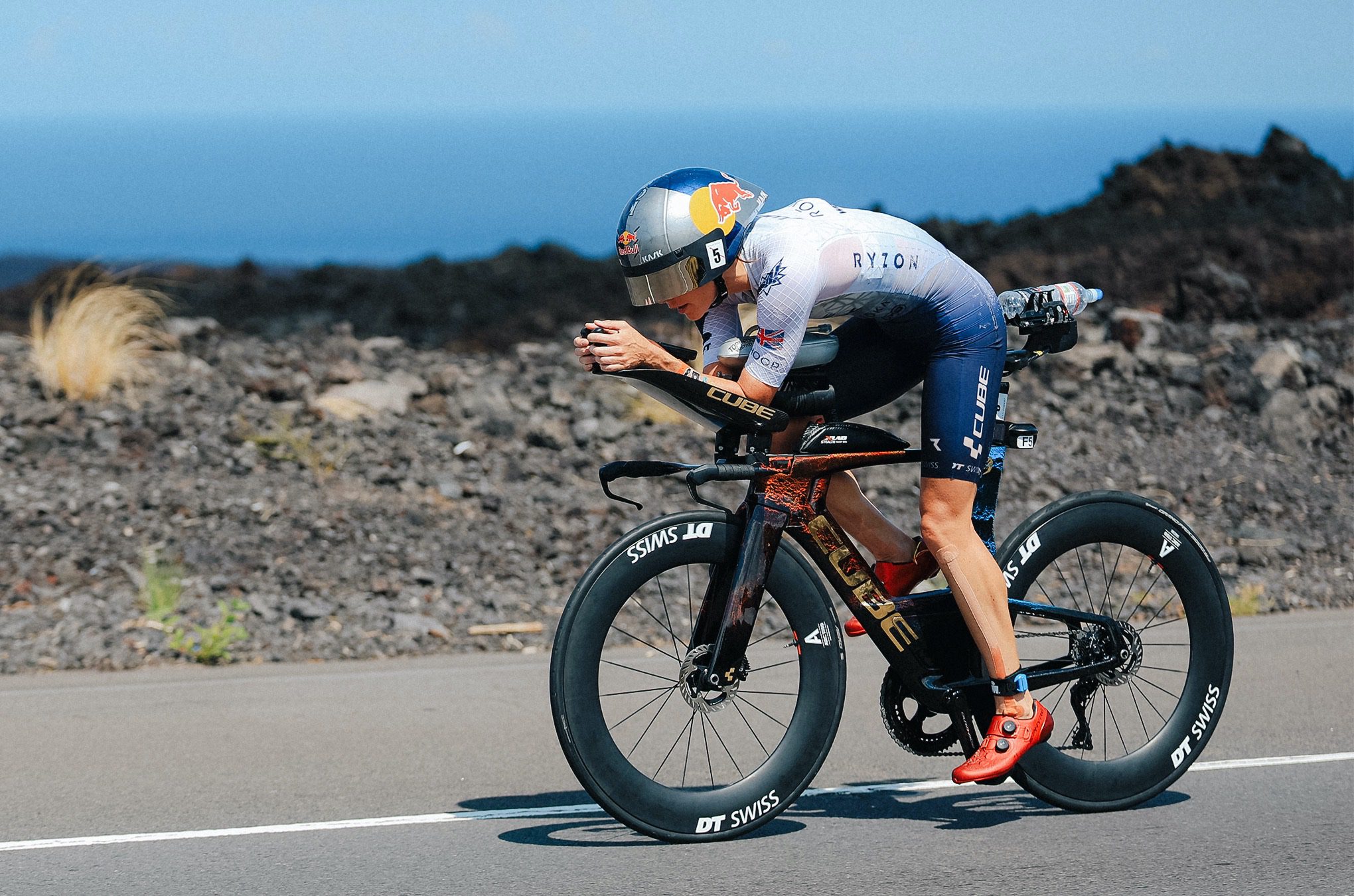 Photo Credit: Ironman
2. Develop Well-Rounded Cadence Ability
Cadence is an often overlooked, but important, component of cycling performance. There are two primary ways to produce power on the bike: by applying more force through the pedals and by increasing cadence.
Many cyclists, particularly those newer to structured training, naturally default to pushing bigger gears. Riding at the cadences commonly seen among top cyclists and triathletes, often in the 85–95 rpm range, can feel unnatural at first. However, as this skill is developed, it can support greater sustainable power output, especially in long-distance events where preserving muscular strength for the run becomes increasingly important.
Conversely, if riding at a higher cadence already comes naturally to you, there may be meaningful gains to be made by intentionally developing cycling-specific strength and the ability to handle larger gears. Over time, this can raise the level of power you are able to sustain at your preferred cadence on race day.
With any adjustments to cadence or the introduction of cadence-focused drills, it’s important to remain attentive to technique to avoid unintentionally increasing injury risk.
3. Dial in Fit and Aerodynamics – and Practice Riding in That Position
Triathlon cycling is ripe with opportunities for “free speed” – and they don’t all have to come with an expensive price tag! One of the most significant contributors to aerodynamic efficiency and watt savings is rider position and frontal profile. A good bike fit is not costly, but it is vital – both for improving aerodynamics and for optimizing biomechanics more generally, allowing you to produce power efficiently and sustainably.
Beyond bike fit, a number of rider-driven skills also influence aerodynamics, including shoulder position and head and neck posture (i.e., an aerodynamic “tuck”). Even small adjustments in these areas can result in meaningful reductions in drag. These positions can feel unfamiliar at first, which is why targeted, time-bound practice holding them is important to allow adaptation over time.
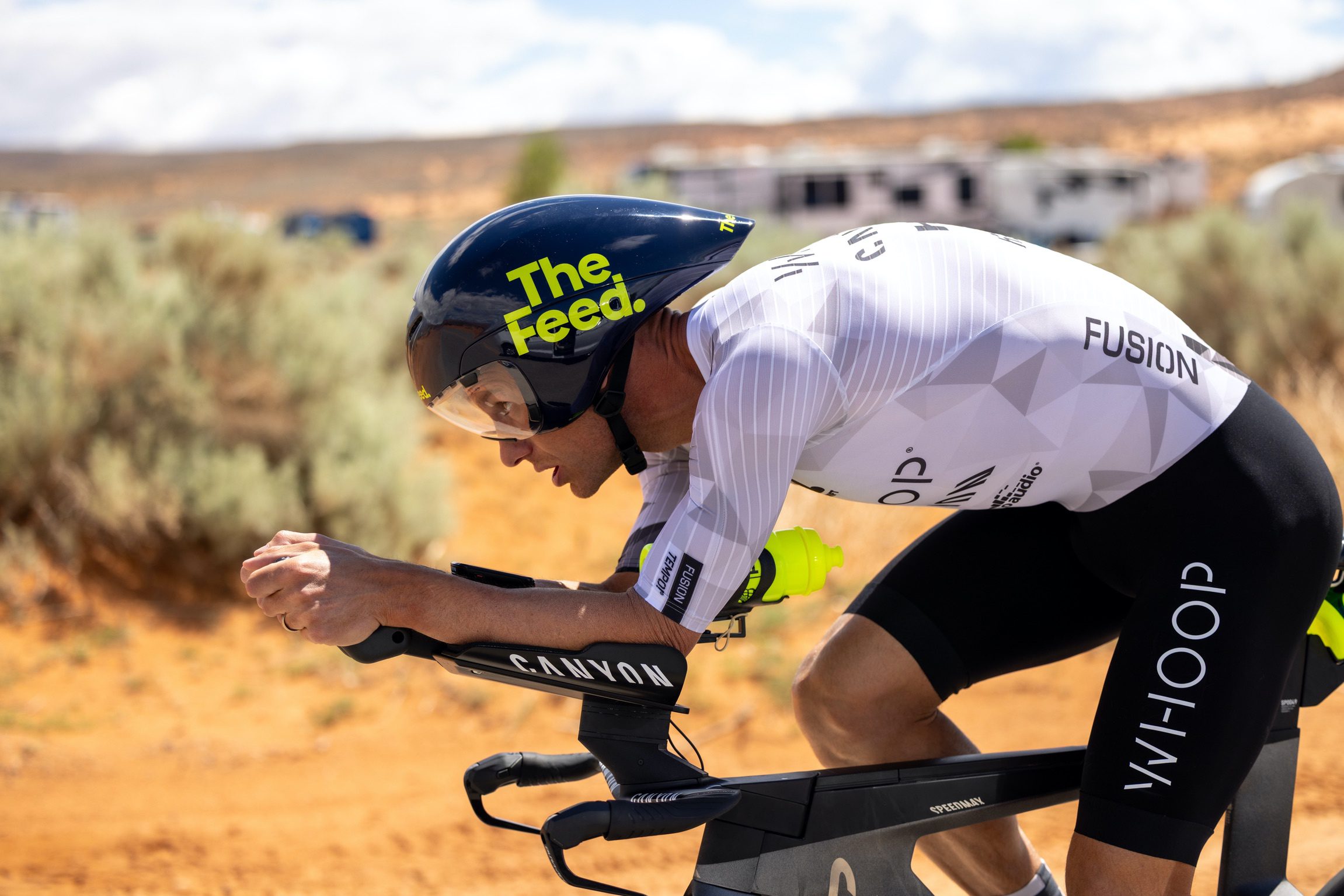 Photo Credit: Canyon
Above all, comfort and familiarity are foundational. An aero position only delivers gains if you can actually ride in it. A position you abandon due to discomfort or lack of adaptation ultimately negates any theoretical advantage it may offer.
4. Learn How to Ride the Terrain
Building on the idea of “free speed,” it’s important to remember that race-day performance is not just about pure watts or your average (or normalized) power on a Garmin screen. What ultimately matters is how quickly you move across the course – and how much is left in your legs to run well.
This requires learning how to apply your fitness intelligently over the terrain. Knowing when to stay aero and coast on downhills, when to fuel and hydrate, and where short increases in power are worth the cost are all core skills.
FTP and durability are undeniably important, but how you deploy your fitness across the course has a significant influence on your bike split. Strong cyclists don’t just produce power – they use it well.