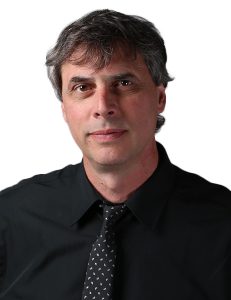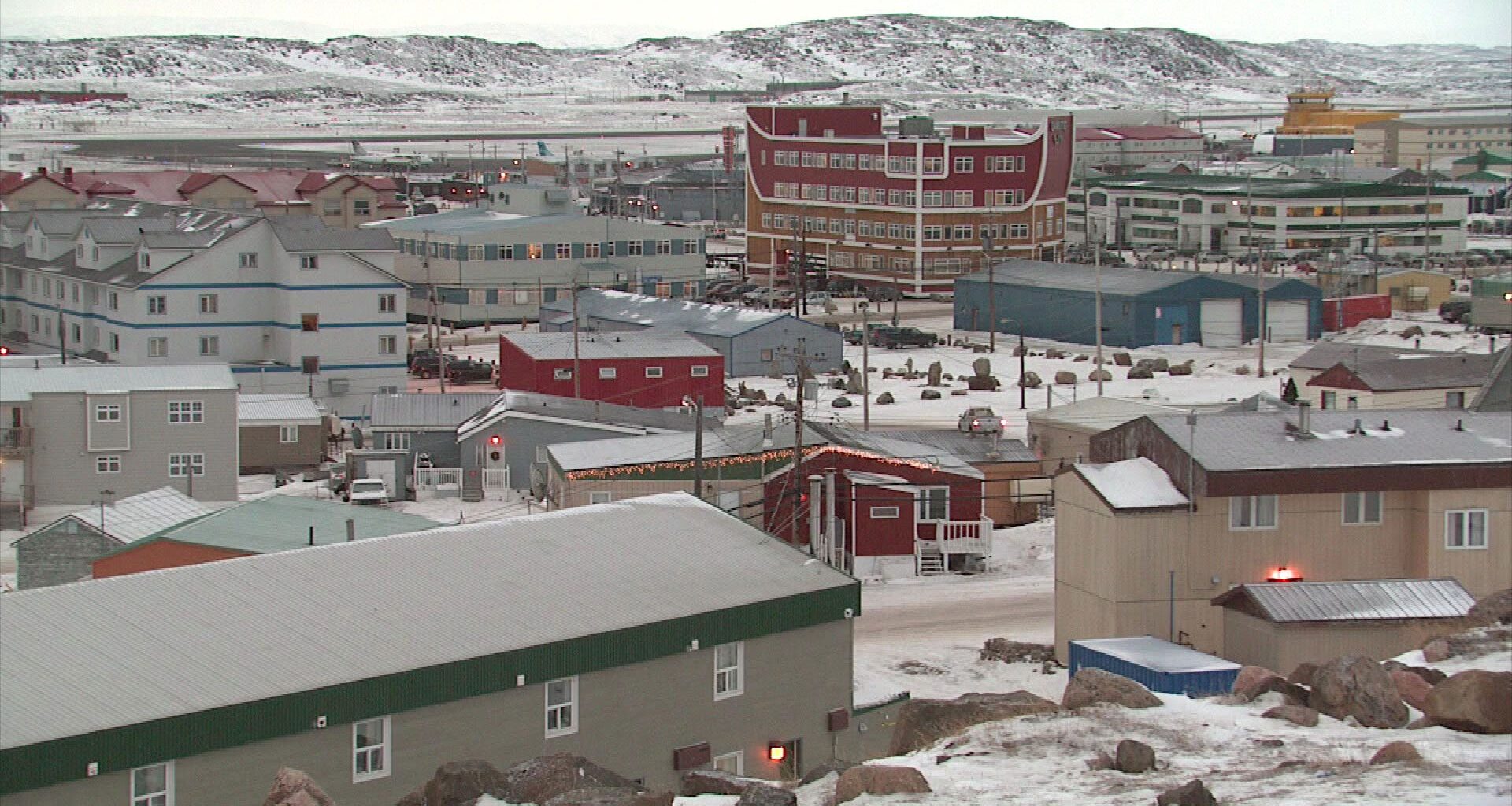
Nunavut’s premier delivered a clear message to a conference on Arctic security Wednesday in Ottawa saying that Canada must pay attention to the needs of Nunavummiut as it plans its strategic defence of the North.
“Our approach to arctic security is that it cannot be one dimensional,” said newly elected Nunavut Premier John Main, fresh from a face to face meeting with Prime Minister Mark Carney on Tuesday. “We can’t have state of the art, military technology, flying in the face of communities that are impoverished and in need of basic infrastructure, for drinking water, for housing, energy security.
“These are the types of things that need to be considered in terms of Arctic security and sovereignty, and we are encouraged so far with the conversations that we’ve had.”
Inuit, federal and territorial leaders, along with international representatives gathered for the one day symposium to discuss the next steps in preparing the Arctic for incursion from or by?? foreign powers including Russia and the United States.
Global Affairs Minister Anita Anand’s speech focussed on the need for cooperation.
She said the Arctic is no longer a “low tension region” but rather the front line of “strategic competition.”
“If there’s one theme of my speech today, it is collective action. Is not one person alone that is going to stand up for our country and our country’s principles,” Anand said. “It is all of us in this room and all of us in our country at large. But recent weeks have indicated that the Arctic is no longer a low-tension region, and it is increasingly the front line of strategic competition.
But there is concern that plans are being made without the input from Inuit leaders.
The focus of Natan Obed, president of Inuit Tapiriit Kanatami, was that Canada’s current policy is not one of cooperation, but of exclusion.
“In moments of crisis, in moments of national consideration, I would still say that the first consideration of the federal government or provinces and territories would not be to involve Inuit leadership,” Obed told Inuit, provincial, federal and international leaders gathered at the event. “Even if the considerations were directly about our homeland.
“We see this playing out in the last year with U.S. threats of annexation of Canada or of Greenland. The first ministers meet now on almost a monthly basis and premiers have not agreed to allow for national Indigenous leaders to play any role in the convening and the discussions of first ministers’ meetings.
“We all saw when Denmark went to the White House and who did Denmark bring with them? The foreign minister for Greenland. If Canada went to the White House to talk about Inuit Nunangat, I don’t believe that under the construction of its diplomacy today, it would bring Inuit leadership.”
Other Inuit groups criticized Anand’s speech for its lack of details. The head of the Qikiqtaaluk Corporation, the economic arm of the Qikiqtani Inuit Association, said he was “disappointed” that Anand’s speech didn’t offer any focused plan for security in the North.
“It offered no concrete steps to strengthen Canada’s Arctic, despite the Prime Minister’s commitment nearly a year ago to invest in more heavy icebreakers and dual-use Arctic infrastructure,” Harry Flaherty said in a release on Wednesday. “The disconnect between words and action in the Canadian Arctic is a pattern that goes back decades. With new threats to Greenland and our own Archipelago, the time for action is now.
“The Prime Minister committed to NATO that Canada will accelerate investments in the Arctic. Enough talk, Inuit are ready – let’s go.”
N.W.T. Premier R.J. Simpson and Yukon Premier Currie Dixon are in Ottawa for the First Ministers Meeting. Indigenous leaders do not have a permanent seat around the table.
Simpson said Carney’s speech in Davos was a good sign for security in the North.
“He talked about the need to ensure that we aren’t reliant on other powers, that we can defend ourselves to the extent that we can,” Simpson said. “And that means strengthening security in the Arctic, and that’s hard security, and that’s going to mean investments on the ground, in infrastructure, in community infrastructure, as well as military infrastructure, and boots on the ground.
“So based on that, as well as the conversations I’ve been having with the federal government, I fully expect that we’re going to see significant investments in the North.”
Dixon agreed with Inuit leaders in that he wants to see words translated into action.
“The Prime Minister made a number of comments about some work that he had intended to do here at home, including the development of our economy, and the development of the Canadian North, investing in the military, and so on, those are great commitments, and ones that we support very much,” Dixon said. “We need to see them translated into action now. And so we look forward to working with the federal government to understand how that action is going to work.”
With files from APTN’s Justin Hardy in Iqaluit and The Canadian Press.
Report an Error
Tell us your Story
Continue Reading