
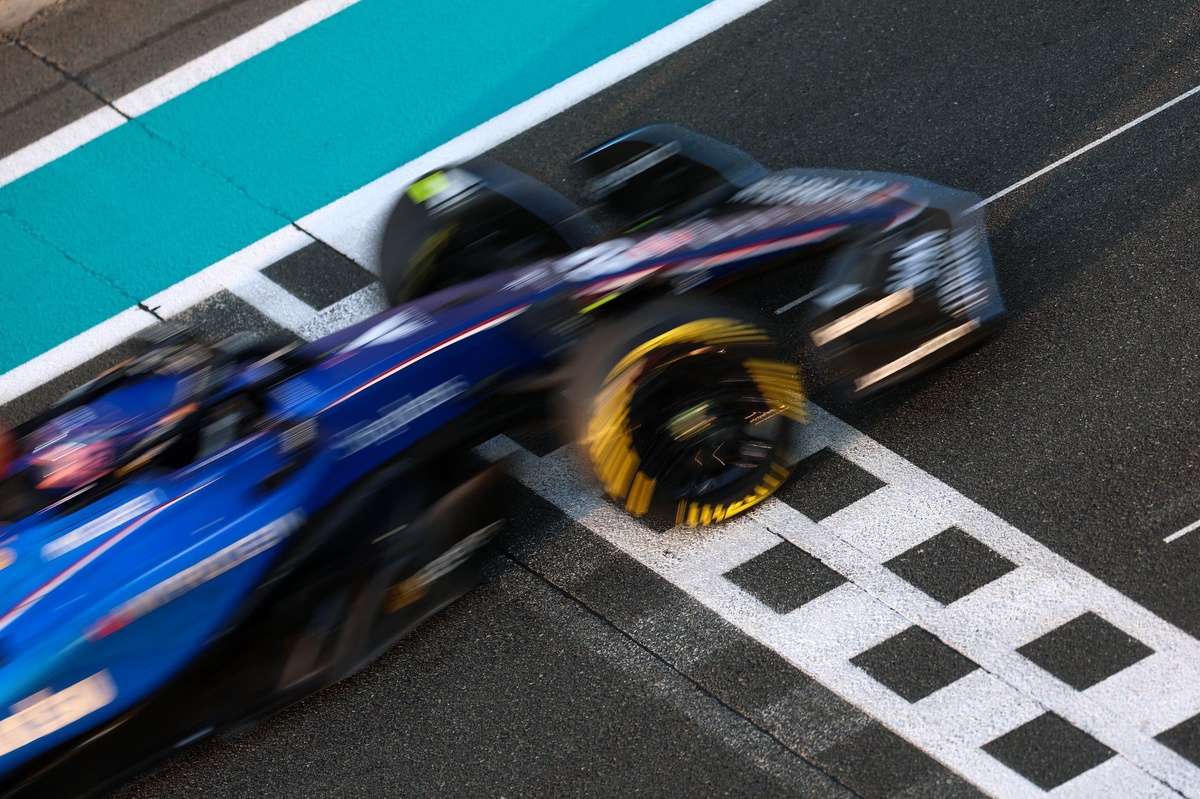
It has been a very weird week in the world of Formula 1: cars have hit the track for the first time in 2026 but the general public, media included, has only been drip-fed information. In a world where everything is usually on constant demand, putting the Barcelona shakedown behind closed doors as teams gear up for this year’s regulation change certainly caused a stir.
But alas, what can you do? As at least one newsworthy topic made its way into the domain and that was Williams opting to skip the five-day test following “delays in the FW48 programme”. Minds inevitably went back to 2024 when the British outfit also had a nightmare start with a car that was both late and overweight, but team boss James Vowles was quick to squash the comparisons as he confirmed that Williams “could have made it to Barcelona”, “but in doing so, I would have to turn upside down the impact on spares components” and updates across the opening rounds of the season.
This is supposed to be the time Williams goes to that next level with two strong drivers in Alex Albon and grand prix winner Carlos Sainz, plus having risen from last to fifth across the past five years, it has been on an upward trajectory.
That is exactly why, however, doubts suddenly crept in about the team’s direction; yet it is understood that the key to success in 2026, per many team bosses, isn’t a good start but a strong finish. Development through the campaign is expected to be rapid as squads adapt to these wholesale regulation changes in what could be a defining era for F1.
Read Also:
So although it isn’t ideal for Williams, missing a private shakedown in Barcelona isn’t necessarily the end of the world, particularly as teams are just using it to clock up mileage. Indeed, the historic squad still has some kind of presence there.
“Yes, I have boots on the ground and individuals there,” confirmed Vowles in a media roundtable, which included Autosport. “It won’t be a surprise to any of you, but I actually think we’re set up for a good championship.”
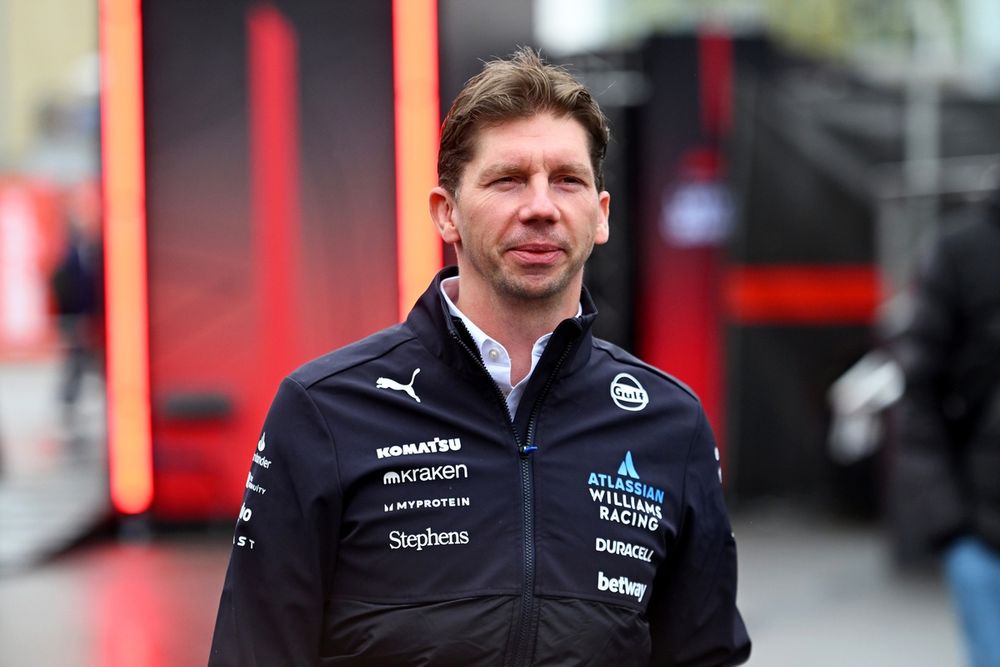
James Vowles, Team Principal of Williams
Photo by: Rudy Carezzevoli / Getty Images
The 46-year-old went on, with particular praise towards Williams’ power unit supplier Mercedes, who Vowles has also previously worked for: “I think Mercedes are doing well out of the box, running to the timetable they said they would.
“It’s very impressive from the get-go. But equally, Red Bull, given they have produced a power unit from scratch, that really cannot be underestimated, they did a brilliant job in the number of laps they completed and then finally, there’s Ferrari, which is exactly the same thing.
“Again, pretty impressive from the get-go, but your times in Barcelona are going to be largely irrelevant. It’s only really in Bahrain [the official pre-season test] that you’ll start to see it.”
It is the link with Mercedes that caused many to hold high expectations for Williams in 2026; the Silver Arrows is currently favourite for this year’s constructors’ title, largely because it dominated F1’s last engine switch in 2014.
Mercedes subsequently won the next eight championships and although it is too early to say it’ll do the same in 2026, the signs are certainly positive. On Wednesday, for example, its drivers George Russell and Andrea Kimi Antonelli completed a combined 183 laps with the latter even conducting a full race simulation.
To do such a thing on only the third day is impressive, backing up the belief that Mercedes boasts the strongest engine, and the learning from such will be valuable – not just for the German marque, but also Williams.
“We have the power unit provided by Mercedes, the gearbox provided by Mercedes, so the learning that they’re going through this week in Barcelona will carry over into us, into Bahrain,” said Vowles.
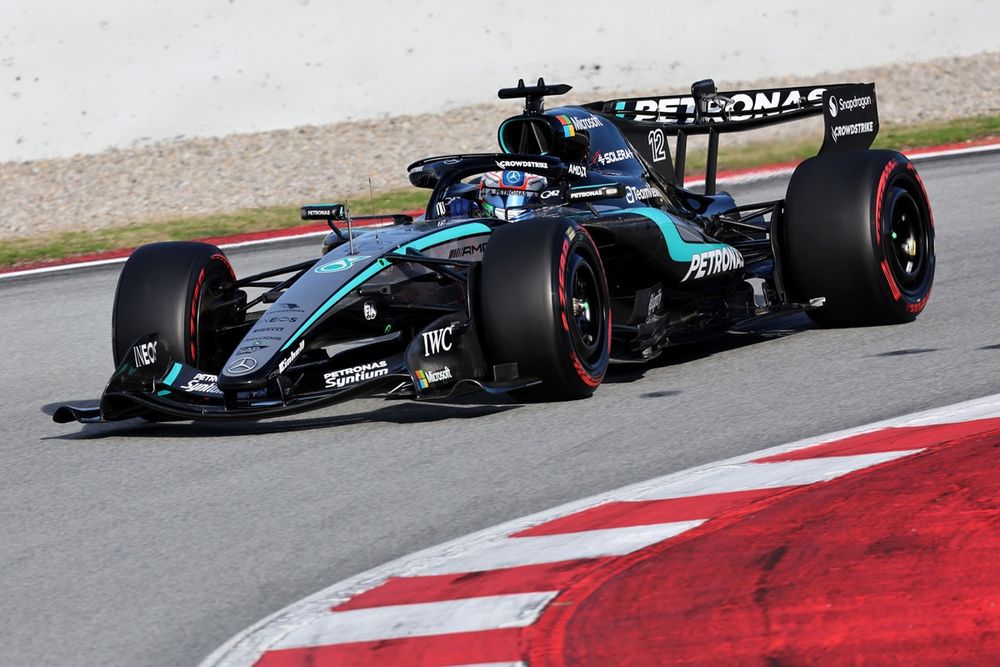
Andrea Kimi Antonelli, Mercedes
Photo by: Mercedes AMG
“It’s not that I want to be resting on their hard work, but also it is worth stating that that is still an advantage for us that falls out of it, or a disadvantage that’s negated. I’m confident with six days in Bahrain [11-13 and 18-20 February], we will run through the programme that we need to and it’s why we’re on the VTT now.
“What I wanted to do is to make sure from the outset in Bahrain, we have a reliable car ready to go so that we’re not sitting there doing what a lot of individuals and teams are trying their best to do in Barcelona, but not leave the garage. We’ve got to be there ready to go.”
So there are still silver linings for Williams – crisis mode will only hit if the situation is the same come Bahrain – with Vowles “confident” it “won’t be behind”, particularly with the VTT it is instead conducting this week.
VTT stands for Virtual Test Track and is similar to a simulator, but it actually includes most of the physical car – but no wings – which is put through a rig and replicates a track test.
“What you’re doing is characterising your cooling system, understanding where that is, running the engine, gearbox, et cetera, under load,” said Vowles.
“So you don’t have dynamic cornering loads but, for example, you can mimic having two cars in front of you, one car in front of you, no cars in front of you. You can mimic being in Singapore or Bahrain or being in a four degrees, Silverstone weather conditions.
“What you can do, especially in tandem to those running in Barcelona, is run the same code base that they’re running on the PU and the gearbox to understand the effects, but in a more controlled environment than they are.
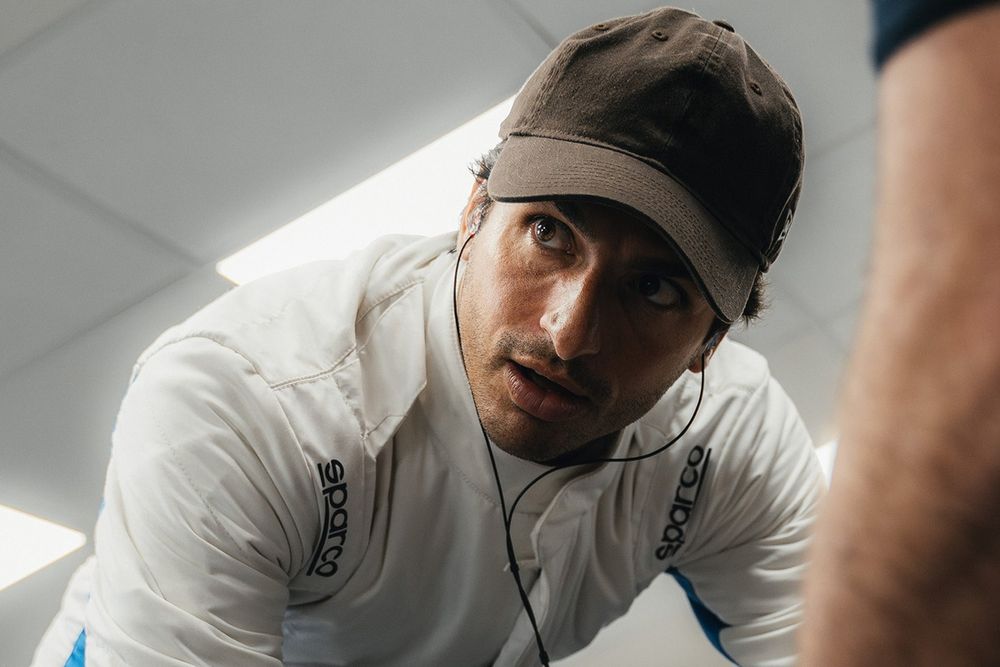
Carlos Sainz, Williams
Photo by: Williams
“So you still get learning on various systems, energy, ECU as a result of it. It’s an invaluable learning, but it is not the same as running on track – it’s just a good use of time.”
By no means is Vowles therefore saying the VTT is better than running in Barcelona, especially because, a, the status of the driver-in-loop simulator Williams has been building is uncertain and, b, if he cannot say how heavy the FW48 is then one wonders how beneficial it would be, but the Briton is still adamant that there are some uses to it.
When asked where that specifically applies, he said: “Primarily on the cooling system side at the moment, we’ve got quite a different cooling system for us here than we’ve designed and used beforehand and it allows us not just current learning to make sure we use it effectively.
“We also have to remember we had some reliability woes last year, and I wanted to make sure that those were all gone, but also future learning on the sizing of it and packaging of it for future states. So that’s been incredibly useful.”
Read Also:
We want to hear from you!
Let us know what you would like to see from us in the future.
– The Autosport.com Team