
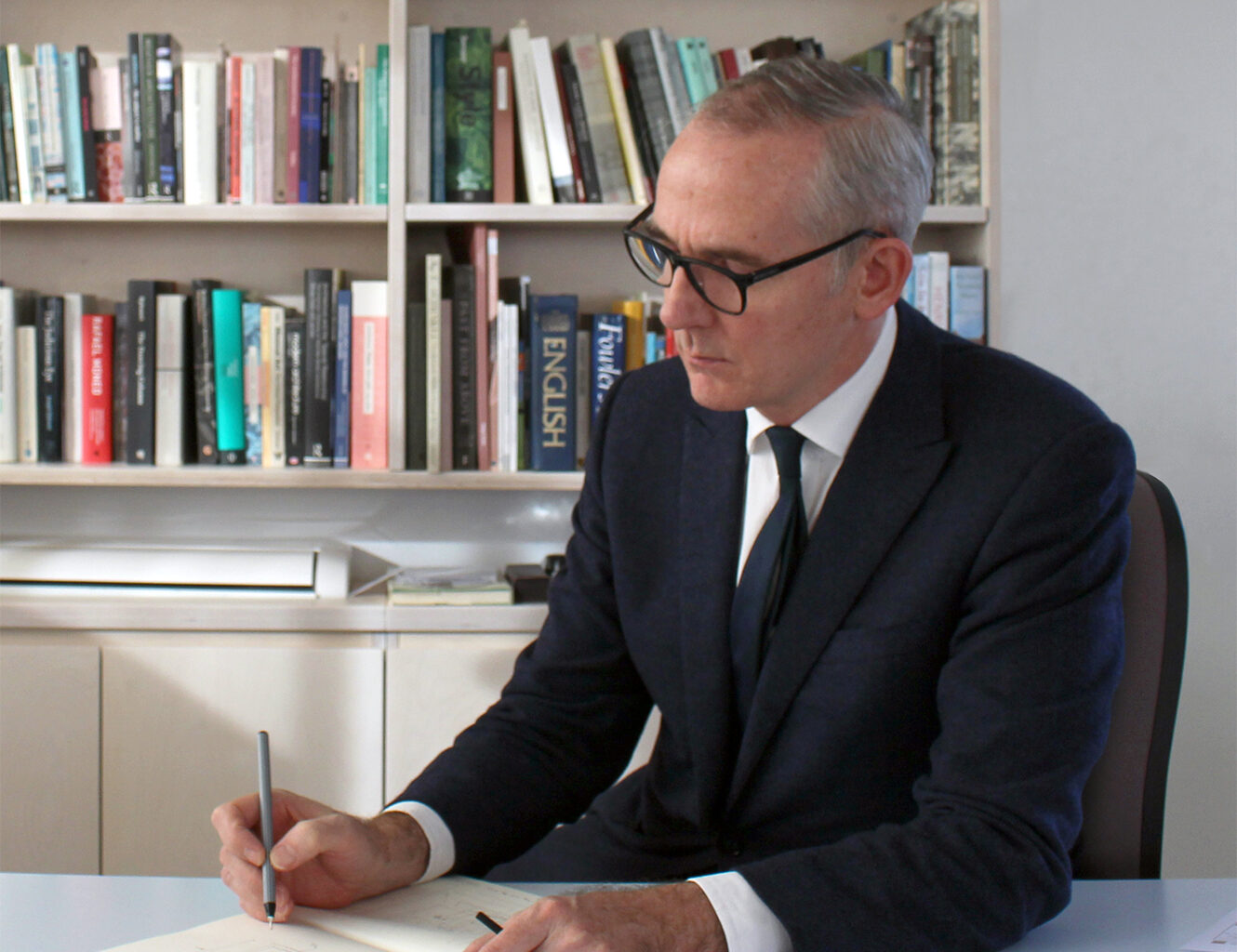
Irish architect Niall McLaughlin, who was announced as the recipient of the 2026 RIBA Royal Gold Medal today, explains his focus on creating meaningful architecture in this interview.
Reflecting on winning the prestigious RIBA Royal Gold Medal, McLaughlin explained that he believes the award is an acknowledgement of architects’ growing rejection of flashy architecture.
“It seems to me that architects are interested in a quieter, more purposeful understanding of architecture that is based on the way that buildings are made, the care in which they’re put together and the work we’re doing for communities around learning, around faith, around care and housing,” he told Dezeen.
“It’s that core vocation of the architect that they’re looking to recognise, I would hope.”
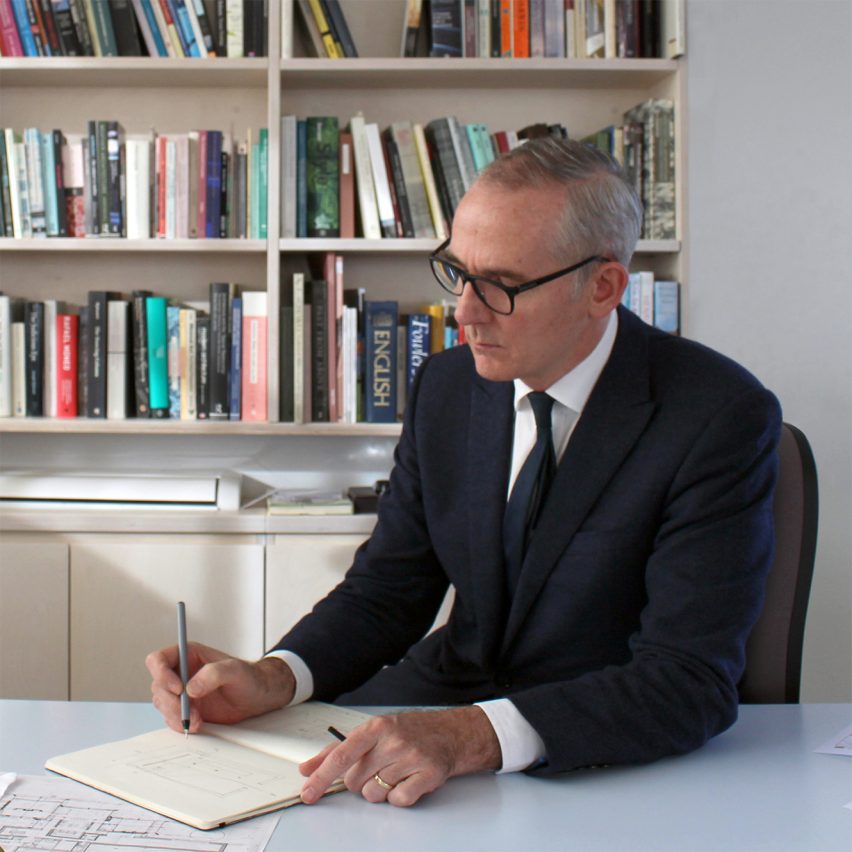 Niall McLaughlin talked to Dezeen about winning the RIBA Gold Medal
McLaughlin, who was called a “pivotal figure in contemporary architecture” by RIBA, has created numerous buildings over a 35-year career, including the New Library at Magdalene College (top), Cambridge, which won the Stirling Prize in 2022.
Other notable projects by the studio include the Bishop Edward King Chapel in Oxford, Darbishire Place in London and Sultan Nazrin Shah Centre in Oxford, which were on the Stirling Prize shortlist in 2013, 2015 and 2018, respectively.
Described by RIBA as “marked by a deliberate modesty”, the body of work created by McLaughlin’s eponymous studio varies widely in scale, function, material and aesthetic.
Ten “deliberately modest” projects by Royal Gold Medal-winner Niall McLaughlin
For McLaughlin, a focus on creating meaningful architecture is the thread that ties all of his projects together.
“I think people want buildings to be meaningful,” he said. “Okay, I know that sounds almost trite, but it’s true that people want to feel that a building is something that helps them to communicate meaning to each other.”
“So whether in a religious group, or whether you’re in a university setting, or whether you’re in a Maggie’s centre dealing with a diagnosis, you want to feel that you can come in and there’ll be a community of people there – and that together, you can constitute some way of dealing with the world, day to day, in terms of meaning,” he continued.
“And I think architecture has a big role to play in that.”
“We’re certainly not a practice that is shy of being explicit”
The Irish architect, who established Niall McLaughlin Architects in London in 1990, explained that his studio aims to create buildings that connect to people.
“We’re certainly not a practice that is shy of being explicit about that [being meaningful],” he said.
“We’re happy to talk to people about the meanings that they want to communicate through built form and to find processes to do that, that have integrity and make them feel as though they’re being supported,” he continued.
“In the digital world everything can seem very fragmented, but there’s a strong desire for communities to come together and to hold themselves together as a group and to see each other in public space – I think that role of architecture is really significant.”
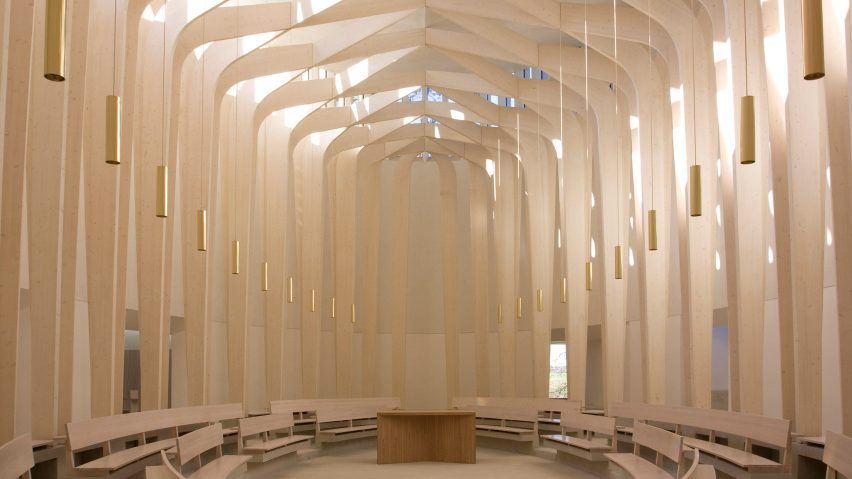 McLaughlin has designed a broad range of buildings, including Bishop Edward King Chapel in Oxford
Although McLaughlin places a strong emphasis on meaning, he believes that many architects struggle to communicate the nature of their buildings to both clients, users and the general public.
“It’s partly through our training, we can be too inside the discipline and things that seem evident to us are not so evident to our clients,” he explained. “Every kind of education has its own sort of secret codes and ways of talking and ways of explaining things to each other, which become a kind of internal dialogue.”
“One of the challenges of my generation, in the past 40 years, has been to persuade the British public that buildings are worthwhile and meaningful, because there’s a scepticism about the value of architecture, and to some extent, it’s had to prove itself,” he continued.
“To me, the first thing is about speaking in a language that people understand about buildings. A good architect can’t simply depend on signalling virtue to their peers.”
“Your ability to invent doesn’t come from the innocence of your own mind”
For McLaughlin, the key to creating meaningful architecture is building a strong relationship with his clients to fully understand their needs.
“Your originality, your ability to invent, doesn’t come from the innocence of your own mind,” he said.
“It comes from encountering people who don’t see the world that you see. And they’re asking why would we do it that way? Why is it like that? And that’s actually the pleasure of it.”
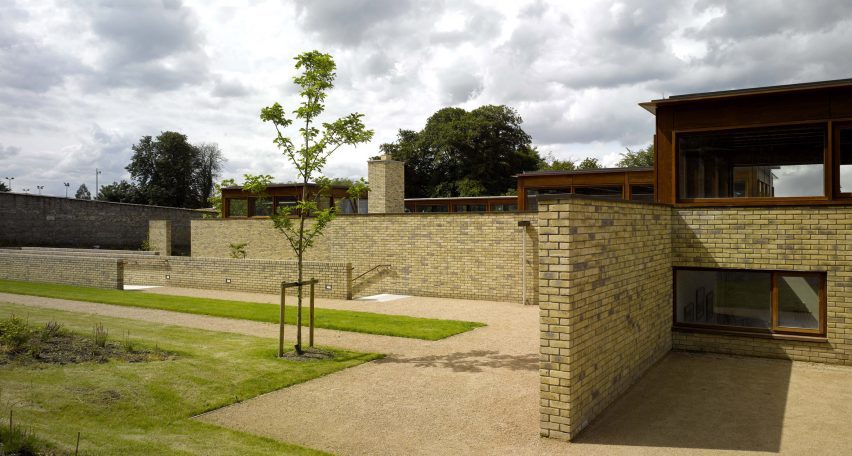 The Alzheimer’s Respite Centre had a perfect brief. Photo by Nick Kane
He recalls being given the brief for the Alzheimer’s Respite Centre on the outskirts of Dublin as an example of an ideal relationship between architect and client.
“The process of design is a kind of mutual education between clients and architects,” said McLaughlin. “I remember the best brief I ever got was from the head of the Alzheimer’s Society who said, ‘we’ll teach you about dementia and you teach us about architecture’.”
“It was such a nice contract, and we learned a huge amount from each other, and at the end of it, people feel as though they can see through that process how architecture can embody meanings and values that they have.”
“A kind of continuity of performance across time”
Many of McLaughlin’s buildings have been built in historic contexts and he aims to ensure that his projects have a relationship with the existing architecture.
“A lot of the buildings that we build, particularly here in the UK, but generally, are often being built cheek by jowl with buildings that have been there long before – following in the footsteps of other architects,” he explained.
“You put your building beside theirs and hope that the two of them will glow together, and you hope that somebody in the future will come and do the same for you,” he continued.
“It’s that sense of a kind of continuity of performance across time, much more so than this idea of the unique bauble, or the unique shiny artefact.”
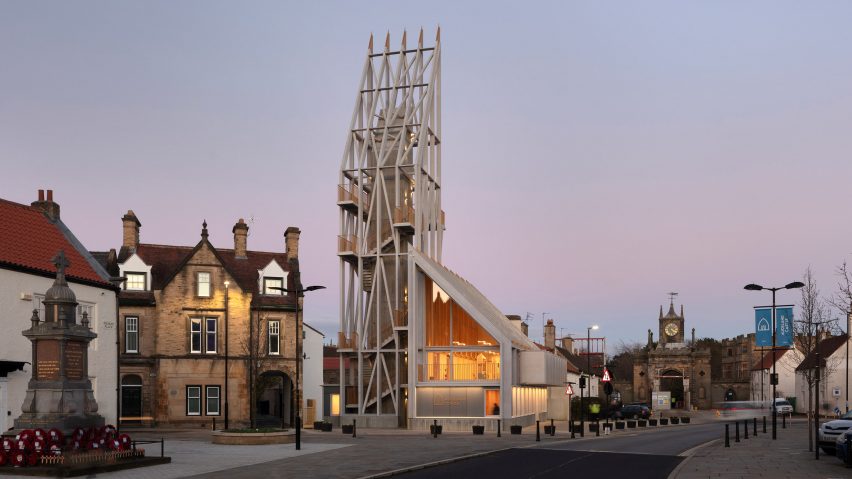 McLaughlin aims to create bold additions in historic contexts, including a viewpoint in Bishop Auckland. Photo by Nick Kane
Although McLaughlin designs his buildings to have a relationship with the surrounding buildings, this does not mean he believes they need to be either dull or subservient to the existing architecture.
“I think if you look at a lot of the buildings that we’ve done on historic sites – you might be surrounded by three or four grade-I listed buildings, or you might be working on an ancient monument – there’s always this pressure to be contextual and deferential,” he said.
“But we try to say that we can do something that is quite bold and singular, and yet will find itself comfortable in this situation,” he continued.
“Generally speaking, the point is to enter into a dialogue with history. It’s not a dialogue of subservience. It’s a conversation with peers.”
Buildings are “a sequence of performances over time”
Seeing architecture as a continuing evolution also extends to his own buildings, which McLaughlin expects to be added to and amended over time.
“I think that the idea of wanting to hold on to a brittle idea that what you’re building is for a particular moment is exactly the opposite of what I think of buildings as being,” he said.
“I see them as being a sequence of performances over time that are always making, amending, remaking, amending, remaking, amending – and you’re just part of that continuity. It’s a completely different way of thinking about architecture from, say, 100 years ago, when you had this notion of Zeitgeist and the author and the building was exact to its historical moment.”
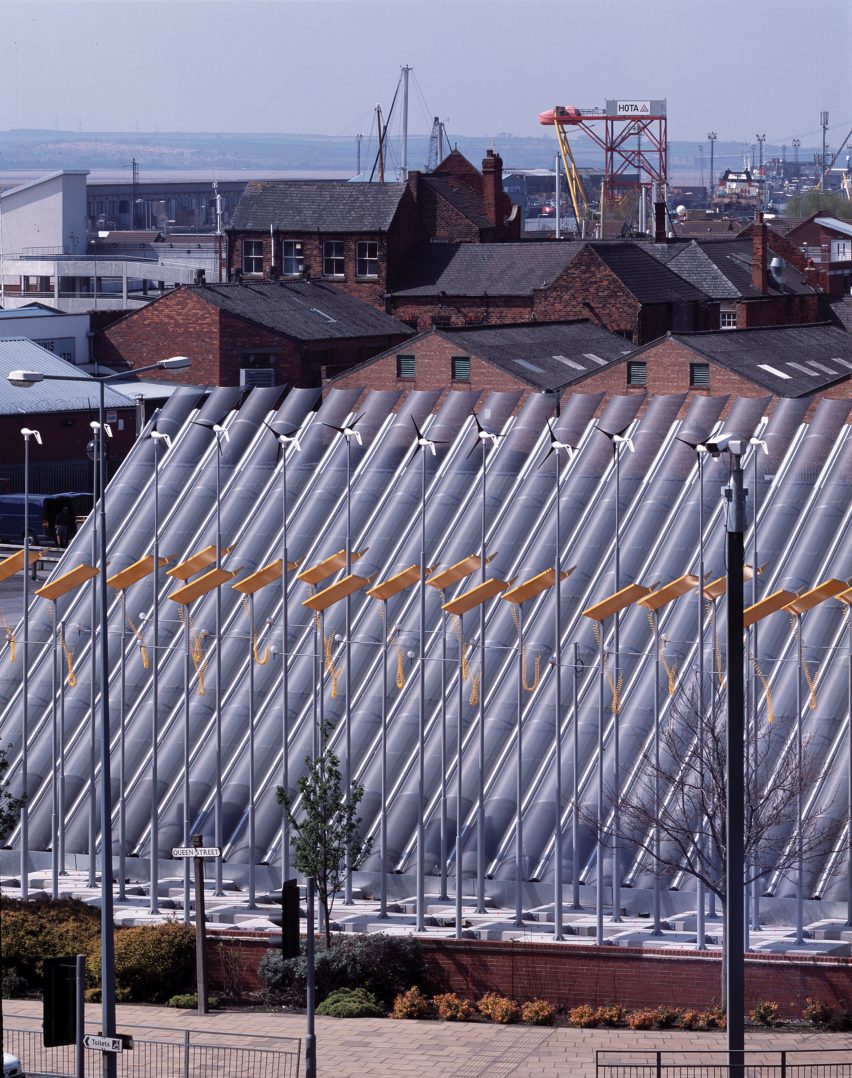 McLaughlin’s Built Environment Centre for Hull is now a car showroom in Grimsby. Photo by Nick Kane
McLaughlin gave the example of a mobile architecture centre that was designed to move around sites in Hull as one of his buildings that has been heavily adapted.
“It is now a second-hand car showroom in Grimsby – that’s quite a substantial change,” he explained.
“I mean, it performed its first duty that was meant to be a mobile building, so it began in the house and Grimsby – so it can definitely move. And, in a sense, it was intended as a place of congregation and exhibition and it’s still a place of congregation and exhibition,” he continued.
“We have to anticipate that people will take our stuff and make something new out of it. Some of it will be awful, and some of it will be something we could never have imagined.”
“Architecture is a discipline that requires a certain mastery”
Along with running his studio, McLaughlin has taught architecture for the past 35 years and is currently a professor at the Bartlett in London. He believes his own teaching has greatly impacted his work, describing building as “a kind of learning activity”.
“One of the things that I really want to advocate for is for more people who are involved in building to also be involved in education, he said.
His recommendation for future architects is that they gain both a knowledge of construction and previous works of architecture.
“For me, architecture is a discipline that requires a certain mastery, and part of that mastery is understanding, fundamentally the processes by which things are made,” he said.
“[Students and young architects should] develop a really exacting relationship with the idea of construction, so that when you go to a building site, the builders really feel that they know you, feel that you’re rather coming in with ideas and no skills,” he continued.
“I would also really encourage people to deepen and broaden their knowledge of the existing stock of buildings in the world,” he added.
The photography is courtesy of Niall McLaughlin Architects, unless otherwise stated.