
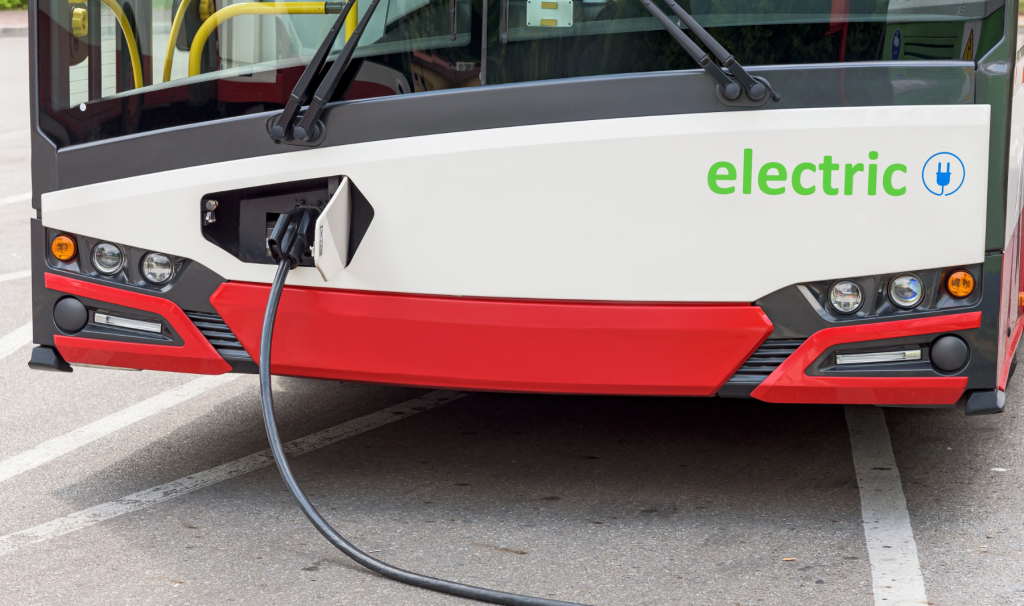
Canada can fully electrify every public transit bus in the country affordably, sustainably and without straining the electricity grid, according to a new national study led by McMaster University.
The research team, led by Moataz Mohamed, associate professor of Civil Engineering and director of the McMaster Institute for Transportation and Logistics, conducted the first bottom-up national assessment to examine what it would take to convert all of Canada’s transit buses to battery-electric power.
Drawing on real operational data from 102 of the 110 transit agencies across the country, the analysis, published in Nature Scientific Reports, offers the most detailed national picture to date of the costs, energy needs and environmental benefits of a fully electric transit fleet.
The findings directly challenge three persistent assumptions, Mohamed says: that Canada lacks the funding, the grid capacity and the emissions advantage to make nationwide bus electrification feasible.
“People have been dismissive for some time, but our national assessment clearly shows none of those barriers hold. Now we can ask better questions and have real conversations about how to move forward,” he says.
The study puts the national price tag at approximately $2 billion annually, including more than $1.7 billion for purchasing electric buses and the additional expense of building the charging infrastructure needed to support them.
Electrifying the fleet would also require a 17-per-cent increase in the number of buses to accommodate charging times while maintaining current service levels under a depot-charging strategy.
“This is not a scary number. For what we gain this cost is reasonable and it positions Canada as a global leader in heavy-duty vehicle electrification,” says Mohamed.
Electrifying every transit bus in Canada would add 1.255 tera-watt hours per year to national electricity demand — 0.20 per cent of the total power Canada generates. In national energy terms, this is effectively a rounding error, researchers say.
A fully electric bus fleet would reduce greenhouse gas emissions by more than 92 per cent, lowering annual emissions to roughly 130,000 tonnes.
Beyond that, the social cost of carbon, which accounts for the financial impact of climate-related damage, would fall by a similar margin.
The benefits are greatest in provinces with cleaner electricity grids, but the study found no scenario in which electrification increases emissions.
“It results in large, immediate reductions across almost all provinces,” explains Mohamed, adding that rolling out electric buses should go hand in hand with reducing fossil-fuel electricity generation in provinces that still rely heavily on coal or natural gas.
Canada, he says, is uniquely positioned to become the first country in the world to fully electrify its public transit bus network, thanks to its strong heavy-duty vehicle manufacturing capacity and relatively clean, low-cost electricity.
Beyond environmental benefits, electric buses produce large amounts of operational data, which could drive innovation in artificial intelligence, battery management, transportation planning and grid modelling. These are fields where Canada has growing research strength, Mohamed says.
“This study gives decision makers the confidence to act. We have the data. We have the technology,” Mohamed says.
“Electrifying transit is not just possible — it’s practical, affordable and beneficial for communities across the country.”
“If we choose to, Canada can lead the world in sustainable transit.”