
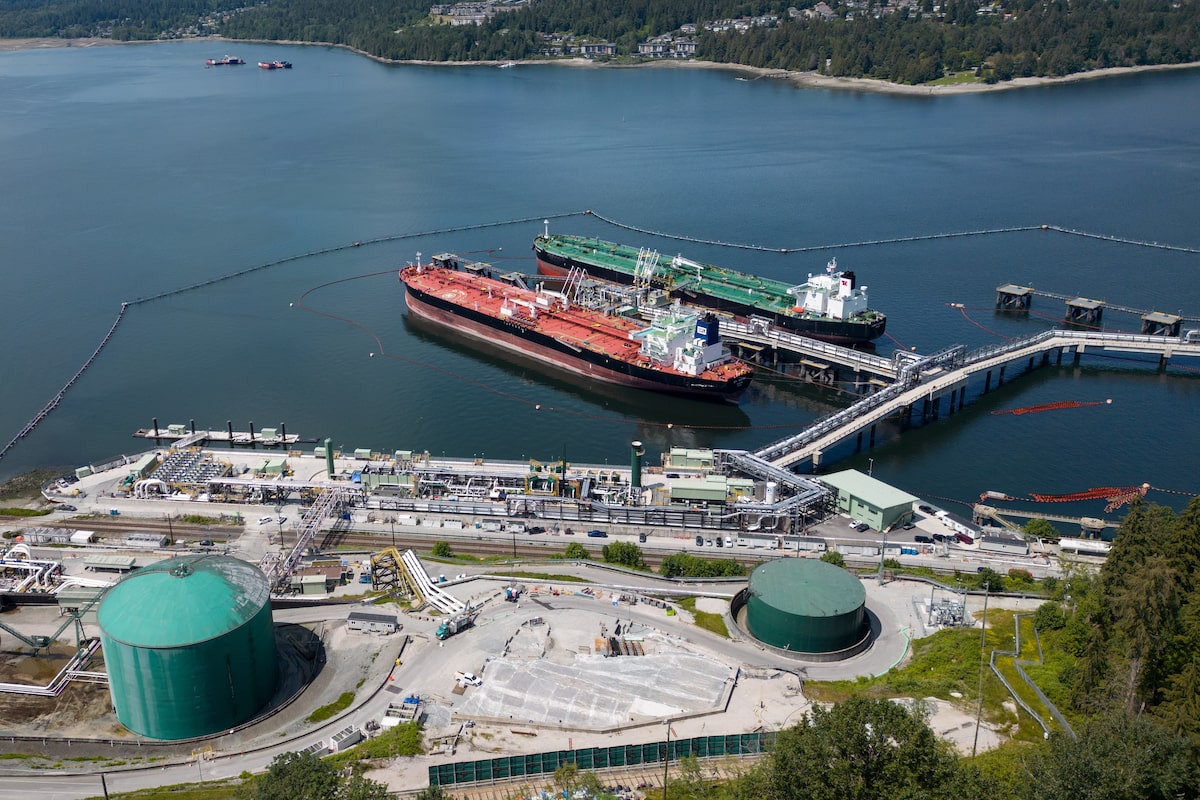
Crude oil tankers at the Trans Mountain Westridge Marine Terminal in Burnaby, B.C., in 2024. The federal government has stepped up its push to find non-U.S. markets for Canadian crude.DARRYL DYCK/The Canadian Press
The share of Canada’s crude petroleum flowing to countries other than the United States hit an all-time high in November, topping the previous month’s record, as the Trans Mountain pipeline boosted Canada’s trade diversification efforts.
But while the latest trade numbers from Statistics Canada show the pivot away from the U.S. is working, the gains elsewhere have not been enough to make up for slumping demand from south of the border.
Canada shipped 14.1 per cent of its crude to the rest of the world in November, with China alone accounting for 10 per cent of Canada’s total oil exports that month.
By comparison, non-U.S. exports averaged just 3 per cent in 2023. In May, 2024, the newly expanded Trans Mountain carried its first shipment of oil from Alberta to the West Coast, fuelling export growth to Asia and other markets.
The federal government has stepped up its push to find non-U.S. markets for Canadian crude. This week, Energy Minister Tim Hodgson said it was a “strategic blunder” that most Canadian energy exports flow to the U.S., adding that “the fastest-growing demand for energy in the world will be in India.”
Canada’s trade deficit widens in November on drop in gold, auto shipments
These provinces are boycotting U.S. travel the hardest
Canada hasn’t directly shipped crude oil to India since mid-2024 and exports before then were sporadic, Statscan’s numbers show, with bituminous coal accounting for almost all of Canada’s meagre energy exports to the country.
The problem for Canada’s oil diversification effort is that growing demand from other markets isn’t filling the gap left by declining shipments to the U.S. From January to November, 2025, total oil exports to the U.S. fell by $13.3-billion, while during the same period demand from non-U.S. countries grew by $7.2-billion.
Decoder is a weekly feature that unpacks an important economic chart.