
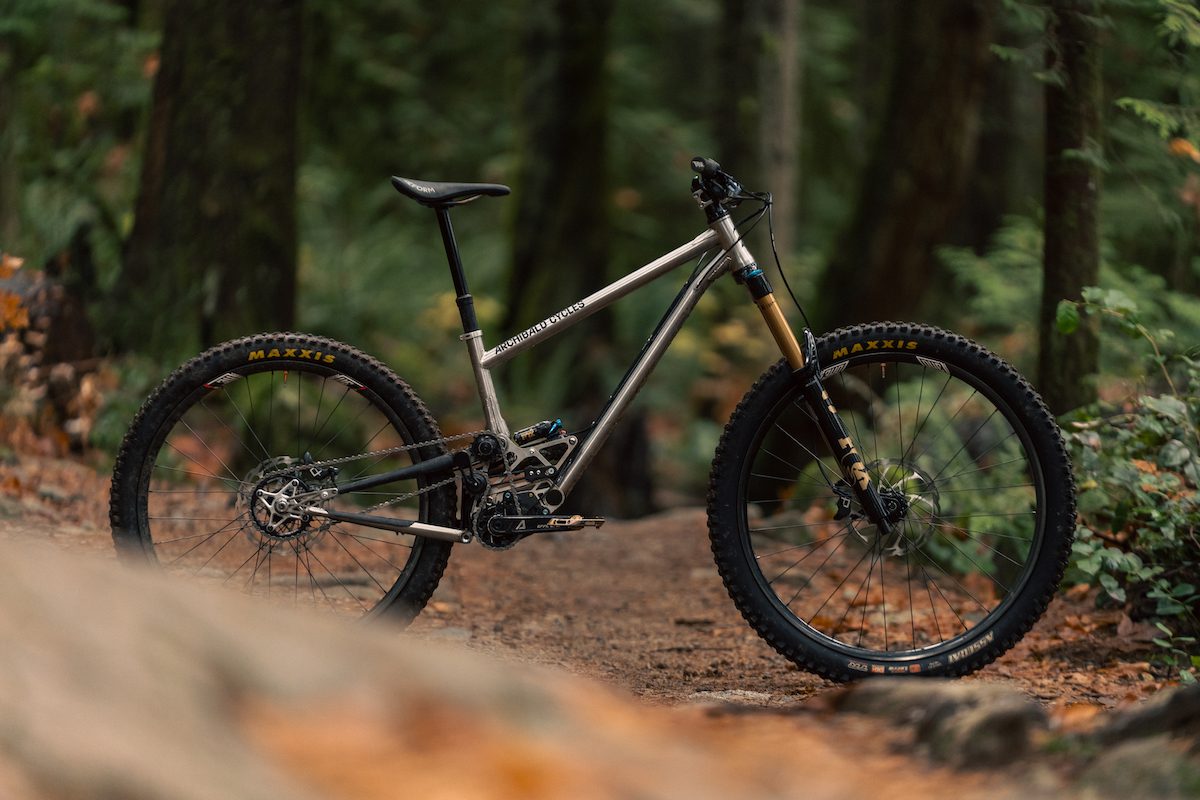
Sometimes, if you want something done right, you just have to do it yourself. That’s exactly what Alex Troughton is doing with Archibald Cycles. And it’s working.
The Vancouver-based brand just released its third model, or configuration, the AC1 Trail. Following a full Dh and an enduro build, “trail” is very much relative to the rest of Archibald’s line. But it’s also the first AC1 configuration designed with more consideration for pedalling included in the boutique gearbox bike’s descending experience.
“We’re taking the core bike we have and then basically elevating certain aspects. In this case, we’re just making it going further into pedalability, further into playfulness,” Troughton says over the phone, explaining what makes the AC1 Trail different. He continues, “And not worrying about the descending as much, because it’s already got that.”
While I caught up Troughton, one of Archibald’s new, very old CNC machines worked away in the background, busily building parts for the new bikes. While it worked, we talked about the simple joy of making things yourself, why he’s driven by the gearbox design and how Archibald’s grown from a garage operation to a growing brand with all its own tooling and a worldwide customer base.
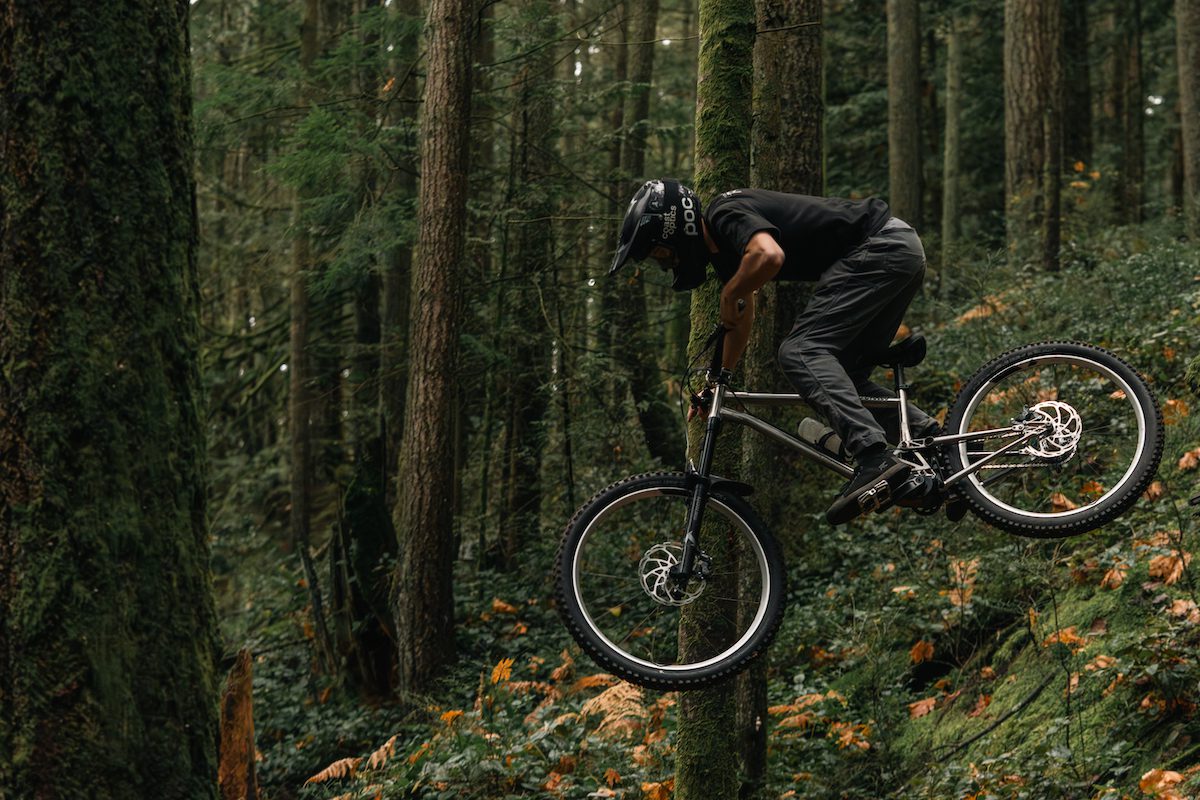 The Archibald crew backs up their demands for tough bikes with burly riding. Photo: Mitch Kaiser
A bike that started with a problem
Archibald may be opening up to more pedal-friendly, or pedal-tolerant riding, but its roots are very much in gravity riding. The AC1’s distinctive design started with a simple problem, though.
“I was never really happy with the bikes I was riding,” Troughton says of what sparked the Archibald journey. “I’m 6″4, so finding a bike that fit me in 2016 was pretty challenging. I never really had a bike that fit me properly. And the bikes I had, some would be nice in certain ways and others in other ways, but never a whole package.”
Troughton was working at Blackspire at the time which, he says, meant making things yourself in Canada always seemed like a realistic option. Even in an era when bicycle production was primarily an overseas venture. When he returned to school, designing his own bike was a natural extension of work he did with Blackspire and the AC1 became his Capstone project for his engineering program.
“That was two to three years of design work figuring out what the bike would be to try and hit every everything I wanted out of it. And really what I wanted was a bike that fit me and fit anyone who wanted to ride one and then didn’t have compromises that I’d been dealing with. Destroying derailleurs, frames just getting destroyed, cracking and failing that was a big one. Paint was always getting scuffed off and just being ruined. So there were a lot of things that kind of guided the design choices.”
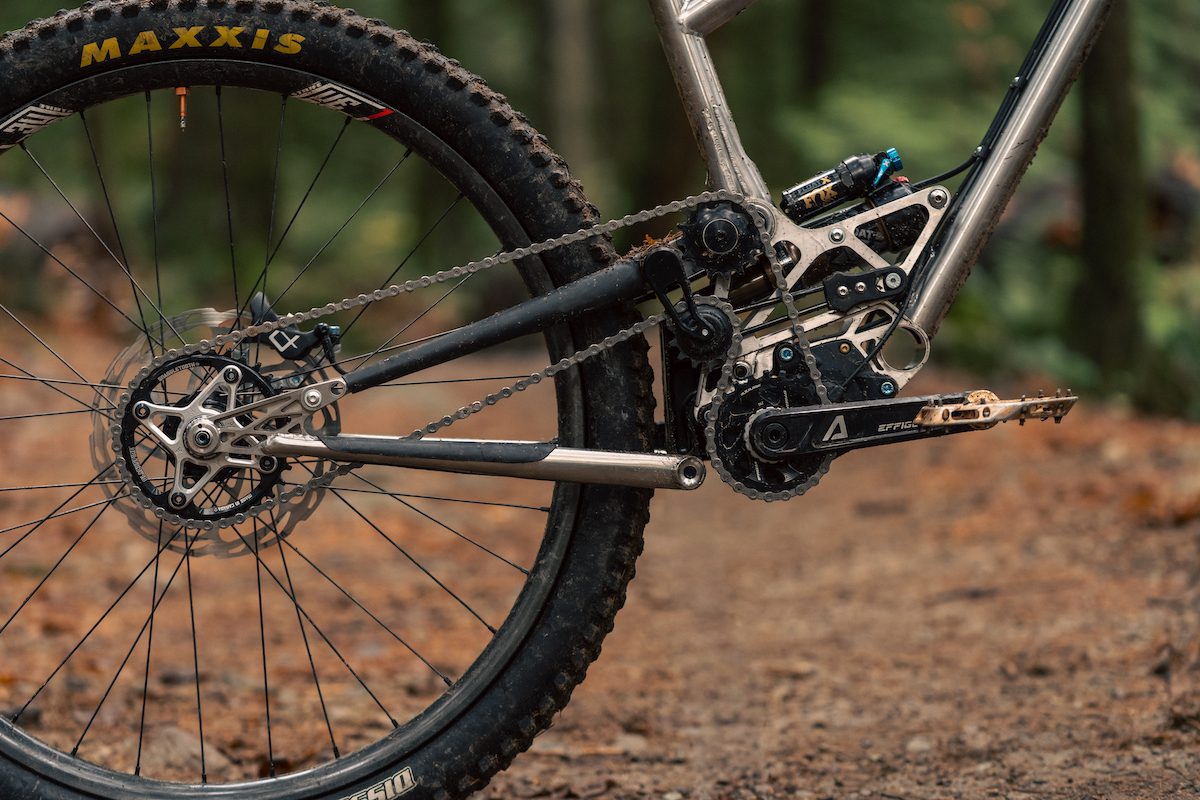 Gearbox drivetrains and metal tubes give Archibald’s a wild, Mad Max look but it’s design-driven. Photo: Mitch Kaiser
Bringing the gearbox revolution to home trails
It’s easy to see that list of problems reflected in the AC1 design. The raw metal frame finish has a gearbox as its centrepiece. It also comes in a very detailed sizing run, with custom options available. To say it looks burly would be a gross understatement.
While gearboxes are gaining traction, they’re still an exception in a world of traditional drivetrain layouts. Troughton says once he tried a gearbox, he realized it was the only option for his design.
“The biggest objective when we started was descending performance. Once you start looking at the unsprung mass of the rear end, that becomes very hard to go back on. Pulling that derailleur and cassette off the rear wheel does so much for the rear end to perform better that, regardless of the other benefits, that is one I simply can’t compromise on anymore.”
That drove the rest of the frame’s design, opening up new design possibilities when not restrained by traditional drivetrain design. When releasing the AC1 Trail, Troughton says that, while admitting its not the most efficient option for riders more interested in pedalling than pure descending, there was no real interest in re-thinking that core design.
“You’re adding weight, it’s going to be heavier than a traditional drivetrain bike, but its in a great spot. We’ve found the AC1 platform can be adapted to this trail set up really well.”
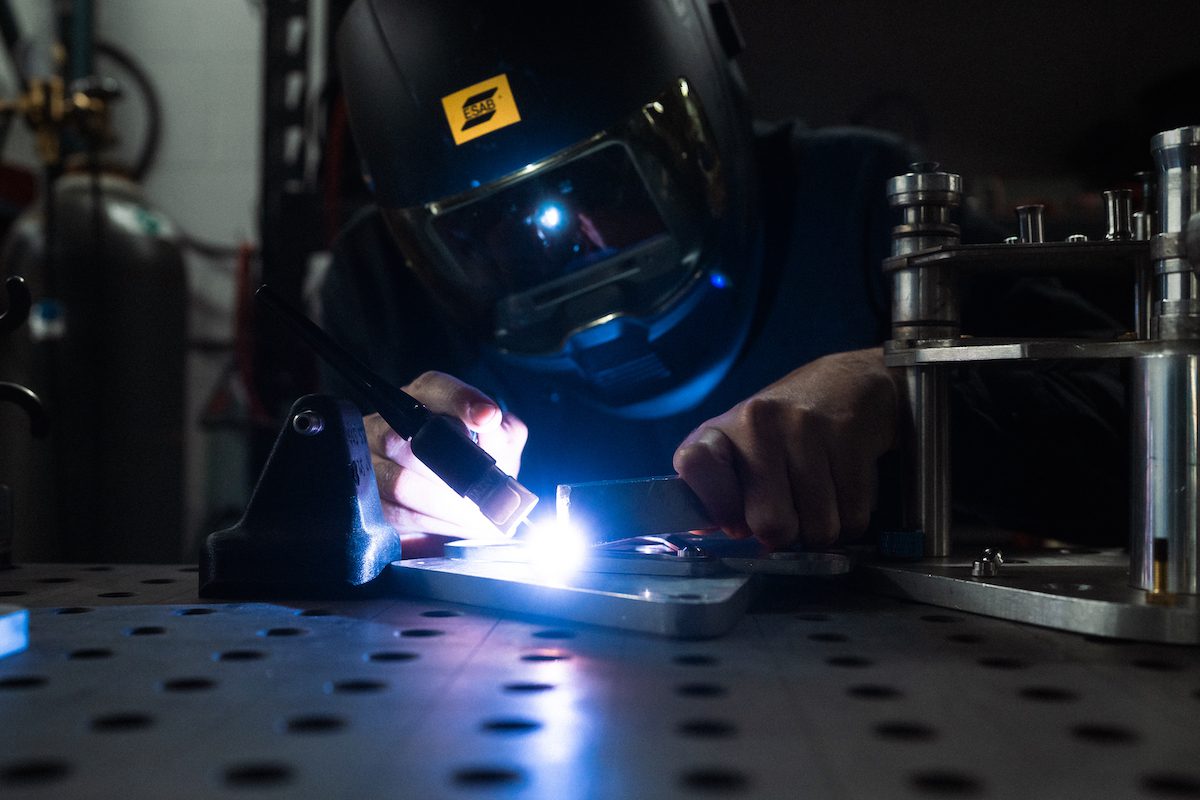 All AC1’s are welded right in Photo: Mitch Kaiser
Turning made in Canada into an advantage
If Archibald’s bikes look very specific and boutique, they are. To an extent. They’re functional works of art. But Troughton is quick to point out that he can offer AC1 frames at a price that is, amazingly, competitive with bigger brands that outsource their bikes to overseas production, while still building the frames in B.C.
“I love making stuff, and if I can make stuff at a competitive price and have my hands on it and be able to put care into every single bike that goes out the door? That is just a difference that can’t really be done when you have to ship the bike so far, far away,” Troughton says, adding a simple question. “If we can do it, why wouldn’t we?”
Archibald offers AC1 frame kits (shock and gearbox) starting around $6,000. High-end, for sure, but not out of place. That’s only $500 more than a Forbidden Dreadnaught frame. Or a $1,000 more than a Trek Slash framekit. Again, for something made for you instead of mass-produced by the thousand overseas.
One benefit of designing the bike through a manufacturing engineering program was that the Archibald project was always focused on design for manufacturability.
“If we weren’t doing a gearbox bike, we could produce it for less money,” Troughton adds. “But because of the gearbox advantages, I had to work really hard on on the design so that it would be affordable to produce it.”
That work laid a foundation that’s allowing the brand to transition from a garage project to a growing business with its own facility and customers around the world. Competing against the buying power of big brands is harder when it comes to building out complete bikes. But the AC1’s are a different value proposition than those mass-produced frames.
“It’s made out of a super high end material and super strong lifetime warranty, and it’s made locally,” Troughton says. “I think that’s a pretty cool thing that we can keep doing.”
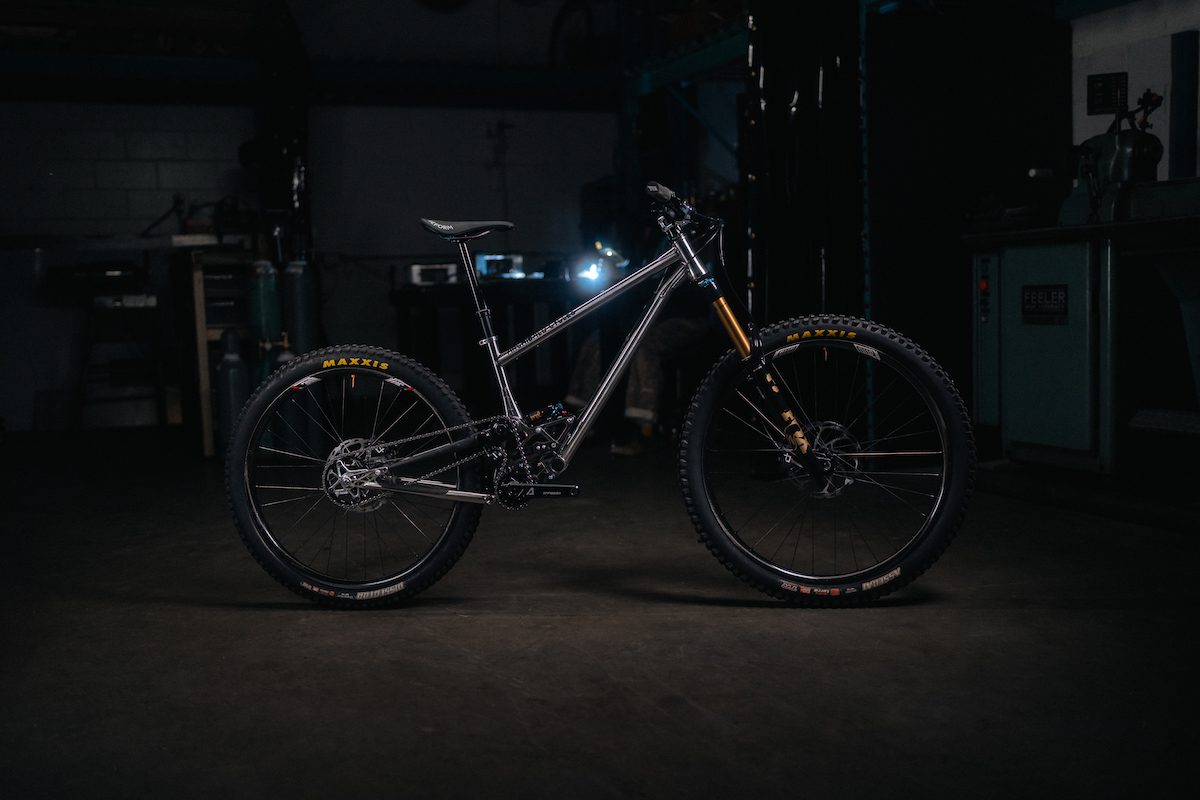 Archibald AC1 Trail. Photo: Mitch Kaiser
Out of the garage and growing around the world
Archibald isn’t staying tiny, or even local. It’s growing.
“We started very small. The first 12 bikes were made in my mom’s garage,” Troughton says. “Now we’ve got bikes all across Europe, through Asia,” and, he adds, a lot of U.S. customers down the west coast. “Constantly, what happens is wherever an AC1 is sold, another one will be sold in that country a month or two later. Once someone sees it on the trail, they have to have one.”
As the business grows, Archibald’s shifting its strategy, slightly. All of the original bikes were fully custom geo. Now Archibald’s moving to standard sizing, though a much more granular sizing than the S/M/L/XL of most brands, with custom as an extra option.
“Customers want their bikes sooner and we want to be building them as quickly as possible. Simplifying the production process is paramount to that,” Troughton explains. Plus, most customers weren’t really interested in the full custom experience. “We get a few guys that are really know what they want, and really concerned with what size they need. And that’s extra work. Honestly, a lot of customers will tell us their size and tells us to give them whatever we recommend. They don’t need a custom fit process.”
A new facility, and some new very old CNC machines are helping Archibald with that goal of getting riders their bikes as quickly as possible. They no longer need to rely on other shops (like North Shore Billet) to help produce some of the small parts. From just Troughton, Archibald’s grown to add a second full time employee, and four more part time employees, including his partner, Bella on marketing and design.
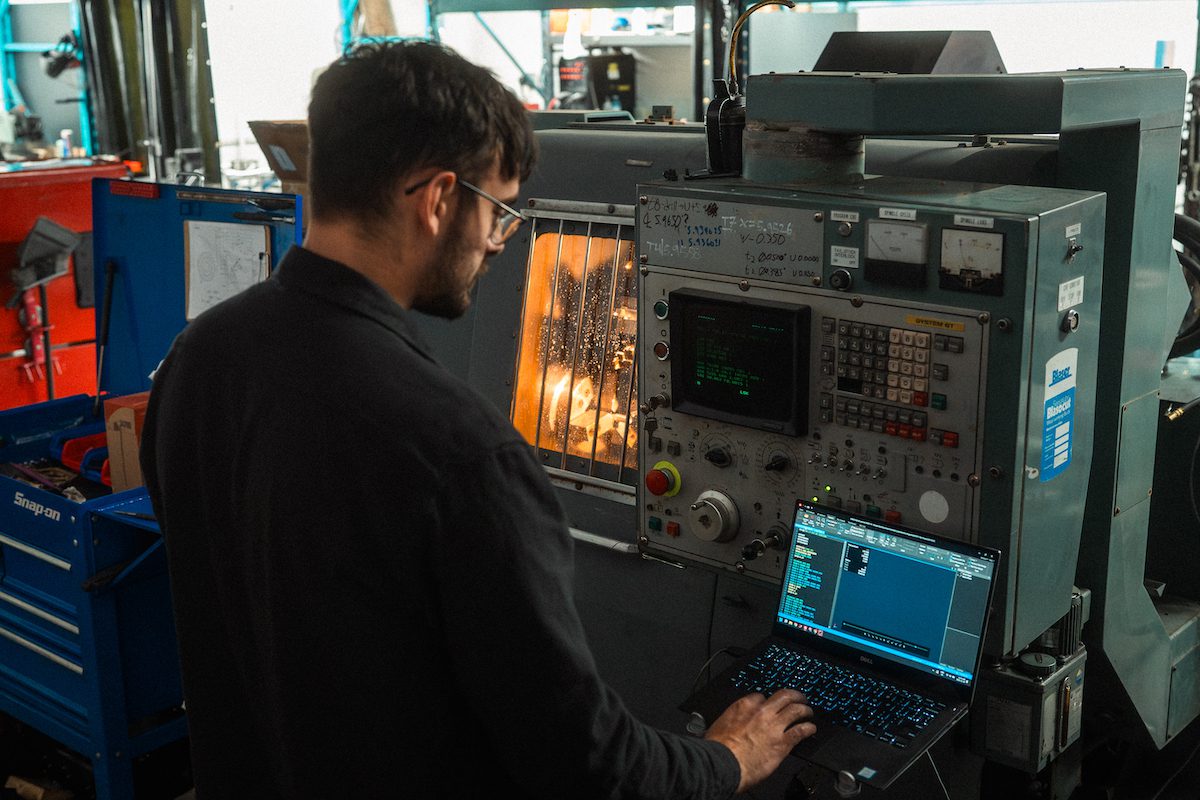 After picking up a couple old but capable CNC machines for “next to nothing,” AC1 production is ramping up. Photo: Mitch Kaiser
The joy of making things
Archibald is one of a growing number of smaller brands popping up in the world of mountain biking that are realizing designs that are complex, intricate to create and more forward thinking than many larger brands would be willing to consider. I asked Troughton if he thought any change in technology, like better CNC machines or 3D printing, we’re helping people like him make dream bikes a reality.
“The machines we have are actually about 50 years old,” Troughton counters. “The new machines are a lot better, but you can still do so much with these old machines. I think it’s the access to information and skills is much wider than in the past. It really lowers the barrier to making things.
While CNC machining suspension linkages seems complex (especially to someone used to wielding a keyboard and maybe a set of Allen keys), Troughton is much more enthusiastic about people’s abilities.
“It’s getting less daunting. The number of people that own 3D printers but don’t have engineering degrees is huge now. And the step from a 3D printer to a CNC machine isn’t that big. One machine adds things. The other takes them away.”
That kind of confidence in people’s abilities, combined with the obvious joy Troughton finds in making things, makes it easy to understand why Archibald, with a design that looks very niche, is growing so quickly internationally.
“People like to make stuff. I think it’s great that, even if it’s just on a smaller level, people can create something themselves.”