

Listen to this article
Estimated 3 minutes
The audio version of this article is generated by AI-based technology. Mispronunciations can occur. We are working with our partners to continually review and improve the results.
Quebec is launching a new home health-care policy that it says will make more family caregivers eligible for government funding, but groups that represent people who need these services are disappointed with the plan.
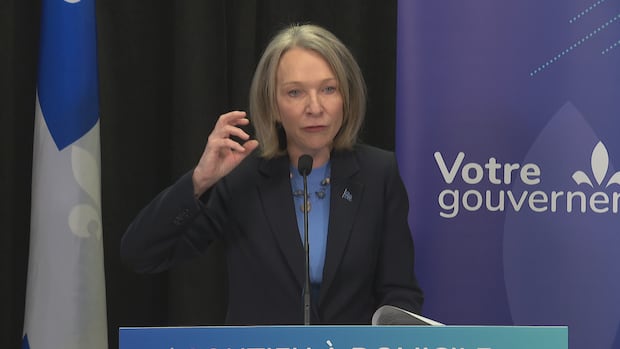
At a news conference Thursday in Montreal, Health Minister Sonia Bélanger said the goal is to enable seniors and people with physical disabilities to live at home as long as possible.
“With this policy, we choose to offer services and care tailored to people’s actual needs in order to support their autonomy, safety and quality of life,” Bélanger said.
The total investment is $107 million.
The policy includes expanding an existing program that grants people an allowance to pay for assistance in their home.
But the group Étoile de Pacho, which supports parents of disabled children, said the changes are mostly cosmetic.
“Our interpretation of this policy is that there is very little that is new; it is more of an update of what has been happening on the ground for several years already,” the group said in a statement.
Ariane Gauthier-Tremblay, spokesperson for MÉMO-Qc, a group that supports people with disabilities and spinal cord injuries, told CBC in an interview the plan is a missed opportunity.
“It’s a real disappointment. We see the announcement as an insult for people with disabilities,” Gauthier-Tremblay said.
Sylvie Tremblay, CEO of the Regroupement Provincial des Comités des Usagers (RCPU), a group that support patients, said the announcement raised many questions but offered few answers.
“We would have liked a little more detail. How will this be implemented, what does it mean for caregivers on a daily basis?” Tremblay said.
Minister calls program ‘extremely complex’
Bélanger said this change means some family caregivers who were previously ineligible for compensation will soon be recognized as service providers under the program.
In addition to expanding eligibility, the hourly compensation amount is being increased by a dollar, from $20 to $21.
And CLSCs will now be the entry point for people looking for compensation, which Bélanger said will simplify the process.
The total budget for the caregiver allowance is being increased by $1.1 million immediately, with additional funding of $22.2 million planned for next year.
Bélanger said the program would not offer retroactive benefits to caregivers.
She struggled to explain precisely who would benefit, how much compensation they might receive, and when that compensation would kick in.
“It’s an extremely complex program,” Bélanger said. “It’s difficult for me to give you an amount because it really depends on each person’s needs.”
Bélanger said details would come later, touting a “very solid communication plan” in the coming days.
But many groups aren’t celebrating.
In its statement, Étoile de Pacho said the $1 increase for hourly compensation was “marginal,” and Gauthier-Tremblay called it “paltry.”
Gauthier-Tremblay also doubted using CLSCs to manage the program would simplify things.
“For 30 years, governments have been weakening CLSCs, and today they’re pretending that the CLSC will take charge of everything?” she said.
Tremblay noted most of the funding won’t kick in until next year.
“This year is an election year, so we’ll see how it all plays out. We would have liked it to be faster,” she said.