
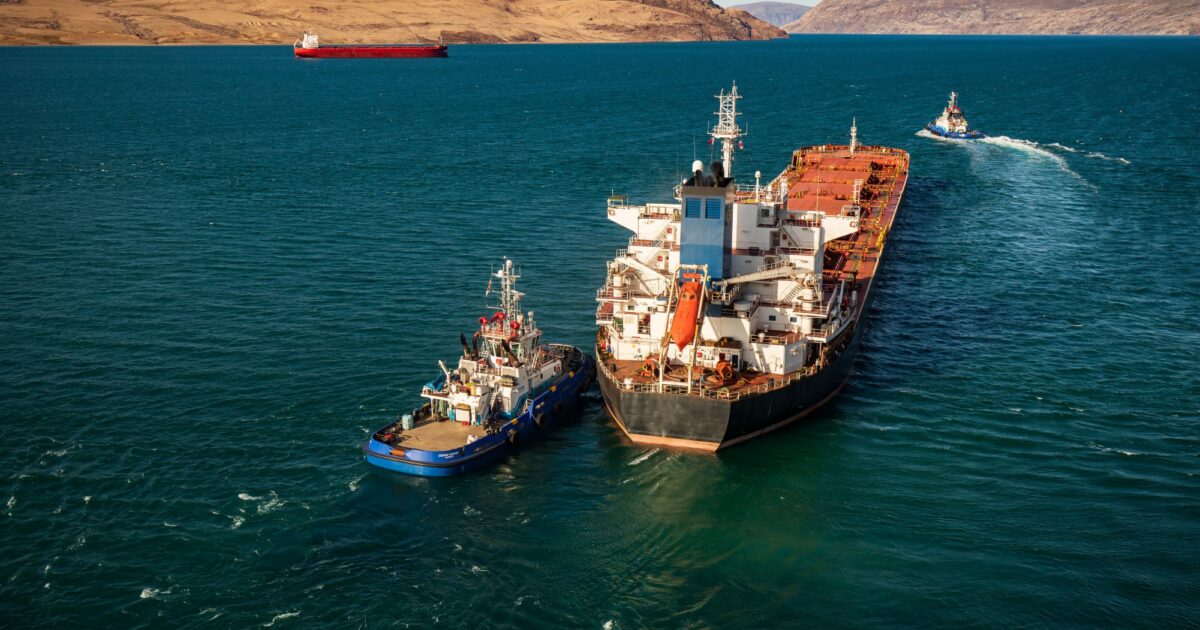
Acting CEO calls decision ‘defining moment’ for Mary River Project; railway would run 149 kilometres
Baffinland Iron Mines Corp. says it is moving forward to construct a railroad that will help increase the Mary River Mine’s production and potential lifespan.

The Steensby rail line extending 149 kilometres south from Mary River to Steensby Port would allow the Mary River Mine to increase its iron ore production and estimated lifespan. (Screenshot courtesy of Google Maps)
“This is a defining moment for the Mary River Project,” said Jowdat Waheed, acting chief executive officer for Baffinland, in a news release Thursday announcing the railway plan received all key regulatory authorizations and can proceed.
The company’s Steensby Inlet component — an all-year rail line that would run 149 kilometres south from Mary River to the proposed Steensby Port — would allow Baffinland to increase iron ore production to 22 million tonnes per year from the current 4.2 million tonnes.
It would also help extend the mine’s life until 2050 “and beyond,” said Peter Akman, head of communications for Baffinland, in an email.
“This reflects access to significantly larger proven and probable reserves that cannot be efficiently developed without rail access,” he said.
Baffinland currently employs 1,200 workers across Nunavut including mine site, port operations, marine, logistics and support staff, Akman said.

Until Thursday’s Steensby announcement, the Mary River Mine on northern Baffin Island was set to cease operations by 2035.
Akman didn’t specify the estimated price tag to build the railroad, saying it will be released in the “near future.”
“This project moving forward allows a multi-generational mine to flourish and continue in Nunavut,” said Hudson Lester, the Nunavut general manager for N.W.T. & Nunavut Chamber of Mines, in a phone interview Thursday.
“I think we could say this is a milestone that reflects all the years of collaborative efforts within Inuit organizations, Government of Nunavut, government of Canada and all the regulatory bodies,” he said.
The Steensby rail line was part of Baffinland’s original proposal for Mary River and was approved by the federal government in 2012.
“So much has changed since then,” Nunavut MP Lori Idlout said in phone interview Thursday.

She said she believes the project should go through another environmental assessment so that approval of the railroad can be an “informed decision.”
That assessment is not required by federal regulators, however.
Shortly after the initial approval, Baffinland turned away from its plans for the Arctic railway which at the time was estimated to cost $5.7-billion.
Instead, the company applied to increase its shipments to 12 million tonnes of iron ore annually through Milne Inlet and Eclipse Sound. The federal government rejected that proposal in 2022 after a heated, years-long public hearing.
Baffinland returned to its original plan of building a railway, which was deemed instrumental to the mine’s survival, according to a 2021 report commissioned by the mine titled Mary River Project Economics Explained.
Construction of the railway is expected to begin later this year with substantial completion in approximately three years, the company’s news release said.
It said major construction contracts are expected to be awarded primarily to Canadian companies, “including many Inuit-owned companies,” and create employment and procurement opportunities across Nunavut and the rest of the country.
Idlout said she believes the mine should further address existing environmental concerns such as iron ore dust and the mine’s impact on caribou migration routes before expanding further.
“I still hear from Nunavummiut about their concerns regarding their current operations and how the current operations are having an impact, both to the marine environment and to the surrounding area of Mary River,” she said.