

Winnipeg business leaders are wondering what happened to early momentum on reducing interprovincial trade barriers, as a new report suggests that would have a positive effect on a Canadian economy strained by U.S. tariffs.
The president of the Winnipeg Chamber of Commerce said he appreciates new laws that removed some barriers for goods and services, along with memorandums of understanding various governments signed, but little has happened in the following months.
“Ever since that initial flurry of activity, it seems that we’ve had a stalling on getting rid of those final regulatory burdens that continue to add significant cost to doing business in this country,” said Loren Remillard.
Getting rid of all internal trade barriers between provinces and territories would boost Manitoba’s real GDP by 12.2 per cent over the long term, according to a new report from the International Monetary Fund.
There was progress in lifting these restrictions in November, when the federal government, provinces and territories signed an agreement to drop trade barriers on most goods except alcohol and food.
However, the vast majority of internal trade costs are the result of the service sector, such as health-care, finance, telecom and transportation, according to the IMF, and they were exempt from that agreement.
Remillard pointed to a recent report from the Macdonald-Laurier Institute that estimates 8.3 per cent of freight costs are tied to differing regulations across jurisdictions.
“Imagine if we can reduce the cost of moving a product across the country by 8.3 per cent, what that means on the price you’re paying on the shelf,” he said.
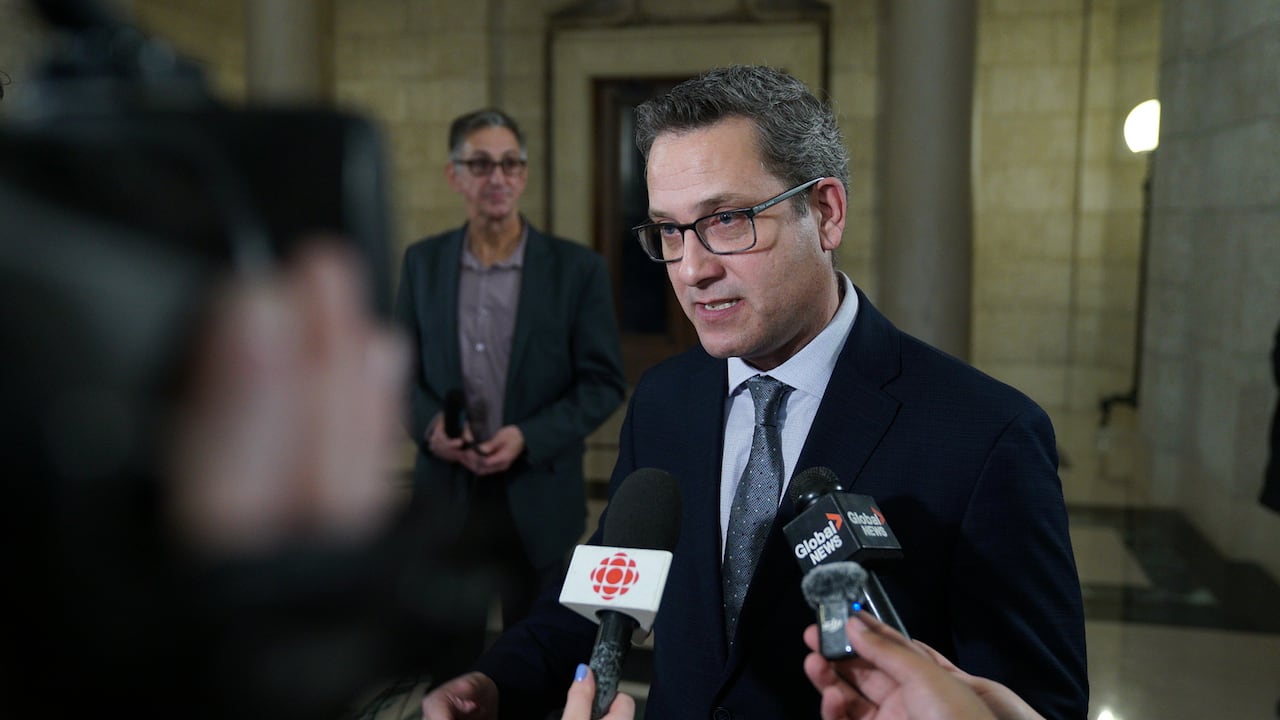 Loren Remillard, president and CEO of the Winnipeg Chamber of Commerce, wants to see more progress in tearing down internal trade barriers. (Jaison Empson/CBC)
Meanwhile, Remillard said, provinces still have different safety regulations and different consumer protections for a range of services.
He says single regulations that apply nationwide are needed.
“I cannot believe for an instance that one part of the country cares about their safety and well-being of their citizens less than another jurisdiction,” he said.
Action needed, not ‘another report’: brewer
The report says the smaller provinces and northern territories are disproportionately affected by internal trade barriers, facing higher costs compared to bigger provinces with diversified economies.
Across Canada, these trade barriers are the equivalent of a nine per cent tariff nationally, the report estimates.
For comparison, the Bank of Canada estimates the U.S.’s average tariff rate on Canada was 5.9 per cent in October 2025.
Internal barriers are “large, economically costly, and increasingly out of step with the needs of a modern, vibrant, service-intensive economy,” states the report, co-authored by IMF researchers Federico J. Diez and Yuanchen Yang, with contributions from University of Calgary economist Trevor Tombe.
“Removing them offers one of the most powerful — and least fiscally costly — levers to raise productivity, strengthen resilience, and support inclusive growth,” it says.
Those findings don’t surprise the founder of one Winnipeg brewery.
“The reality is we don’t need another report — we just need people to do something about it,” said Little Brown Jug founder Kevin Selch.
Provinces have made it easier to sell alcohol to out-of-province buyers by mail, “but that’s not how people buy beer,” he said.
“People buy beer in stores … rather than finding a website, mailing it.”
His biggest challenge now is getting his beer onto store shelves. In Ontario, the Liquor Control Board of Ontario controls much of the distribution and retail market, making access difficult for out-of-province breweries like Little Brown Jug.
“Every monopoly is Byzantine in its approach to it,” Selch said, adding he’d need a listing agent and a distributor, and to have his products tested and labels approved, in order to enter the Ontario market.
Those hurdles mean selling in Ontario still isn’t worth it, despite the extra 35 cents he’d earn per can because of lower markups there.
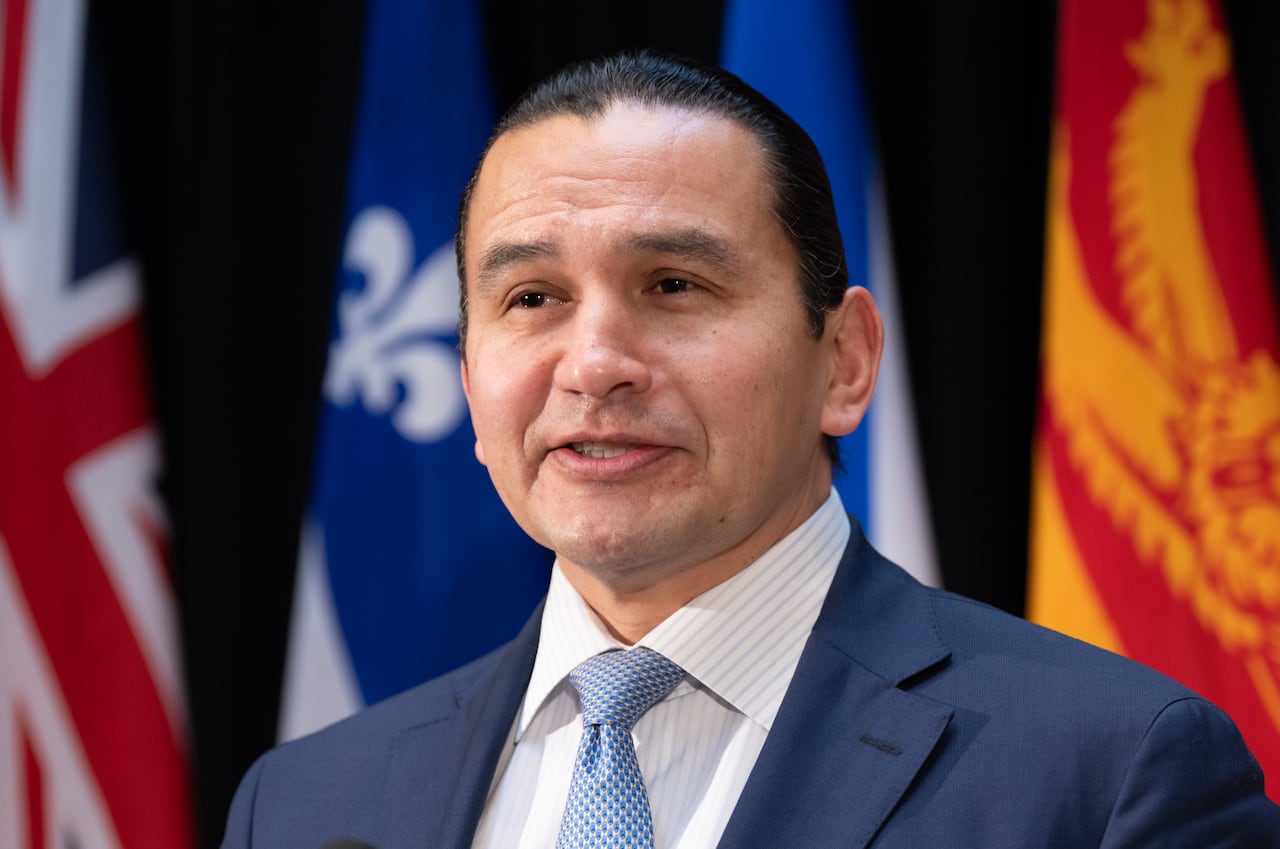 Manitoba Premier Wab Kinew said easing interprovincial trade barriers was a major topic of conversation during his meetings with Canada’s premiers this week in Ottawa. (Adrian Wyld/The Canadian Press)
Manitoba Premier Wab Kinew said easing interprovincial trade barriers was a major topic of conversation, particularly around food, during his meetings with Canada’s premiers this week in Ottawa.
He said removing these barriers is easier said than done. As an example, he referenced a possible change to Canadian Food Inspection Agency regulations.
If that happens, “there’s going to be thousands of farmers and egg producers in our province alone that are going to want to have their perspectives heard by the federal government,” Kinew told reporters from Ottawa.
“I think it’s easy to see the economic benefit” to lifting trade barriers, he added. “It’s just up to us ministers and premiers and other government officials to cut through all the noise and red tape, and hopefully deliver some progress.”
If that doesn’t happen, Remillard wants the federal government to exercise its constitutional authority over the flow of trade and start negotiating.