
A decade after Canada’s toxic drug crisis took hold, claiming thousands of lives each year, recent data show that toll may now be easing. The rate of drug deaths over the past two years has fallen by at least a third – and potentially more – marking a shift in a public-health emergency that has devastated communities across the country.
At its peak, the drug crisis claimed 20 lives for every 100,000 Canadians. Yet from January to June in 2025, the figure fell to 13.5.
Complete data for last year, which would speak to the fuller extent of this falling rate, is not yet available.
The shift follows years of devastation after illicit fentanyl – cheap to produce, highly potent and easy to smuggle – began supplanting the street supply of heroin, fuelling an epidemic that has killed more than 53,300 people nationwide since 2016.
The majority of deaths have occurred in B.C., Alberta and Ontario, with construction workers, Indigenous people and residents of northern and remote communities disproportionately affected.
Declining national averages can mask profound disparities. In northern Ontario, for instance, the most recent coroner’s data show opioid death rates two to four times higher than the national figure. A Chiefs of Ontario report found that Indigenous people are dying from opioids at nearly 10 times the national rate.
Still, the data show fewer people across Canada are dying now than a few years ago.
Ontario’s Chief Coroner, Dirk Huyer, expressed cautious optimism but said questions remain. “It’s tough to know what it’s from,” he said. “It’s tough to know if it’s going to be sustained.”
Some factors that may be driving the decline include possible supply shocks, less lethal drugs replacing that supply, the growing reach of overdose-reversing medications, shifts in drug-use methods and the fact that the country has already lost many of its most vulnerable victims.
Experts stress, however, that while the trend is encouraging, it remains too early to draw firm conclusions.
A crackdown in China might have prompted a ‘supply shock’
In November, 2023, then-U.S. president Joe Biden and Chinese President Xi Jinping met in California, where Washington extracted a promise from Beijing to crack down on Chinese companies exporting fentanyl and the precursor chemicals used to make the drug. As China ramped up law enforcement, its leading body for drug control published warnings against selling those substances.
Around the same time, people using the deadly drugs in North America reported in online posts they were increasingly encountering fentanyl “droughts.” By 2024, analyses showed the amount of fentanyl present in seized drugs in both Canada and the U.S. was falling sharply.
Researchers now hypothesize that a “supply shock” has arisen in North America, with the scarcity contributing to less lethal, albeit still dangerous, street opioids.
Drug researchers posit this theory in a new study published this January in the peer-reviewed academic journal Science, which observes that fentanyl purity and overdose deaths fell at roughly the same time.
Mexican cartels are now shipping less-potent fentanyl to the U.S., and Canadian traffickers are synthesizing more opioids chemically similar to fentanyl, called fentanyl analogues, the researchers noted.
The far-reaching changes likely stem from a clampdown originating in China, said Jonathan Caulkins, a professor of operations research and public policy at Carnegie Mellon University. “There are instances in which a supply shock is just a hiccup,” he said in an interview. “And there are instances in which the supply shock kind of breaks the momentum of an epidemic.”
A changing drug supply, and a dip in lethality
When the flow of fentanyl precursors tightened, the illicit market adapted.
At Toronto’s Drug Checking Service, an analysis of 1,200 fentanyl samples checked in 2024 found an average sample contained about 5 per cent of the powerful synthetic opioid, which can be lethal in minuscule doses.
But by 2025, the average concentration of fentanyl had dropped to 2 per cent among 1,300 samples, the lab found.
At the same time, the service’s executive director Karen McDonald said lab analyses showed a significant decrease in the presence of benzodiazepines, a central nervous system depressant that can increase the risk of respiratory depression and overdose when combined with opioids.
While those two factors are likely contributors to the drop in deaths, the rapid emergence of another substance has complicated overdoses, and overdose response.
The veterinary sedative medetomidine, first detected in December, 2023, was found in roughly 40 per cent of fentanyl samples a year later, Ms. McDonald said. Of 58 fentanyl samples checked so far this January, medetomidine was present in 83 per cent.
Meanwhile, B.C. issued a provincewide drug alert in late January warning of a spike in overdoses linked to medetomidine, noting it was detected in 38 per cent of opioid samples checked by the BC Centre on Substance Use in November.
The sedative can cause deep and prolonged sedation, as well as cardiac and respiratory depression, and has been linked to alarming spikes in overdoses in both B.C. and Ontario. By some estimates, it is 200 times stronger than xylazine, another veterinary sedative that has been detected in street opioids.
“We’re finding ‘new’ drugs all the time, drugs that weren’t approved for human use, so we don’t know a lot about what their strengths or effects may be,” Ms. McDonald said.
She noted that the volatility of the drug supply remains incredibly dangerous. “If I didn’t have people telling me that overdose deaths were down, I would not think that based on the data that we are generating,” she said.
The federal Public Health Agency of Canada (PHAC) has found that chemical composition of street drugs is a clear factor in dropping death rates. “Evidence supports changes in the drug supply as a driver of the recent mortality decline,” PHAC said in a report released Dec. 12.
The proliferation of overdose-reversing medication
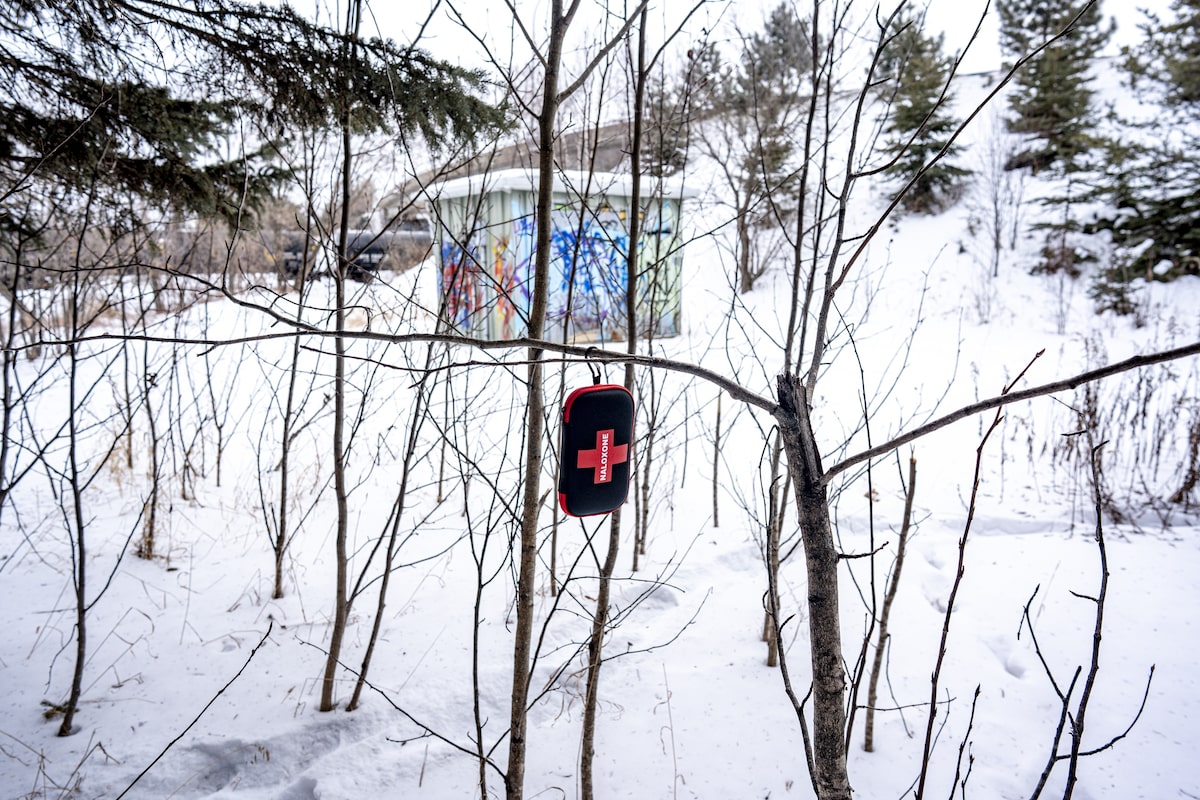
In March, 2016, as the drug crisis intensified, Health Canada removed the prescription requirement for naloxone, making the opioid overdose-reversing medication widely accessible. The life-saving kits can be administered by anyone and are often provided free of charge at participating pharmacies, harm-reduction and social-service sites, hospitals and schools.
Several provinces have required that naloxone be available in certain settings, such as at schools in B.C. and construction worksites and nightclubs in Ontario.
Naloxone distribution tripled between 2020 and 2024, and PHAC said this has likely had a major impact on death rates: “All provinces with substantial naloxone distribution experienced notable mortality decline.”
Kit Young Hoon, medical officer of health for the Northwestern Health Unit in Ontario, said her region has put a lot of effort into making the medication widely available.
There, fatal opioid overdoses are triple the provincial average but are no longer growing.
“I think we have the highest rates of naloxone distribution across the province,” Dr. Hoon said. “I think that’s hopefully a reason why there’s a little bit of a plateau.”
Fewer people are injecting opioids
Over the past decade, smoking has far surpassed injecting as the most common mode of illicit drug consumption in Canada. People who use drugs have said it gives them greater perceived control over dosing and reduces risks from injecting, such as vein damage and blood-borne infections.
George Karandinos, a clinician investigator at Massachusetts General Hospital and Harvard Medical School, is lead author of a peer-reviewed study that found people who primarily smoked opioids died at two-thirds the rate of those who primarily injected them. The study was published in January, 2025, in the journal Addiction.
In an interview, Dr. Karandinos said injection drug use is strongly associated with serious infections of the heart and bones, which can be fatal. Meanwhile, smoking allows a user to start with smaller test doses, or split a dose over several administrations, reducing overdose risk.
However, he said that while there is reason to believe that smoking reduces risk at an individual level, it is difficult to say how big of an impact it may be having on a population. He also cautioned that smoking opioids remains extremely dangerous.
“People need to remain very vigilant against overdose no matter how they use drugs, and that means strengthening harm reduction and making treatment as easy as possible to access,” he said.
PHAC does not fully endorse the theory that the shift in consumption modes has driven down deaths. The federal agency says this factor is more “possible” than “likely,” and may speak to some drug users being more aware of risks and taking precautions.
“Changes in consumption behaviours reflect the adaptive capacity of people who use drugs to respond to an evolving crisis,” PHAC said in its report.
When The Globe reported on Oshawa’s opioid crisis in 2020, locals had erected a memorial downtown, with more tributes on a curbside garbage bin. During and since the pandemic, fatal overdoses have hit middle-aged people the hardest.
Galit Rodan/The Globe and Mail
Opioids have already claimed the lives of many at-risk users
The toll of opioid toxicity in Canada has been staggering, with more than 53,300 deaths over the past decade.
The sheer extent of these deaths may factor into why fatality rates are now dropping. “The theory is that, in terms of the population of people who use drugs, so many of them have died that there aren’t as many people that are going to be at risk to die,” said Dr. Huyer, Ontario’s chief coroner.
“It’s a difficult theory to prove or disprove,” he said.
Year-over-year rates of fatal opioid poisoning are declining most profoundly in regions that have seen the most deaths, including B.C., Alberta, Saskatchewan and Ontario. These provinces saw notable declines in death rates in 2024 compared to 2023.
But PHAC said this trend is not being seen in the country’s eastern provinces. “Regions where the crisis started later, such as Quebec, Newfoundland and Labrador and Nova Scotia, saw fewer changes or even increasing death rates,” PHAC said.
Those three provinces, which have the lowest death rates in Canada, saw increases of 20 and 22 per cent, and a decrease of 7 per cent, respectively.
The deaths to date are a “likely” driver of declining mortality rates, according to PHAC, which says that regional trends are also at work in some demographic groups hit hardest by the opioid overdose crisis.
Deaths among 30- to 59-year-olds, which rose and had remained high since the pandemic, declined sharply in 2024 relative to other age groups, PHAC said.
Whatever the reasons for the decline, DJ Larkin, executive director at the Canadian Drug Policy Coalition, said the trend should not obscure the broader harms. Drug prohibition has fuelled an unregulated drug supply that is increasingly potent and unpredictable, while criminalizing drug use disproportionately harms marginalized communities and has failed to improve public health or safety, they said.
“Though a slight decline in deaths may bring some sense of relief, this is not a moment for celebration. Ten years into this crisis, it can be hard to remember that it wasn’t always this way,” Larkin said.
“The level of death, loss and life-changing injury we are living with now is neither normal nor acceptable. The number of deaths has declined slightly, but the policy driving those deaths and related harms has not changed.”
Chad Hipolito/The Globe and Mail
Poisoned: More from The Globe and MailOpioids and their impact
After taking drastic steps on opioids, an Ontario city struggles to find its footing
Opioid deaths hollow out the construction trade
Have Victoria’s millions made a difference on Pandora Avenue? The Globe returns to check
Spencer Colby: Caught in Ottawa’s drug crisis, a homeless woman searches for a new life
Sam Quinones: How the ‘discovery’ of fentanyl changed North America
The Decibel podcast
Drug decriminalization comes to an end in B.C. on Jan. 31, but the problems it was designed to solve are not going away. Reporter Andrea Woo spoke with The Decibel about the controversial pilot project and what’s next. Subscribe for more episodes.