
In hydrothermal vent fields, a small snail evolved an iron-reinforced shell. Here’s how it challenges assumptions about nature’s toughest composites.
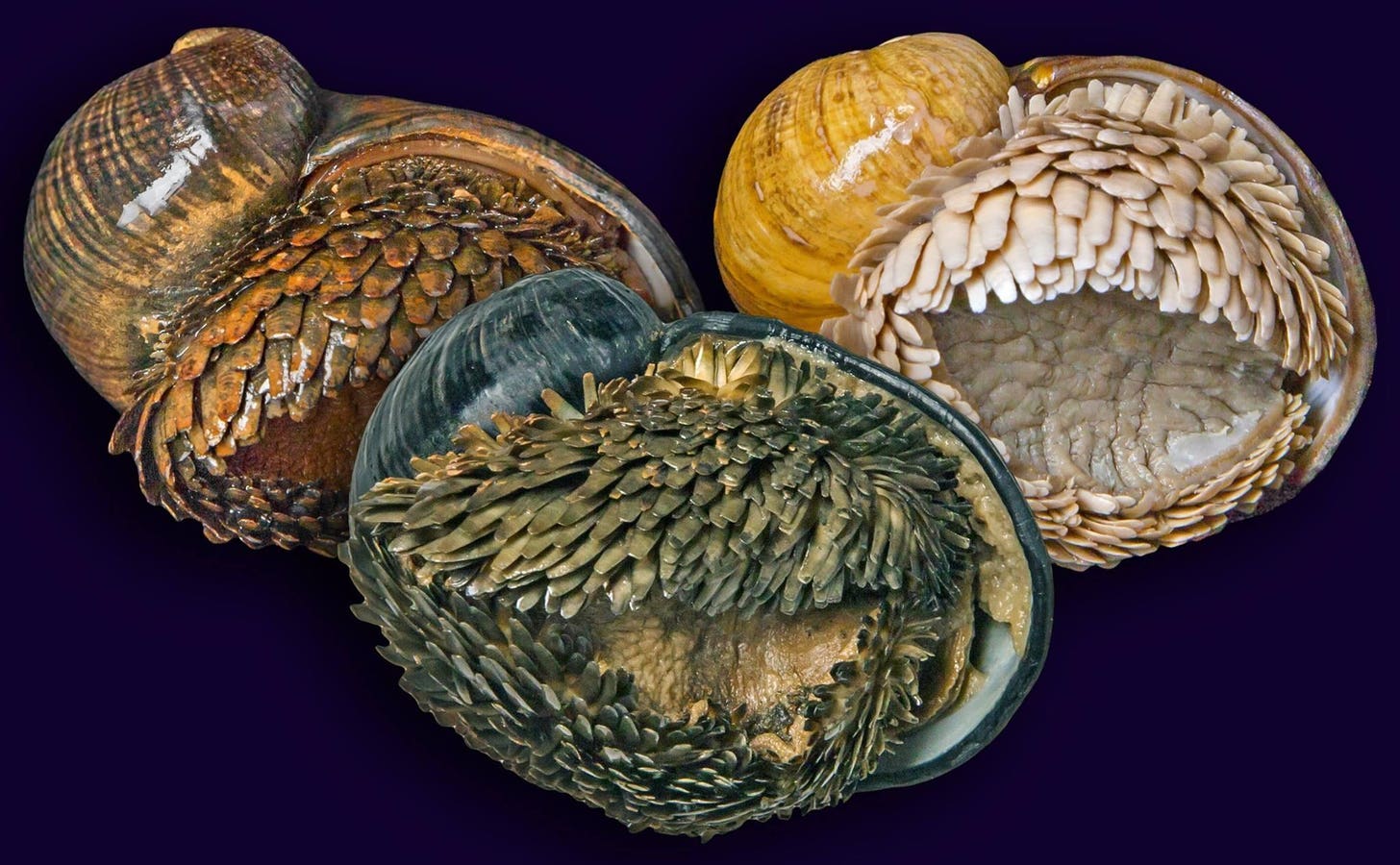
By Chong Chen – Own work, CC BY-SA 3.0, https://commons.wikimedia.org/w/index.php?curid=39716931
A snail might seem an unlikely contender for the superstar of structural biology. When most people picture them, they envision fragile, chalky shells and slimy bodies. But one species defies that stereotype altogether: Chrysomallon squamiferum, commonly called the scaly-foot gastropod or volcano snail.
Instead of evolving a shell made purely of calcium carbonate, as most snails do, this deep-sea snail built itself a remarkable iron-sulfide-reinforced armor. In fact, materials scientists have demonstrated this armor to be stronger than the shells of most other mollusks, and even structurally complex in ways that rival advanced synthetic composites.
For biologists and engineers alike, studying this snail’s armor is nothing short of fascinating. Here’s what we can learn from it about evolutionarily designed materials with remarkable mechanical performance under extreme conditions.
A Deep-Sea Snail Like No Other
The scaly-foot snail was first formally described in a 2003 study published in Science, after researchers initially observed it living among hydrothermal vent fields in the Indian Ocean. Based on its size alone — about 3–5 centimeters (1–2 inches) — it hardly looked impressive. That was until the researchers saw the armored scales, or sclerites, that covered its foot, as well as the iron-sulfide-rich outer layer of its shell.
As a 2006 study from Earth and Planetary Science Letters describes, one of the main factors that differentiates the scaly-foot gastropod from others is that its shell isn’t composed primarily of calcium carbonate. Instead, it incorporates iron sulfide minerals such as pyrite (FeS₂) and greigite (Fe₃S₄) into its exoskeletal structures.
Most notably, this makes the scaly-foot gastropod the only known animal that biomineralizes iron sulfides at this scale in its skeleton, as a typical snail’s shell layers would include an outer organic periostracum and inner calcified layers. The scaly-foot’s shell is a three-layered composite:
An outer layer of iron sulfide minerals (pyrite and greigite)A middle layer of thick organic materials that help dissipate energyAn inner layer of aragonite (a common form of calcium carbonate used by mollusks)
The outer metallic layer is what makes the scaly-foot so unique, as this substantially changes its mechanical properties. What’s more impressive is that this three-layered arrangement is strikingly similar to what is seen in engineered composite materials, in which soft and hard sections work together in order to resist fracture.
This tiny snail’s shell combines hardness, toughness and energy dissipation in a way that very few single-phase materials can. Relative to its weight, the layered structure increases resistance to crack propagation and distributes mechanical forces. For reference, this is similar in concept to how Kevlar and other synthetic armors combine both fibers and matrices to resist penetrative forces.
This makes the scaly-foot snail’s biology a masterclass in evolutionary innovation. The unique composition and structure of its shell, paired with its protective foot scales, make it possible to survive in an environment where very few other animals can: thousands of meters below the ocean surface, near hydrothermal vents.
Notably, these hydrothermal vents can release water that can exceed 350°C (662°F); the water is also saturated with dissolved metals and sulfides that would kill almost any other species. While the snail does not live in the hottest fluid directly, it still somehow thrives in the extreme mixture of temperature changes, chemical toxicity and high pressure surrounding the vent.
Why Iron In A Snail Shell?
Iron is not a common biomineral in animal skeletons. This is because free iron can catalyze reactive oxygen species, which may prove to be chemically damaging. So, how does this snail manage to incorporate iron safely?
According to a 2020 study published in Nature Communications, which compared populations from different vent fields, the scaly-foot gastropod’s iron sulfide mineralization is biologically controlled and tied to gene expression. More specifically, populations that incorporate iron show upregulation of metal tolerance and transporter genes. This means that the snail actively recruits and manages metal ions from its environment for shell formation.
In this context, iron sulfides are formed through biomineralization: a process where the organism directs the precipitation of minerals within an organic matrix. The researchers also found that the snail’s scales have both pyrite and greigite crystals embedded within their organic material. This lends even further support for the snail’s sophisticated level of biological control over what would otherwise be simple geochemical precipitation.
This is not just passive deposition. It appears the snail’s cells can regulate how sulfur and iron interact to produce stable mineral particles—an ability that is rare among animals and unique in the known fossil and modern record.
Why This Snail Matters
The layered composite resembles advanced biomimetic designs for protective materials:
A hard outer layer to resist penetrationA ductile middle layer to absorb energyA strong internal layer to support the structure
These principles mirror how human-made armors combine different phases to maximize toughness and strength, while also minimizing weight. However, the snail’s solution proves that there are biological materials that can outperform expectations, especially when evolution explores combinations of materials rarely seen elsewhere in nature.
In fact, given its remarkable strength, the scaly-foot snail has become a great source of inspiration for engineers. This is because its shell dissipates mechanical energy and tolerates nanoparticle inclusion in ways that synthetic materials seek to emulate for aerospace, armor and protective coating applications.
Understanding the genetic and biochemical pathways behind the scaly-foot gastropod’s iron sulfide incorporation could lead to bioinspired pathways for novel composites. Importantly, it could also inform low-temperature, sustainable conditions under which these materials can be produced, involving either organisms or engineered cells.
How deeply do you feel connected to the natural world? Take this science-backed test to find out: Connectedness to Nature Scale
Curious what your inner creature is — whether it’s a snail, a wolf or something entirely unexpected? Take the Guardian Animal Test for an instant answer.