
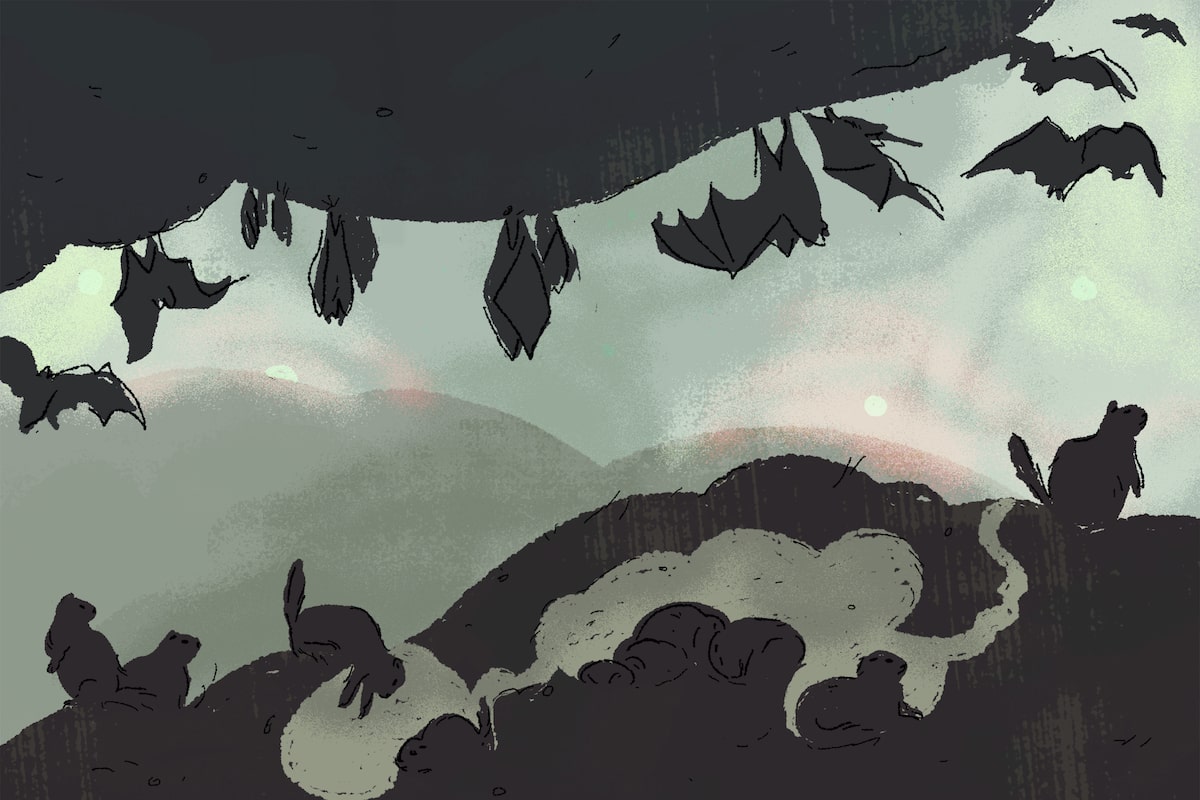
Illustration by Marley Allen-AshThe Globe and Mail
Thomas R. Verny is a clinical psychiatrist, academic, award-winning author, poet and public speaker. He is the author of eight books, including the global bestseller The Secret Life of the Unborn Child and The Embodied Mind: Understanding the Mysteries of Cellular Memory, Consciousness and Our Bodies.
In Siberian permafrost, in the Arctic, in Chile’s nearly rainless Atacama Desert and in the dark forests of Poland, organisms have been found that appear lifeless yet will revive and become fully functional when propitious environmental conditions arise. The question these discoveries evoke is not merely how life endures in harsh, inhospitable to life places, but what, exactly, it retains while doing so.
Consider the bdelloid rotifer, a microscopic animal invisible to the naked eye and seemingly indifferent to the usual limits of survival. In a laboratory in Pushchino, Russia, researchers revived rotifers that had been frozen in Siberian permafrost for more than 24,000 years. During that interval, the animals existed in cryptobiosis, a reversible state of suspended animation. “This is the hardest proof so far,” Stas Malavin, one of the researchers remarked, “that multicellular animals can withstand tens of thousands of years in a state of almost completely arrested metabolism.” [1]
Cryptobiosis is not death, though it resembles it closely enough to make the distinction difficult. Growth stops. Repair ceases. There is no signalling, no transcription, no detectable metabolism. Biological processes halt, and life retreats to something like a shadow of the real thing.
Near-death experiences suggest that our consciousness may not die when our bodies do
Preserving their cellular integrity with sugars and stress proteins to prevent cellular damage, bdelloid rotifers, tardigrades, brine shrimp and other microbes have mastered this dormant state. [2] The organism remains poised, asleep, waiting for Prince Charming to kiss her and bring her water, energy (warmth) and oxygen. When that happens, no matter how much time has passed, the organism awakens and carries on as before.
Along the western coast of South America lies the Atacama Desert, so dry that rain may not arrive for decades. Beneath its soil, scientists have found bacteria that showed no visible activity for years revive and reproduce when moisture finally appears. While earlier studies uncovered dying organisms at the surface and residual DNA, this was the first documented instance of a long-term, viable form of life existing in the desert.
“We believe these microbial communities can lay dormant for hundreds or even thousands of years in conditions very similar to what you would find on a planet like Mars and then come back to life when it rains,” commented Dirk Schulze-Makuch, the lead investigator. [3]
Continuing our travels, I take you back to the Arctic, where we find the eponymously named arctic ground squirrel. Every September in Alaska and Siberia, these squirrels retreat into burrows more than a metre beneath the tundra, curl up in nests built from grass, lichen and caribou hair, and begin to hibernate. Their core body temperatures plummet, dipping below the freezing point of water. Their neurons shrink and thousands if not millions of vital connections between brain cells wither. Extensive pruning occurs in areas necessary for long-term memory such as the hippocampus.
How science is challenging long-held theories about cats
And yet, months later, when the squirrels emerge, they behave as though nothing essential has gone wrong. They recognize their relatives, distinguish the familiar from the unfamiliar, and reliably perform tasks learned before hibernation set in. This offers a persuasive demonstration that memory, by which I mean multiple forms of information from the past, can endure even under conditions approaching biological suspension. [4, 5]
When you think of warm cuddly animals, bats would not be at the top of your list. Researchers at the Polish Academy of Sciences, in Bialowieza, Poland, undeterred by the animals’ reputation, set out to test whether these nocturnal mammals, often associated in the popular imagination with blood sucking vampires, retain what they have learned prior to hibernation once they “wake up.”
The experiment was straightforward. Bats were trained to locate food in one of three arms of a maze. Before hibernation, they performed flawlessly. Then they were allowed to hibernate. When they emerged months later, they navigated the maze with the same accuracy as before, matching the performance of control bats that had not hibernated. The researchers concluded that bats must possess a neuroprotective mechanism, not yet identified, that shields memory from the ravages of a hibernating brain. [6]
The squirrel and bat studies provide us with provable evidence that these animals retained known capacities they acquired before they went into a dormant state. [7] What these scientists cannot explain easily is how intricate memories, learned before the lights went out, survive intact through a season in which the brain itself appears to have largely shut down and disassembled.
Taken together, these findings confound long-held assumptions. They suggest that life is more resilient, more patient, and more inventive than previously thought.
How do animals see the world? New camera system captures how bees, birds and more perceive colour
They also introduce the possibility that the way bioscientists and astronomers are searching for signs of extraterrestrial intelligent life may be all wrong. Because water, oxygen and energy sources are the basic prerequisites of life on earth, these experts assume that the same applies in the whole galaxy. Yet, it is quite possible that there may exist creatures in the universe who live on different gases, liquids and minerals from the ones we do here.
In fact, in 2020, scientists identified a microscopic parasite, henneguya salminicola, lodged deep within the muscle tissue of salmon. It is the first known animal to have abandoned the need for oxygen. Rather than relying on aerobic respiration, henneguya appears to have taken a more parasitic route to survival, siphoning nutrients directly from its host. The discovery unsettles the long-standing assumption that animal life is inseparable from oxygen even in this world. [8].
Insights gained from studying these remarkable animals will also have important implications for the development of non-traditional computational media in synthetic bioengineering. But perhaps their most provocative implication concerns memory itself.
Conventional neuroscience rests on the assumption that memory, identity, and consciousness require ongoing neural activity. According to this view, when electrical signalling ceases, memory dissolves; when metabolism stops, life ends; and when the brain is inactive, the organism becomes a blank slate.
Yet the study of cryptobiotic organisms, as well as of the organisms mentioned here, contradicts this premise. These organisms return to their predormant state once the right conditions materialize. This suggests they could not do so unless they “remembered” their past configurations. For this to occur, the organism’s past, its developmental history, adaptive strategies, and future potential must be embedded somatically, conserved in cellular organization, and epigenetic configurations. [9] What that tells us is that these tiny animals carry information necessary for their survival in their bodies without neurons or a brain.
The old metaphor of memory being stored like documents in file folders in the brain has been steadily eroding. A growing number of scientists are proposing that memory is distributed throughout the body. No single neuron “contains” a memory any more than a single word contains a language. Instead, memory is encoded in patterns of relationships between cells, tissues and organs. [10,11,12].
Let’s take that a step further. Joshua Bongard, professor of computer science, University of Vermont, has written that humans and animals have evolved to adapt to their surroundings and interact with one another. Similarly, our tissues have evolved to subserve these functions, and our cells have evolved to subserve our tissues. “What we are is intelligent machines made of intelligent machines made of intelligent machines, all the way down,” he said. [13].
In a now frequently cited 2013 paper, Tal Shomrat and Michael Levin, of Tufts University, proposed a radical idea: that memory in planarians (a flatworm) does not reside exclusively in the brain. Instead, they suggested that traces of experience persist in the body itself, embedded in the cytoskeleton, metabolic signalling circuits and gene-regulatory networks. These systems, they argued, are not passive infrastructure but dynamic substrates, capable of experience-dependent rewiring and sustained feedback, properties sufficient, in principle, to store information.
More provocatively still, Mr. Shomrat and Mr. Levin observed that the core mechanisms normally associated with neural function – ion channels, neurotransmitters and electrical synapses – are not confined to neurons. Rather, they are distributed throughout cells and tissues, orchestrating the regenerative and developmental feats for which planarians are famous. Memory, in this view, is less a local inscription than a bodily disposition, written into the living architecture of the organism itself. [14,15]
Dear birdwatchers, it’s ‘leave the owls alone’ season
New research from The Dana-Farber Cancer Institute in Boston has shown that cells in all animals are constantly undergoing change and responding to stimuli, reorganizing themselves while remembering their origins and history. A team there found that adult tissues retain a memory, inscribed on their DNA, of the embryonic cells from which they arose. In other words, cells remember what they are and their origins. Ramesh A. Shivdasani, the senior author of the study, put it this way: “Beyond the sheer existence of this archive, we were surprised to find that memory doesn’t remain permanently locked away but can be accessed under certain conditions.”
The implications for medicine are huge. Namely, that under specific conditions, patient-derived cells could be reverted eventually to a more primitive developmental stage and then guided to grow into mature healthy tissues suitable for replacing damaged or diseased ones. [16].
Our bodies are perfectly capable to heal wounds or broken bones or even replace a complex structure such as the liver. For healing to occur, cells, tissues and organs need to know what, when and how to accomplish this. Without the ability of “remembering” the body’s own structure, healing and regeneration of body tissues would not be possible. Repair of damaged tissues or organs is not top down but bottom up, not controlled by the brain but organized locally by the affected cells or assemblies of cells in body tissues and organs.
The brain does not work alone. All the cells in our bodies are connected and form a sentient network with a highway, the vagus nerve, linking the brain, the heart, and the gut. What we are learning from the animals discussed here is that memory starts in the cell, not the brain, since many of these animals do not even possess a brain. In animals that do have a brain – like us – a bottom-up approach from the cell seems to offer a more promising explanation of the way memory functions across all living beings.
The body remembers the past. It remembers how to become.
Sleeping Beauty creatures reveal that life is defined by the persistence of embodied information. The organism is a living archive capable of suspension, conservation and renewal. This lends biological plausibility to the concept of cellular memory and supports my long-held belief that all our experiences, from conception on and perhaps even going back to those of our parents, are somatically archived.
Life can take many forms. It may burn brightly, like a candle, or linger as smouldering embers beneath a blanket of ash, apparently asleep. Waiting for Prince Charming.
References
Shmakova, L., Malavin, S., Plewka, M., & Rivkina, E. (2021). A living bdelloid rotifer from 24,000-year-old Arctic permafrost. Current Biology, 31(11), R712-R713.Wright, J. C., et al. (2019). Cryptobiosis: Long-term survival in extreme conditions. Integrative and Comparative Biology, 59(2), 394–403.Ferguson, Will (2018). Life always finds a way.Millesi E, Prossinger H, Dittami JP, Fieder M. (2001). Hibernation effects on memory in European ground squirrels (Spermophilus citellus). J Biol Rhythms; 16:264-71.Mateo, J. M., & Johnston, R. E. (2000). Retention of social recognition after hibernation in Belding’s ground squirrels. Animal Behaviour, 59(3), 491–499Ruczynski, I., & Siemers, B. M. (2011). Hibernation does not affect memory retention in bats. Biology letters, 7(1), 153-155.Blackiston, D. J., Shomrat, T., & Levin, M. (2015). The stability of memories during brain remodeling: a perspective. Communicative & integrative biology, 8(5), e1073424.Yahalomi, D., Atkinson, S. D., Cartwright, P., … & Huchon, D. (2020). A cnidarian parasite of salmon (Myxozoa: Henneguya) lacks a mitochondrial genome.Proceedings of the National Academy of Sciences, 117(10), 5358-5363.Boothby, T. C., et al. (2017). Tardigrades use intrinsically disordered proteins to survive desiccation. Molecular Cell, 65(6), 975–984.Gentsch, A., & Kuehn, E. (2022). Clinical manifestations of body memories: The impact of past bodily experiences on mental health. Brain Sciences, 12(594). Bergouignan, L., Luyat, M., & Clément, F. (2024). Expanded taxonomies of human memory. Cognition.Kukushkin, N. V., Carney, R. E., Tabassum, T., & Carew, T. J. (2024).The massed-spaced learning effect in non-neural human cells. Nature Communications, 15(9635).Bongard, J. (2023). National Security News and Commentary.Shomrat, T., & Levin, M. (2013). An automated training paradigm reveals long-term memory in planarians and its persistence through head regeneration.Journal of Experimental Biology, 216(20), 3799-3810.Blackiston, D. J., Shomrat, T., & Levin, M. (2015). The stability of memories during brain remodeling: a perspective. Communicative & integrative biology, 8(5), e1073424.Jadhav, U., Cavazza, A., Banerj, Saenz-Vash, V., … & Shivdasani, R. A. (2019). Extensive recovery of embryonic enhancer and gene memory stored in hypomethylated enhancer DNA. Molecular cell, 74(3), 542-554.
This article was updated to include the author’s footnotes.