
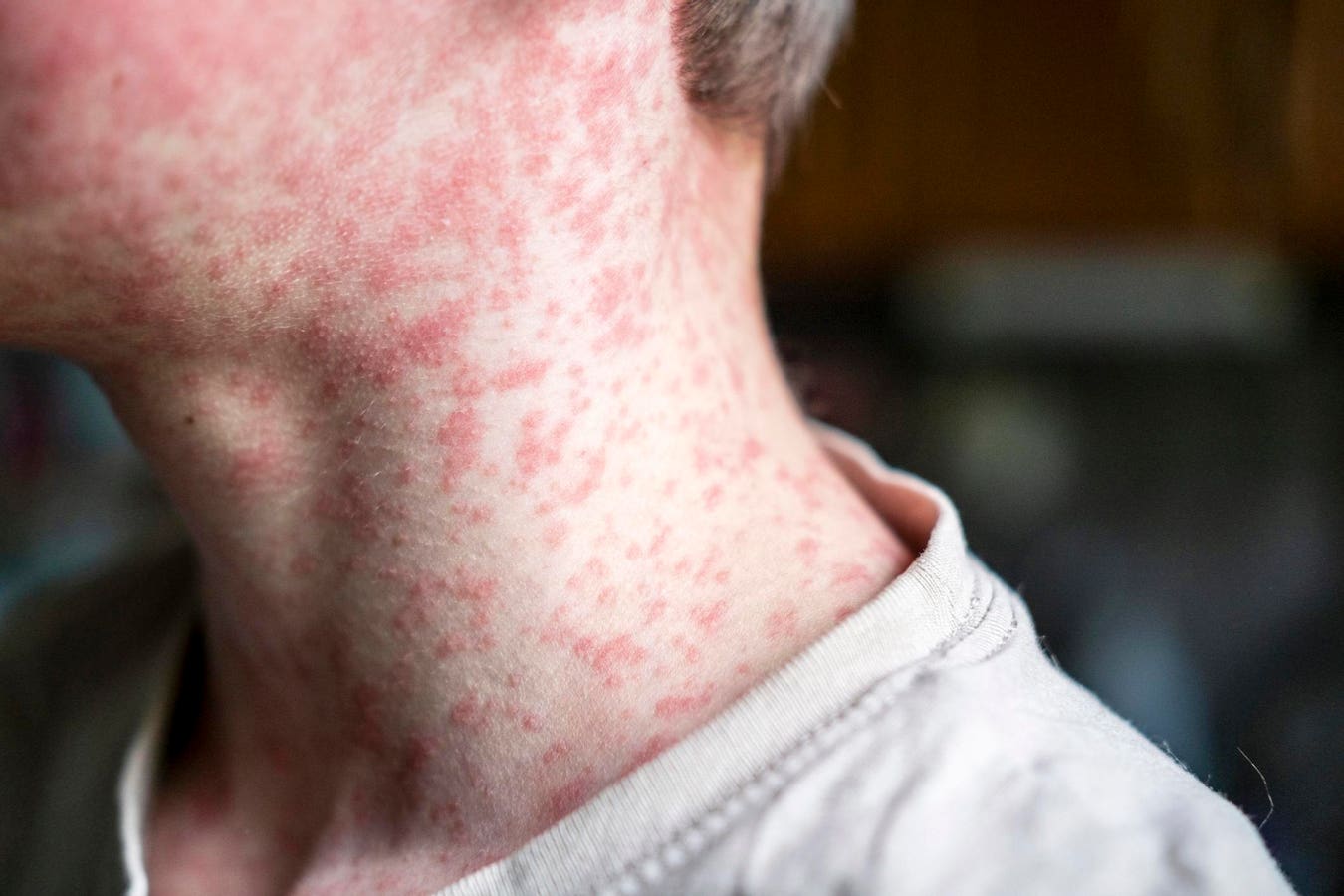
Historically, measles has been an illness doctors only learned about in textbooks. With increasing measles outbreaks in the U.S. and around the world, that’s changing.
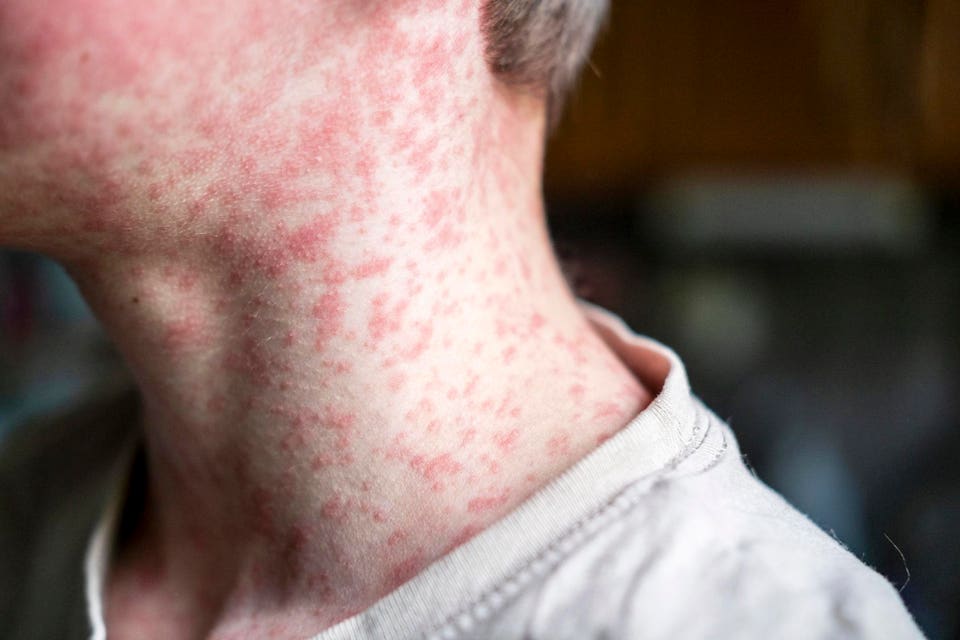
The measles rash (seen here) often starts on the face and neck before spreading downward.
getty
Here are the numbers: The Centers for Disease Control & Prevention reported 2,255 confirmed measles cases in the U.S. in 2025. There have been 416 more confirmed cases as of the first twenty-three days of January. An ongoing South Carolina outbreak hit 789 cases as of January 27, 2026.
Here are five things families need to know about the measles, from the perspective of a practicing ER doctor.
1. The Measles Is More Than “Just A Rash”
The measles, in fact, is a full-body viral infection. Here’s how it typically goes. Following an exposure, symptoms usually appear 7-14 days later: a high fever, cough, runny nose, and red, watery eyes. A classic early clue is what are called “Koplik” spots (see image below), tiny white dots that form inside the mouth.
These are Koplik spots—tiny white lesions in the mouth. They are a diagnostic hallmark of measles, often appearing several days before the classic rash and signaling high contagiousness.
https://www.cdc.gov/measles/signs-symptoms/photos.html
Then comes the rash, commonly 3-5 days after the first symptoms. The measles rash often starts on the face and spreads downward, with concomitant fevers spiking dangerously to 104°F or higher.
Several issues contribute contagion in the measles. First, people are typically contagious from four days before the rash starts through four days after. This means people can spread measles before they know they have it. Furthermore, the virus can remain infectious in the air for up to 2 hours after an infected person leaves a room. The measles is one of the most contagious known viruses.
This combination is why measles can rip through schools, clinics and crowded spaces with terrifying speed.
2. Measles Outbreaks Are Spiking Because Vaccinations Are Down
Because measles is so contagious, it requires ~95% community immunity to reliably stop its spread. As vaccine coverage ticks down, outbreaks ignite.
In the U.S., kindergarten measles-mumps-rubella (MMR) vaccination rates dropped from 95.2% in 2019–2020 to 92.5% in 2024–2025, according to CDC. This left 280,000 kindergartners unprotected. A drop in vaccine coverage of just a few percentage points is important. In a classroom of 20 kids, just 1 or 2 unvaccinated children can fuel a local outbreak.
Vaccine coverage also varies significantly by state and community. In the 2024-2025 school year, exemptions increased to 3.6% from 3.3% the year before. Seventeen states reported exemptions over 5%. Localized hotspots like this create the conditions for measles outbreaks.
Globally, two-dose coverage also remains far too low, at approximately 84% for the first dose and 76% for the second according to 2024 data. The WHO European Region reported 127,350 cases in 2024: the highest in 25 years.
Here’s the pattern: more transmission overseas, more importations through travel and more vulnerable pockets in the U.S. where the virus takes off.
Global vaccination rates have declined in recent years due to many factors, primarily the massive disruption of routine immunization during the COVID-19 pandemic. It’s also been exacerbated by increasing vaccine hesitancy, misinformation and the loosening of vaccination mandates.
3. Certain Groups Are More Vulnerable To Severe Measles Complications
Measles causes significant acute illness. Yet, full recovery commonly occurs within 7 days after the rash’s onset in uncomplicated cases in the majority of cases in previously healthy people. Yet, approximately 30% to 40% develop one or more complications, from mild to severe. This includes diarrhea or ear infections, where approximately 10% will develop long-term hearing loss. Certain high-risk groups face substantially increased risk for severe complications, including pneumonia, encephalitis and even death.
In fact, for every 1,000 measles U.S. cases, approximately one case of encephalitis and two to three deaths occur. Mortality risks are greater for infants and young children than for older children and adolescents.
Adults over age 20 years similarly face increased risk for death from measles or its complications compared to older children and adolescents.
Measles during pregnancy is associated with increased rates of spontaneous abortion, premature labor and preterm delivery, low birthweight and stillbirth. The case fatality rate among pregnant women can range from 5% at the low range to 20-30% among fragile populations such as refugees, with an increased risk of pneumonia requiring ventilatory support.
Measles can be severe and prolonged in immunocompromised individuals with conditions like leukemia, lymphoma or HIV infection. In one series of 23 pediatric cancer patients with measles, five required mechanical ventilation and four died, despite 20 having been previously vaccinated.
An important additional consideration: measles-induced immune amnesia. This causes an immunosuppression that can last 2-3 years after the infection increasing the risk of secondary bacterial and viral infections.
4. Here’s What to Do If You Suspect Measles
People often (accidentally) do the worst thing: they walk into a pediatric office, urgent care or ER waiting room and sit down. If it is the measles, they’ve just created a major exposure event.
Instead, here’s how to contain the spread. First, don’t go anywhere without calling first. Tell the clinic you’re concerned about measles, describe symptoms and ask for instructions about how to be evaluated without exposing a lobby full of patients. Second, isolate immediately. Stay home while you figure out what to do next.
Third, expect public health involvement. If measles is suspected, clinicians will coordinate testing and reporting with health departments. It’s is a reportable disease.
Fourth, ask about time-sensitive post-exposure prophylaxis. If you were recently exposed, ask a doctor about options. This may include the MMR vaccine, which can provide protection if given within 72 hours of exposure. Immune globulin can also help if given within 6 days of exposure, especially for high-risk individuals.
Imagine this scenario: A contagious patient sits in a pediatric waiting room for an hour. The measles virus lingers in the air. A newborn too young for vaccination arrives for a check-up two hours later. This is how preventable tragedies happen.
5. Your Best Protection From A Measles Outbreak: Vaccination
Measles prevention is one of modern medicine’s successes. The MMR vaccine is highly effective. One dose is about 94% effective. Two doses are >99% effective at preventing the measles.
For parents, that means ensuring children are up to date, with the first dose at 12–15 months and the second at 4–6 years.
Adults should confirm their immunity. Especially for those who travel, work in healthcare or are around high-risk individuals. Vaccination information is often recorded with a primary care physician, in a state immunization registry or buried in old childhood records.
When unsure, the safest course is to consult your doctor about a booster, which is safe for most adults.
The CDC’s travel guidance repeatedly warns that measles is circulating globally. Susceptibility plus exposure is the recipe for infection. It’s also about community protection. High vaccination rates create a shield for those who can’t be fully protected during a measles outbreak. When community immunity slips, high-risk groups often pay the highest price.