
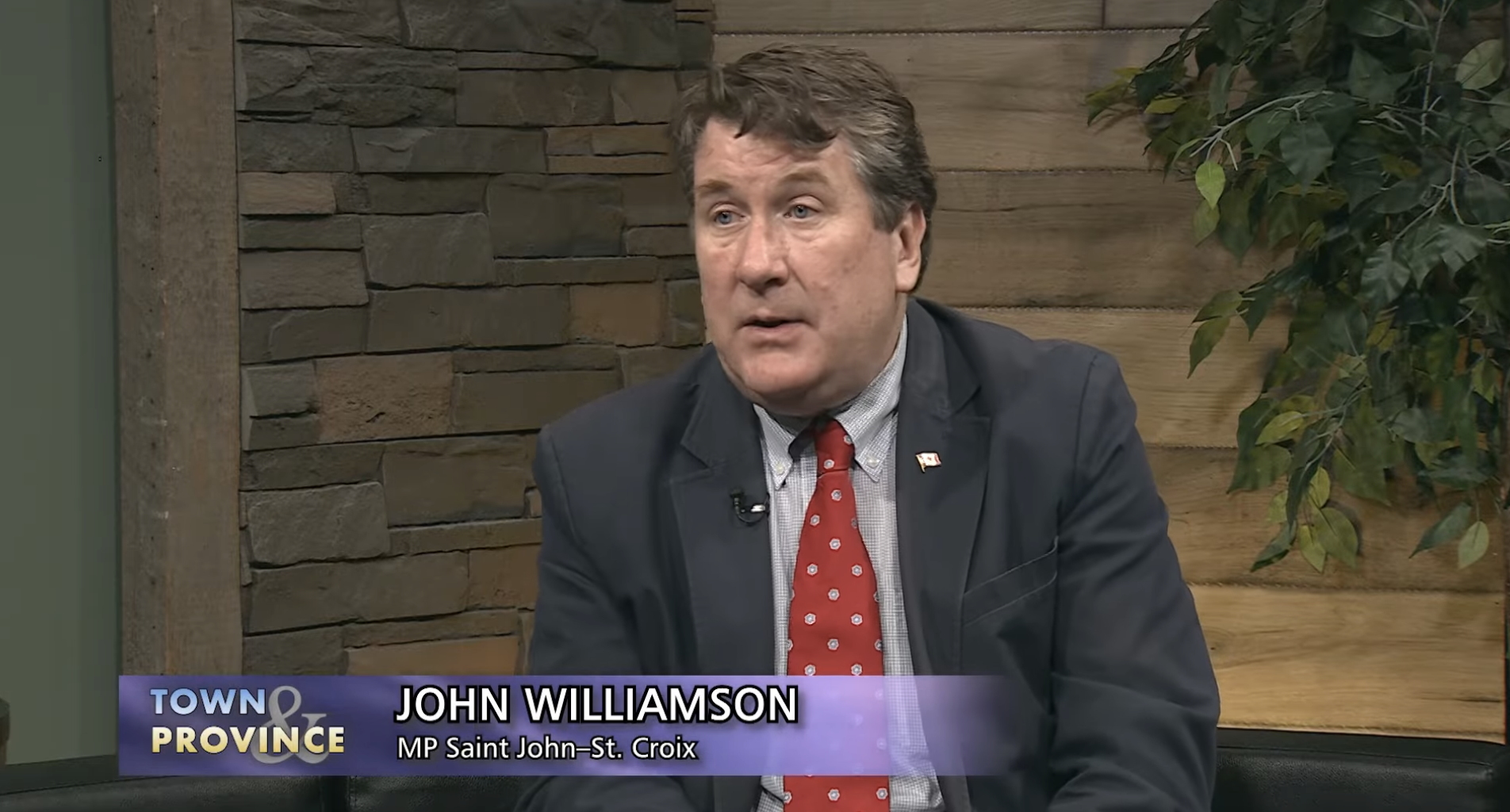
In an interview on CHCO-TV’s Town and Province, John Williamson, Conservative MP for Saint John–St. Croix, warned that Canada’s economic security is increasingly exposed as tariffs rise and Ottawa remains without a bilateral agreement with the United States.
Williamson said Prime Minister Mark Carney’s recent speech at the World Economic Forum captured global unease but may have weakened Canada’s negotiating position with U.S. President Donald Trump. Public signalling, he argued, should give way to quieter diplomacy. “The first job of a prime minister is to keep the country together and maintain a working relationship with Washington,” he said.
While acknowledging interest in closer ties with Europe, Williamson noted that European allies were largely absent when Canada faced U.S. pressure. He also criticized both Europe’s long-standing underinvestment in NATO and Canada’s own lagging defence spending, saying it has diminished the country’s influence.
Williamson welcomed China’s removal of tariffs on Canadian canola and Atlantic seafood, including lobster, but cautioned against deeper dependence on Beijing, citing concerns over coercive trade practices and the impact of subsidized electric vehicles on Canada’s auto sector.
Closer to home, he identified deteriorating small-craft harbour infrastructure as the most urgent issue in his riding, pointing to restricted or condemned wharves in communities such as Campobello Island and Grand Manan. Harbours, he said, are “extensions of highways” in coastal New Brunswick and essential to keeping Canadian landings on Canadian shores.
On energy, Williamson expressed skepticism that a proposed West Coast pipeline agreement between Ottawa and Alberta will proceed, citing internal Liberal divisions, while stressing that pipeline approval remains a federal responsibility tied to national interest.
Politically, Williamson said Conservative leader Pierre Poilievre is likely to clear a mandatory leadership review, as the next phase of federal politics turns on affordability, public safety, and sovereignty — and whether, he said, the prime minister can turn “words from Switzerland” into results.