
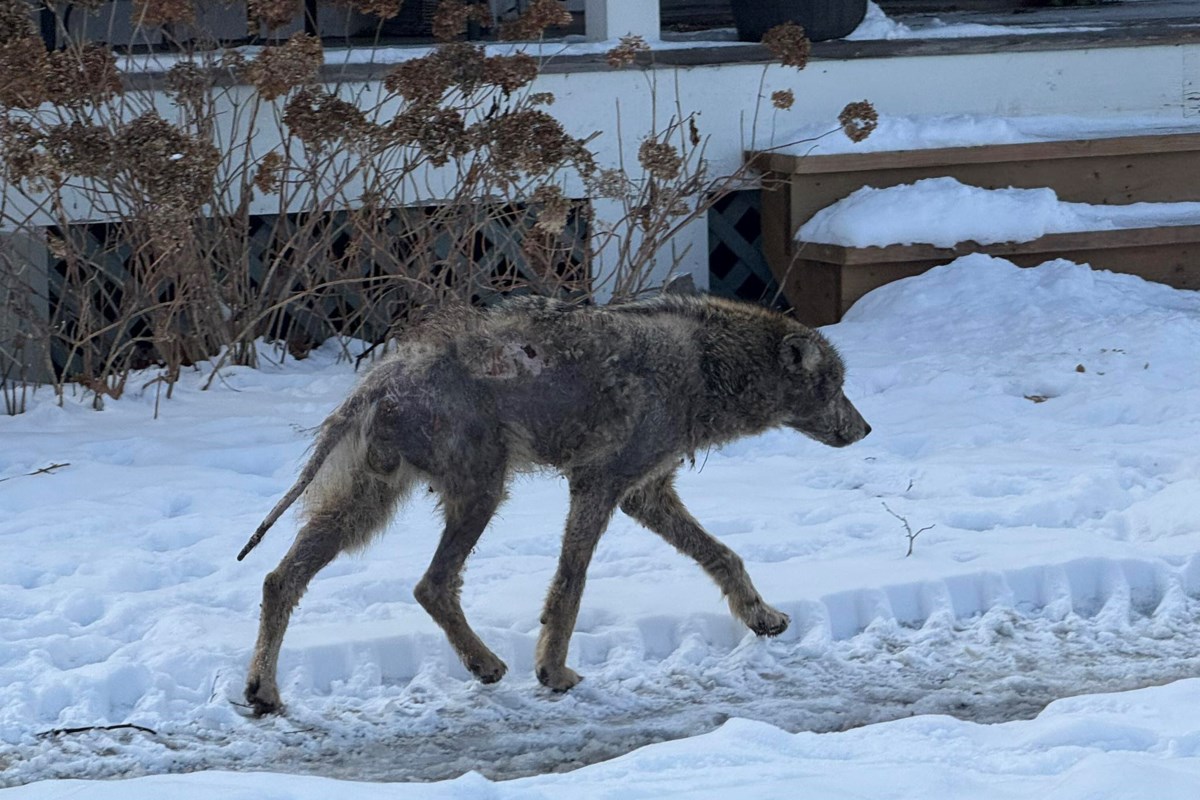
The Town of Newmarket captured a sick coyote roaming downtown streets, which was later euthanized at the Toronto Wildlife Centre.
The town’s animal services team had been trying to capture the coyote for weeks, according to Newmarket Mayor John Taylor in a social media post. Eventually, the coyote was found in the Old Main Street area and was transported to the Toronto Wildlife Centre for treatment and rehabilitation. However, the centre had to euthanize the coyote.
“I can assure everyone that this coyote was treated with great care and respect. The coyote was undoubtedly saved from weeks more of suffering,” Taylor said on Facebook. “My thanks to our amazing animal services team, who deal with so many difficult circumstances.”
The post garnered more than 500 comments and 2,000 reactions on Facebook. Commenters said they had seen the coyote wandering in the area, along with reporting other urban coyote sightings in recent weeks.
While an official diagnosis was not released, observers noted that it appeared emaciated. People on social media speculated it may have had mange, a contagious skin disease caused by mites in wildlife.
The Toronto Wildlife Centre said on its website that coyotes can be particularly vulnerable to mange in the winter, given that it can result in fur loss, making it hard to find relief from the harsh cold. The disease can be fatal if left untreated in coyotes.
Several commenters expressed relief regarding the animal.
“I had seen this a few weeks back here on Avenue Road. It is sad that it had to be euthanized, but better than suffering and painful death,” one resident said. “Thanks also for all our neighbours and animal services in our community that looked out for people walking and their pets.”
Other comments questioned if the animal could have been treated and saved.
On its website, the Toronto Wildlife Centre said that while it tries to treat as many wild animals as possible, some are too sick or injured to be able to cope in the wild again.
“A wild animal must be able to find food, shelter, evade predators and carry out natural behaviours all on their own. The inability to do this due to an illness or injury will cause the wild animal to suffer and eventually perish, often in a painful and drawn-out way,” the centre said. “Humane euthanasia is one of the kindest treatments we can offer to an animal that is seriously injured or suffering from an incurable disease. It is a much more peaceful path than these animals would receive if they were left to succumb to their injuries in the wild.”
The municipality keeps track of coyote sightings, with an online tracker available. There have been more than 70 sightings within Newmarket in the past three months, according to the tracker.
Residents can report coyote sightings and find more information through the town website.