
Opening ceremony set for Sunday; organizers plan more than 20 events through February and into early March
February may only be 28 days, but Black History Month organizers in Iqaluit are making up for it with a packed schedule spilling into March.

Keynote speaker Justice Donald McLeod of the Ontario Court of Justice will receive a lifetime achievement award during the Black History Month opening ceremony in Iqaluit on Sunday. (Photo courtesy of Nunavut Black History Society)
As Canada celebrates the 30th national Black History Month, Iqaluit-based Nunavut Black History Society will also honour its own 13th anniversary over five weeks.
The schedule includes more than 20 events, with the opening ceremony and awards presentations at the Astro Theatre at 6 p.m. Sunday. Admission is free.
“We have progressively grown quite a lot over the years,” said Stephanie Bernard, the society’s president and co-founder, in an interview.
The inaugural event in 2014 spanned one evening at the Franco Centre, she recalled.
This year’s lineup includes a film festival opening Feb. 5 at the Astro Theatre and continuing Monday evenings all month; a month-long Black authors exhibit at the Iqaluit Centennial Library opening Feb. 3 at 6 p.m.; and community feasts on Feb. 8, 15, 22 and March 1 at the Qajuqturvik Community Food Centre, based on the African culinary traditions of Nigeria, Zimbabwe, Kenya and Ghana.

A visiting keynote speaker, Justice Donald McLeod, appointed to the Ontario Court of Justice in 2014, will accept the Sankofa Lifetime Achievement Award during the opening ceremony Sunday. He was a founder of the national charity Federation of Black Canadians.
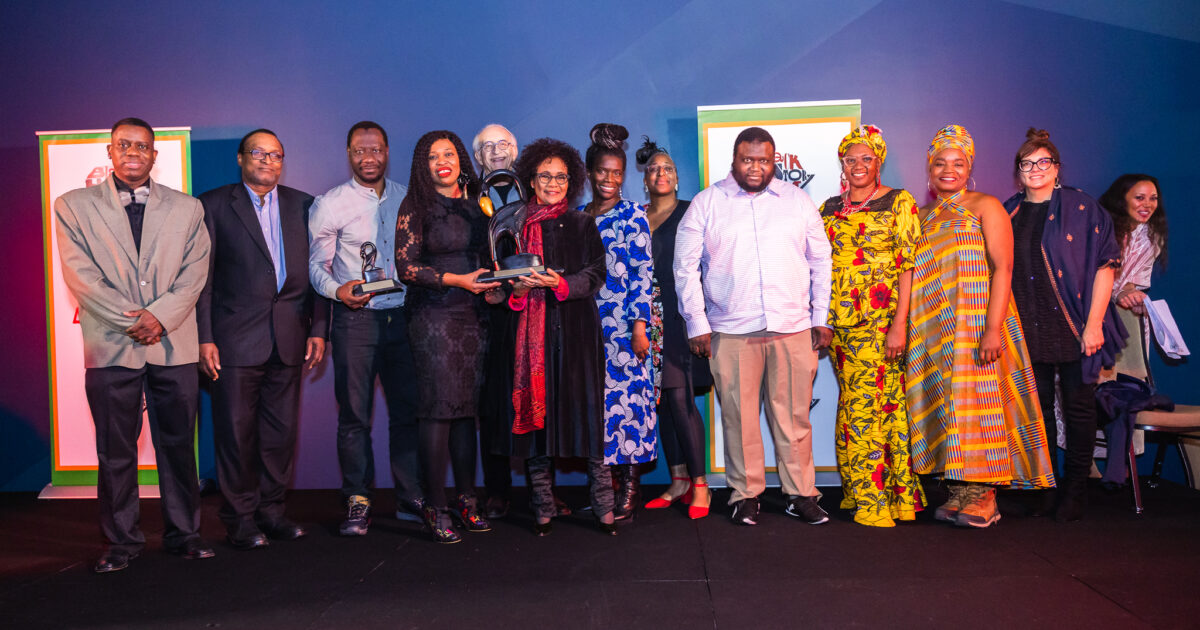
Six members of the Iqaluit community will also be recognized with Sankofa awards. The honours, presented annually, are named for the sankofa bird of Ghana. With its neck craning backward, the bird symbolizes the importance of knowing the past as one enters the future.
New this year is a research project involving a questionnaire developed by the society that will be distributed throughout the month. The study seeks to document the experience of people of colour in Iqaluit.
Results will be released later in the year.
The Black diaspora in Nunavut has grown in Iqaluit alongside the society, Bernard said. Close to 400 people of African descent lived in Iqaluit at the time of the census in 2021, up from 220 in 2016.
Bernard said people of African descent first arrived in what is now Nunavut aboard whaling vessels that passed through the region in the 19th century.

A community discussion about the impact of colonialism on people of African descent begins at 6 p.m. on March 5 at the Astro Theatre.
The society is preparing to launch a new website at some point during the month as well, Bernard said. The finale for Black History Month is scheduled for March 7 at a venue yet to be determined.
For the complete Black History Month schedule, visit the society’s social media pages.