
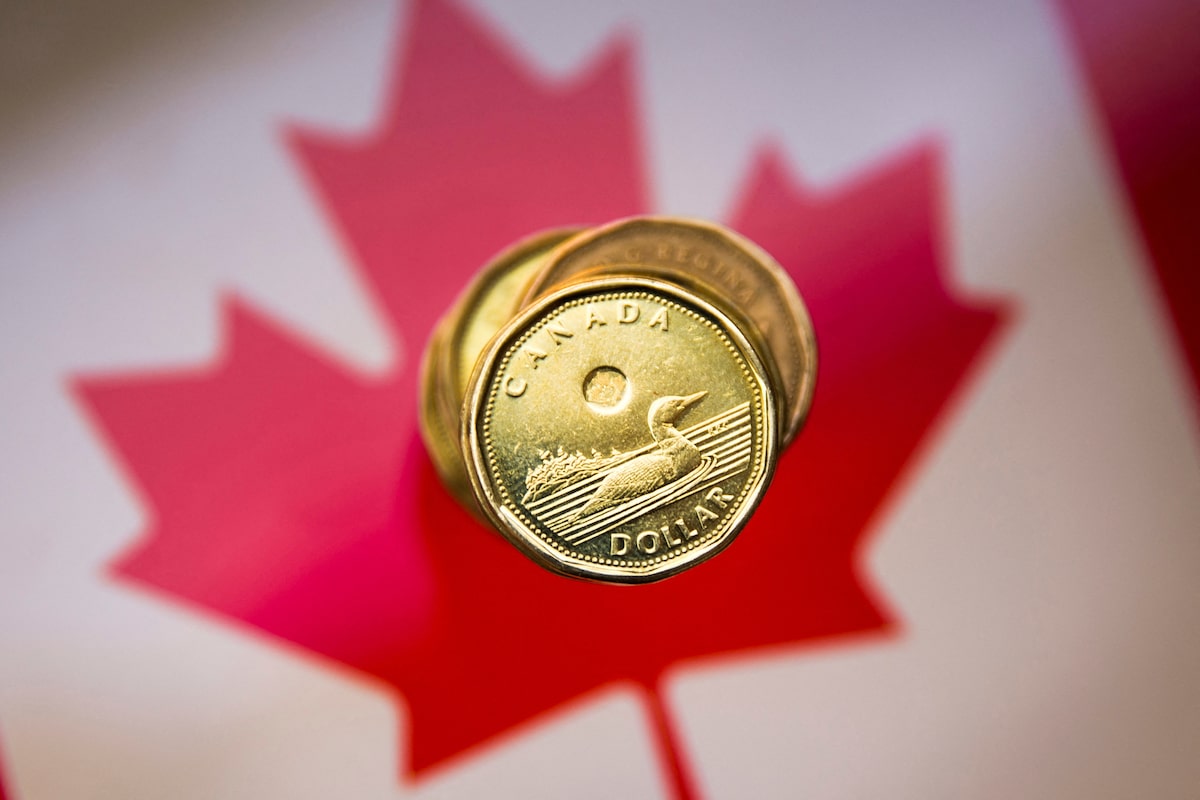
The Canadian dollar is on a rollicking ride as global investors are rapidly reassessing their views of the U.S. dollar amid heightened geopolitical uncertainty and shifting expectations for U.S. currency policy.
The loonie topped 74 US cents on Thursday for the first time since September, 2024, after a more than 3-per-cent rise in less than two weeks.
It then fell back into the mid-73-cent range on Friday, after U.S. President Donald Trump announced Kevin Warsh would be the next chair of the U.S. Federal Reserve. The surprisingly hawkish pick strengthened the greenback against other currencies, while sending equities and the price of gold sharply lower.
The oversized moves have largely been a U.S. dollar story, with the greenback hitting a four-year low against a basket of other currencies this week.
TSX plunges nearly 1,100 points after Trump picks Fed chair
Still, the stronger Canadian dollar that’s accompanied the decline in the greenback has implications for Canada’s economy, making imports from the United States cheaper, but exports less competitive. And where things go from here for the loonie, analysts say, will depend a lot on what happens with U.S.-Canada trade negotiations this year.
Currency markets have been a whirlwind since mid-January.
The U.S. dollar had been on a downward trend against other currencies through 2025, as the Fed resumed cutting interest rates and global investors started to hedge their exposure to U.S. assets in response to erratic economic policy making in Washington and outperformance in non-U.S. financial markets.
This gradual decline rapidly picked up momentum this month after Mr. Trump ramped up his threat to annex Greenland and threatened new tariffs against Europe.
“Fears started to spread that the EU countries could start either reducing their [U.S.] asset base or at minimum start increasing hedges, and that contributed to some increased hedging activity throughout the marketplace,” said Lorne Gavsie, head of macroeconomic and FX strategy at CI Global Asset Management.
Currency markets were given a further jolt late last week when the New York branch of the Fed, which manages the central bank’s market operations, called Wall Street banks to check the price of the Japanese yen. This type of move typically precedes a Fed intervention in the currency market.
“It served as a signal that they were prepared to buy Japanese yen and sell U.S. dollars, and this triggered a wider concern that the U.S. is comfortable with a weakening currency,” Mr. Gavsie said.
When Mr. Trump was asked about the currency on Tuesday, he seemed to signal support for a weak dollar. “Look at the business we’re doing. The dollar’s doing great,” the President said.
Opinion: Under Donald Trump, Canada’s former best friend is now our most dangerous threat
U.S. Treasury Secretary Scott Bessent partly walked these comments back on Wednesday, saying that the U.S. still supports a strong dollar, and denying that Washington was intervening to support the Japanese yen. But his definition of dollar strength was somewhat hazy, leaving market participants with more questions than answers.
Mr. Trump’s comment “sort of set the cat amongst the pigeons,” said Shaun Osborne, chief currency strategist at Bank of Nova Scotia.
“There’s long been a suspicion for markets that it was an unspoken goal of this administration that to facilitate some rebalancing of global trade and the onshoring of manufacturing, a weaker dollar would be an easier path perhaps to pursue… than pursuing a sort of tariff-based mercantilist approach to trade,” Mr. Osborne said.
“Now whether that’s implicitly or explicitly part of what the game plan is, we still don’t know.”
As the U.S. dollar has weakened over the past year, the Canadian dollar has strengthened on the opposite side of the trade. However, the loonie did not perform as well against the dollar as other currencies.
“The Canadian dollar was up about 5 per cent overall in 2025,” Mr. Osborne said. “When you look at the euro, it was up to 13 per cent, the Swiss franc up 15 per cent, the pound was up 7 or 7.5 per cent. So, it has lagged.”
Demand for the Canadian dollar is being held back by uncertainty about the future of Canada’s trading relationship with the U.S., said Sarah Ying, head of FX strategy at CIBC Capital Markets. And until negotiations about the continental free trade agreement, the USMCA, are finished, the Canadian dollar may struggle to appreciate much further.
Heading into the year, Ms. Ying said she saw decent upside for the Canadian dollar. But that view has shifted in recent weeks as Mr. Trump has become more vocally negative toward Canada following Prime Minister Mark Carney’s speech at Davos that critiqued the President.
“The fundamental thing that’s changed… is Trump really has started tweeting on Canada again,” she said.
She and her colleagues have created a model that uses a natural language processor to assess the tone of Mr. Trump’s social media posts and map that against currency moves. A negative post means a down day for the Canadian dollar. “That relationship between the sentiment and the currency is extremely close,” Ms. Ying said.
“If he’s going to increase tweeting again, with USMCA negotiations coming up for review, it’s reasonable to think… that’s going to mean upside risk for dollar-CAD, so a stronger U.S. dollar.”