
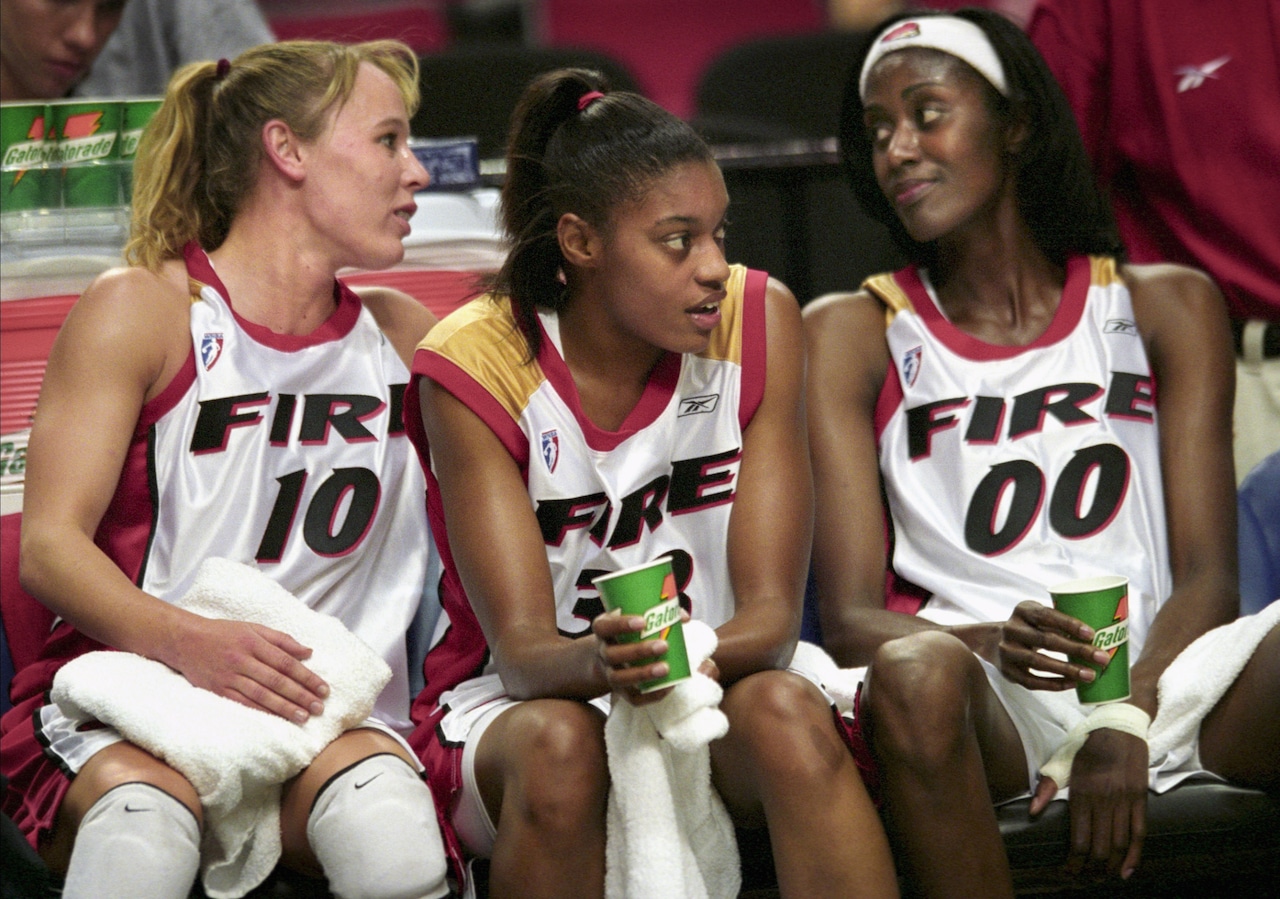
As the Portland Fire take the court for the 2026 WNBA season, the year will include building a roster from the ground up and also creating a team culture from players who still don’t know each other.
And few people know quite as much about culture building in Portland women’s basketball as Sylvia Crawley.
Crawley has more women’s professional basketball experience than anyone else in Portland. A 6-foot-5 forward who could throw down a dunk, Crawley was one of only five players to play for the Portland Fire in 2000, 2001 and 2002 (the others being Stacey Thomas, Tully Bevilaqua, Alisa Burras and DeMya Walker) and leads the team in all-time scoring (935 points), rebounds (522) and blocks (87).
Crawley grabbed the Portland Fire’s first rebound and blocked the first shot.
And before that, Crawley spent 1997 and 1998 playing for the Portland Power in the American Basketball League.
“Everything we did, we were trail blazers,” Crawley said of her time playing in Portland.
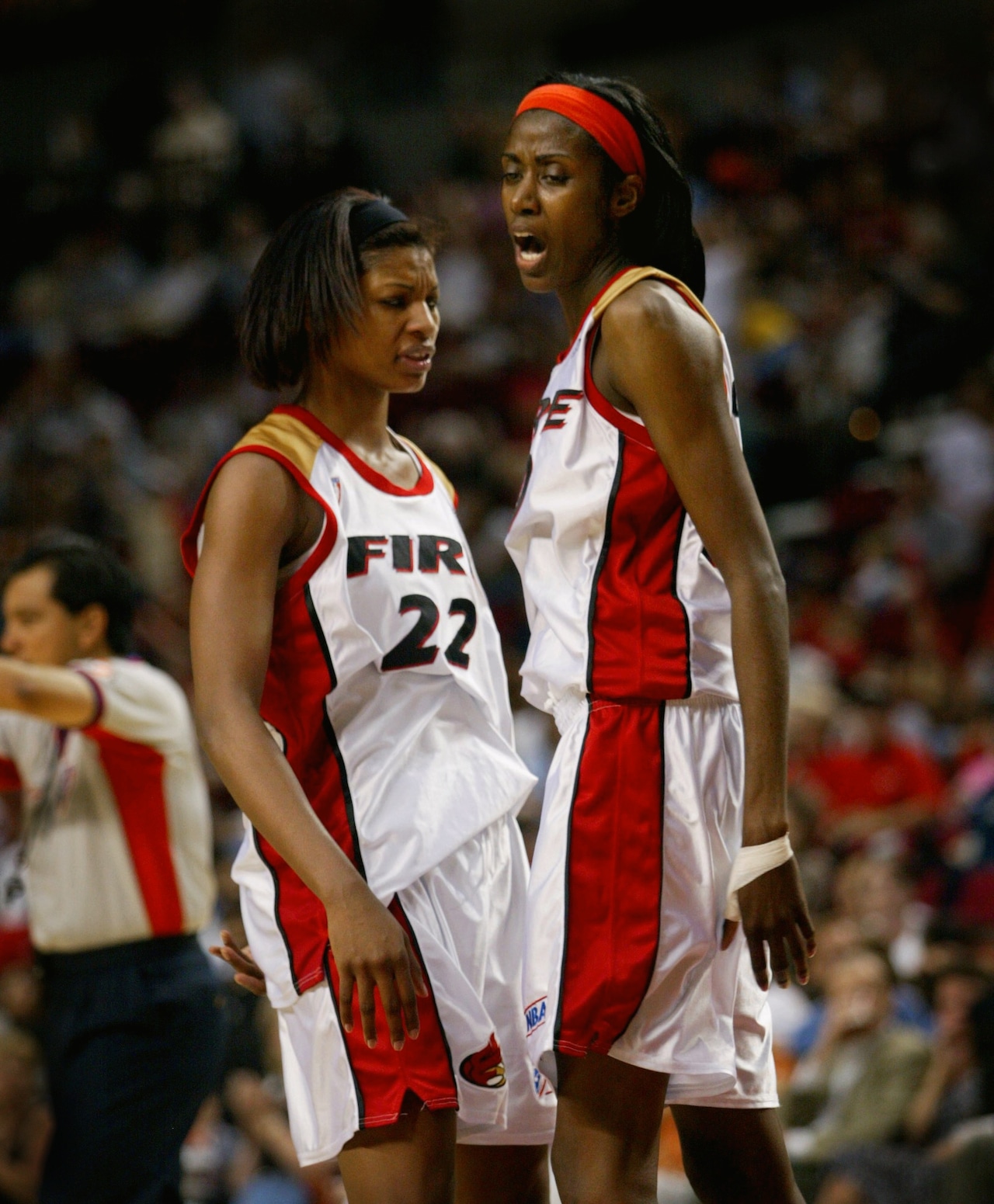 The intensity of the game was reflected in the faces of DeMya Walker, left, and Sylvia Crawley.SP- THE OREGONIAN
Crawley said the Portland Fire’s first iteration was a tight-knit group, equating it to more like a college team environment than a professional team.
“When you’re in college, the team is close because you eat together, you lift weights together, you do everything as a team,” Crawley said.
She added that at the professional level, players sometimes stick to themselves or stay with their families. But the, on the other hand, were inseparable.
“We didn’t have to (eat meals) as a team, but we chose to do that,” she said, adding that the players all lived in the same Beaverton apartment complex and would pool their per diem food money to make team meals.
Crawley said that initial team culture from the Portland Fire was developed as the players — especially those that were given to the Fire via the dispersal draft, like Crawley, felt that they were there to prove that they belonged in the WNBA.
In Crawley’s case, she was passed over by the WNBA after the ABL folded in 1998. She said she needed to find a new manager with WNBA connections in order to get a tryout.
“We were overlooked. We were left behind and we had a second chance,” she said.
So when she looks ahead to the 2026 WNBA season, Crawley said she hopes the new era of Portland Fire basketball comes with a culture of hard work and hustling on the court. She said it’s the kind of thing that always resonates with the Portland basketball fans.
“If you give your best effort, they will be loyal to the end,” Crawley said. “They don’t really care about the outcome as long as they know you have given your best effort. So we dove after loose balls and we took charges. The crowd would just go bananas.”
Crawley said even opposing players would recognize the Portland Fire fans from 2000-2002 as animated and extra loud.
Crawley said she still keeps in touch with her former Fire teammates and hopes to be in town for a few games. She said she loves the team’s new logo and likes the direction that she’s seen so far.
And when viewing women’s basketball games now as a fan, Crawley said she watches as a proud aunt seeing the new generation of players.
“I’m just here to cheer them on, you know, they’ve got bigger salaries than what we made at the time and they’re fighting for more even,” she said. “It’s a new day for women’s basketball. They’re selling out arenas. And I think the women deserve to play in front of sold-out crowds because they work just as hard.”