
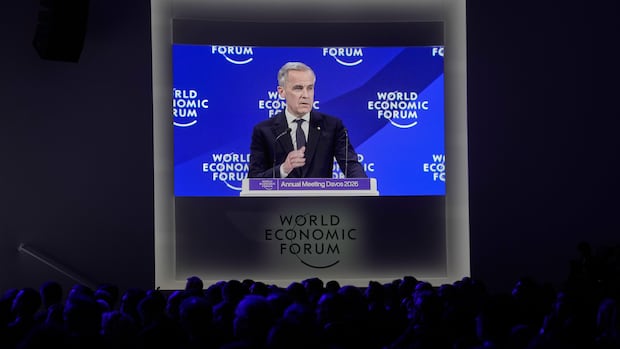
In an interview with an American television network this week, U.S. Treasury Secretary Scott Bessent volunteered some advice to Mark Carney.
“I would just encourage Prime Minister Carney to do what he thinks is best for the Canadian people, not his own virtue-signalling, because we do have a USMCA negotiation coming up,” Bessent said, using the American name for the Canada-U.S.-Mexico Agreement.
“He rose to power on an anti-American, anti-Trump message, and that’s not a great place to be when you’re negotiating with an economy that is multiples larger than you are and your biggest trading partner.”
The cause of Bessent’s concern was apparently Carney’s widely lauded speech in Davos, Switzerland, last week. And the treasury secretary’s comments came after U.S. President Donald Trump’s suggestion that Canada needed to be more “grateful.”
“I would not pick a fight going into USMCA to score some cheap political points,” Bessent said.
If a fight is currently being had, one might ask whether Carney — or Canada — can really be said to have picked it. Canada was largely minding its own business a year ago when the United States launched tariffs against Canadian products.
One might also ask whether Carney’s speech in Davos was really motivated by a mere desire to score political points — or, for that matter, whether those political points were particularly cheap.
But if Bessent thinks Carney would have been better off not delivering that speech, he is not entirely alone.
Second-guessing Carney’s speech
“Carney is a really smart guy and he said in the United Kingdom during Brexit, it’s really dangerous for the United Kingdom to separate itself from its No. 1 trading partner,” Goldy Hyder, president of the Business Council of Canada, told Bloomberg News this week. “And yet that’s exactly kind of the narrative that came out in Davos.”
The Business Council represents the chief executives of some of the biggest companies operating in Canada.
Lucy Hargreaves, co-founder of Build Canada, a think-tank launched last year by figures in Canada’s tech industry, wrote in an op-ed for the Toronto Star that Carney’s speech was “poorly judged.”
“This is why Carney’s behaviour … is so concerning — it suggests that we are back where Trudeau left us: political leaders scoring anti-American points for partisan gain, at the country’s enormous detriment,” Hargreaves wrote, referencing both Carney’s Davos speech and his framing of a new agreement with China.
WATCH | Carney on the reaction to his speech: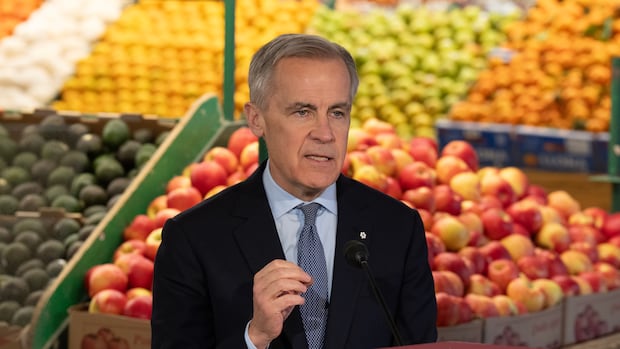
Carney says Davos speech made a point ‘Canadians understood months ago’
Prime Minister Mark Carney was asked Monday what he thinks of U.S. President Donald Trump’s reactions following his provocative speech from the World Economic Forum in Davos, Switzerland, last week.
It’s not unreasonable, of course, to think — or worry — about how any action by a Canadian government might impact relations with Canada’s largest trading partner. And it’s perhaps unsurprising that corporate interests in Canada are particularly inclined to think about such things.
At the same time, allowing the American president’s potential for anger and retribution to dictate the behaviour of Canadian leaders risks ceding a great amount of power. It is also worth remembering that the president has shown a willingness to get upset over relatively innocuous remarks, as in the aftermath of the G7 summit in 2018.
In that case, Trump’s apparent anger at the prime minister did not stop him from completing a new free trade deal with Canada less than four months later.
A matter of sovereignty, geography and economics
This recurring conversation about how much or how little Canadian leaders should worry about upsetting the American administration — or how often or how forcefully Canadian leaders should condemn American actions — speaks to the central challenge currently facing the country: the need for sovereignty set against the unchangeable nature of geography, the existence of deep economic integration and the reality of a power imbalance.
It might be agreed that Canadian leaders should not needlessly attack the United States or lob gutter insults at members of the administration. One way or another, Canada is going to have to maintain some kind of relationship with the country with which it shares a 9,000-kilometre land border.
But then it is necessary to ask whether Carney’s remarks in Davos were needless, pointless, unjustifiably provocative or insulting — whether it was simply or primarily about scoring “cheap political points.” One might also ask how much of the speech — or specifically which parts — the American administration would disagree with.
WATCH | Bessent warns Carney not to pick a fight: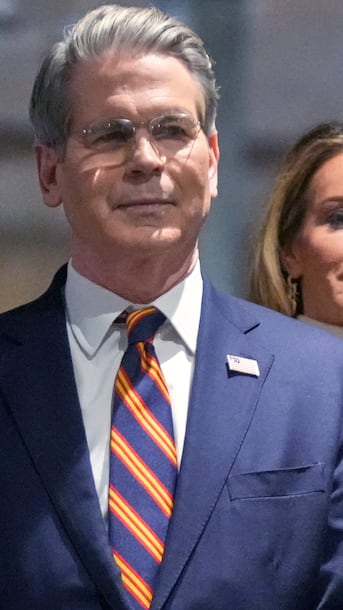
Scott Bessent warns Carney not to ‘pick a fight’ with Trump
U.S. Treasury Secretary Scott Bessent’s latest challenge to Prime Minister Mark Carney comes on the heels of claiming Carney walked back his headline-grabbing speech at the World Economic Forum in Davos, Switzerland, while on a call with U.S. President Donald Trump. The spat looms over CUSMA renegotiations as the deal comes up for review later this year.
The context of Carney’s speech included not just the CUSMA renegotiations, but also Trump’s escalating threats against Europe over Greenland. Hours before Carney appeared on stage, Trump posted an image to social media that depicted not just Greenland, but also Canada, as part of the United States. And without knowing exactly what Carney had in mind when he was preparing it, it’s fair to say the speech has attracted attention beyond both Canada and the White House.
“I thought Mark Carney’s speech in Davos was outstanding … and, yes, I think the Australian prime minister needs to give a similar speech, which is essentially acknowledging that the world has changed,” former Australian prime minister Malcolm Turnbull told an interviewer this week.
Turnbull said Anthony Albanese, the current prime minister, was correct to take the position that he would not offer running commentary on the actions of Trump. But Turnbull said there was a place in the Australian discourse for a speech like Carney’s.
“Unfortunately, I don’t think we’ve yet heard from our government the type of honesty and the clear, rigorous analysis of the world as it is, as we’ve had from the Canadian prime minister,” Turnbull said.
‘We have to be able to look ourselves in the mirror’
One way to measure the power of a speech is to consider the actions its words help inspire. And while it’s too early to do that in the case of Carney’s Davos speech, concerns about its impact on CUSMA negotiations may come to seem secondary if the speech is ultimately part of a turning point in how Canada and other “middle powers” conduct themselves.
“I do think it’s appropriate and Canadians expect a prime minister to tell them the truth and that’s why, in the government I worked in, at different points, you saw Chrystia Freeland and Justin Trudeau levelling with Canadians about the threat presented by Donald Trump,” says Brian Clow, a former adviser to both Freeland and Trudeau.
“As we saw in the first term, sometimes it didn’t take much to generate a huge reaction from the Americans.”
Clow says CUSMA talks were always likely to be difficult. And while some industries might understandably be nervous, previous “episodes” of conflict have eventually faded. He also noted that Carney’s lead on the trade talks, Dominic LeBlanc, spoke this week with U.S. Trade Representative Jamieson Greer this week.
WATCH | Wab Kinew talks to Power & Politics: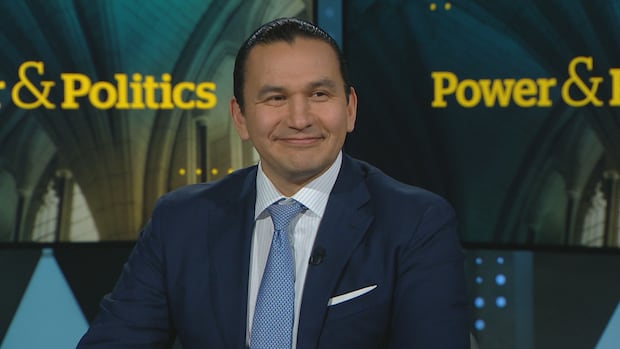
Alberta separatist meetings part of U.S. efforts to ‘destabilize’ Canada: Kinew
Manitoba Premier Wab Kinew says he sees the U.S. State Department meetings with Alberta separatists within the context of U.S. threats against Greenland and attacks on the prime minister, arguing ‘there’s a lot being thrown at us to try to destabilize us’ before talks to renew the CUSMA trade deal this year.
In an interview with CBC’s Power & Politics this week, Manitoba Premier Wab Kinew praised the “moral clarity” of Carney’s speech and framed moral clarity as an advantage for Canada. He also said it would be a mistake to try to simply keep our collective heads down.
“We have to be able to look ourselves in the mirror as Canadians, as Canada, at the end of this. And I think it’s completely appropriate for our prime minister to give the speech that he gave at Davos. And I think everyone, including Donald Trump, should expect that we’re still going to show up at the negotiating table and drive a hard bargain when it comes to the CUSMA review,” he said.
“This is who we are as Canadians. We’re the adults in the room. We are people who can go into the corners at a hockey rink and then go out for beers at the end of the hockey game.”
One way or another, the goal now is Canadian sovereignty. But sovereignty might not mean much if Canadian leaders have to forever hold their tongues.