

Listen to this article
Estimated 3 minutes
The audio version of this article is generated by AI-based technology. Mispronunciations can occur. We are working with our partners to continually review and improve the results.
A union representing federal public employees says it’s trying to determine how many Manitoban jobs are risk as a result of pending cuts to the Canadian Food Inspection Agency, Statistics Canada, Service Canada and other national workplaces.
The Public Service Alliance of Canada says it’s aware of potential layoff notices sent to Manitoban workers at a number of federal agencies.
Workers began to receive these notices earlier this week, said Marianne Hladun, a regional executive vice president for the union’s Prairie region.
“They’re not telling us how many positions need to be eliminated or when the process is going to be undertaken. They’re just saying to employees ‘your job is affected,’ “ Hladun said Friday in an interview.
The federal government is trying to shed 16,000 public employees belonging to several unions across Canada. Some workers are being offered buyouts, early retirement packages and voluntary departures.
Scientists, researchers and other highly skilled employees are among the workers targeted in Manitoba, Hladun said.
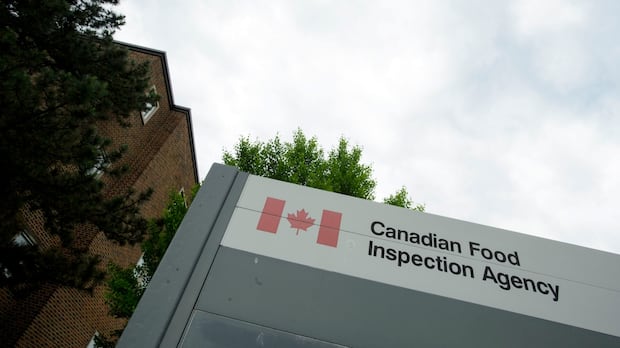
The federal government confirmed an Agriculture and Agri-Food Canada research farm in Portage la Prairie will close, and hundreds of full-time food-inspection jobs across the country are on the chopping block.
Hladun called these cuts concerning.
“Inspectors are the ones that are catching things before they get to your table,” she said.
“CFIA inspectors monitor recalls to make sure that stuff is off the store shelves. They are in meat plants. They’re in processing facilities.
“They’re already stretched and the agency’s response is ‘Well, the industry will monitor themselves and we’ll check their paperwork.’” That to me is extremely concerning.”
In a statement it did not attribute to any official, the Canadian Food Inspection Agency said its cuts are part of “targeted changes to program delivery, operational efficiencies, and reinvestments in front-line capacity.
Dylan MacKay, an assistant professor in human nutrition science at the University of Manitoba, said the cuts to science in general constitute terrible timing.
He is among more than 1,700 academics who signed a letter to Prime Minister Mark Carney in April, urging him to invest in science at a time when the United States is laying off thousands of its own scientists.
“We need to invest in our scientific sovereignty, given what’s happening south of the border,” MacKay said Friday in an interview.
“We used to benefit quite a lot from research that’s done in the U.S. It’s been erased the last little while.”